How to Tell a Real Outdoor Sculpture Supplier From a Middleman
The term outdoor sculpture supplier covers everyone from workshop owners who design, build and install their own work to traders who own nothing but a website and a phone, and the difference between them is the difference between a landmark and a liability. Because outdoor sculpture must survive weather and public life for decades, the supplier's real capabilities matter far more than its photography.
This guide explains how to evaluate an outdoor sculpture supplier, what questions separate makers from middlemen, and how to structure a purchase that protects your investment.
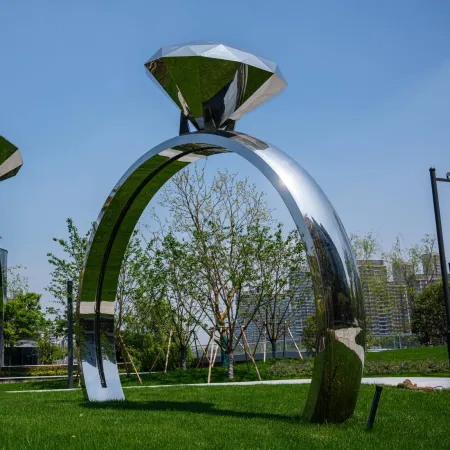
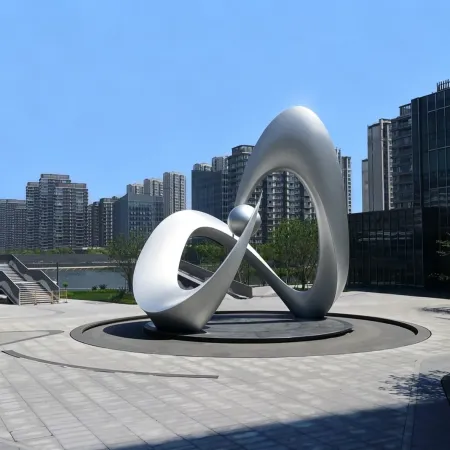
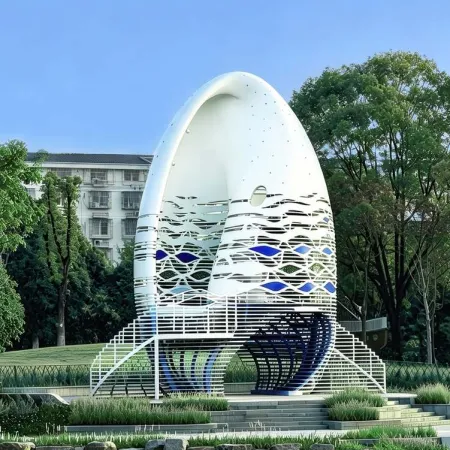
Compare the evidence behind Eye of the Phoenix, the workshop origin of The Diamond Rings and the delivered quality of Wind Sail.
What a Supplier Should Really Supply
An outdoor sculpture supplier should supply far more than an object: it should supply the certainty that the object will stand safely, endure the weather and keep its finish for decades. That certainty rests on capabilities that a middleman cannot provide, design authorship or access to real designers, structural engineering for wind and foundation, fabrication in a controlled workshop, quality control with documentation and installation competence. When a supplier is really a trader, each of these is subcontracted and uncontrolled, and the client inherits the risk of every link in the chain.
The distinction matters most when something goes wrong. A workshop owner can recall the work, inspect it, repair it and answer for it, because the people who built it are still there; a trader who sourced the piece from the cheapest bidder has no bench, no records and no incentive to help once the sale is complete. Clients should therefore evaluate a supplier against the full chain of responsibility, asking who designs, who engineers, who fabricates and who answers for defects, and treating vague answers as the warning they are.
Questions That Separate Makers From Middlemen
A few direct questions reveal the nature of any outdoor sculpture supplier faster than a portfolio review. Ask where the work is fabricated and whether you may visit or take a live video tour; ask who owns the workshop and how long it has operated; ask for the names of the designers and engineers behind the work; ask for material certificates and structural documentation from recent projects; and ask what happens if a defect appears after installation. A genuine maker answers these specifically and opens its doors; a middleman answers in generalities and changes the subject.
Technical questions are equally revealing. Ask how stainless is protected from carbon steel contamination, how joints are detailed to drain water, what grade of alloy is specified for coastal sites and how the finish will be maintained, and listen not for perfect answers but for genuine knowledge. A supplier whose people speak the language of the workshop understands the work; one whose people speak only the language of sales is selling someone else's work, and the client who cannot visit the bench should at least hear the voice of someone who has stood at one.
| Question | Maker answers | Middleman answers |
|---|---|---|
| Where is it made? | Names its own workshop | Names a partner or avoids detail |
| Who engineers it? | Names its engineers | Says it is standard practice |
| May we visit? | Welcomes the visit | Finds reasons to decline |
| Show documentation? | Shares certificates and records | Has nothing to show |
| Who answers for defects? | The workshop itself | Whoever can be found |
Verifying Quality Before You Commit
Verification turns a supplier's promises into evidence, and it should cover the three things that decide an outdoor sculpture's future: the material, the structure and the finish. Require mill certificates for the alloy, structural calculations for wind and foundation, and a defined finish specification with samples, and check them against the contract rather than accepting them at face value. For larger commissions, third-party inspection at key milestones adds an independent layer that protects both sides.
The supplier's past work is the other evidence, and it should be examined in the field rather than in the brochure. Ask for outdoor sculptures delivered several years ago, visit them if possible and look at their condition, and speak to the owners about the supplier's honesty, responsiveness and the quality of the work over time. A supplier that points proudly to ageing works is confident in its craft; one that only shows fresh photography is hiding the evidence that time would provide, and time is the only judge that matters outdoors.
Contracts, Payment and Protection
A professional outdoor sculpture supplier will welcome a contract that protects both sides, and the client should insist on the terms that matter most for outdoor work. The specification should name the alloys, finishes, fabrication standards and inspection points; the programme should tie payments to verified milestones; the warranty should cover materials, workmanship and structural integrity for a defined period; and the design ownership should transfer to the client on full payment. Each clause is a protection against the failure modes that outdoor commissions actually suffer.
Payment structure is the sharpest test of a supplier's confidence. A genuine maker asks for a deposit to cover design and materials, then staged payments as milestones are reached and inspected, and a balance on delivery or installation, because it knows the work will pass the checks. A trader who demands large upfront payments or full payment before inspection is protecting itself against a product it does not trust. Clients should hold the payment schedule to the work's progress, because money released too early is leverage lost, and leverage is the client's only power across distance.
Choosing Well and Building a Relationship
Choosing an outdoor sculpture supplier is the foundation of the whole commission, and the clients who choose well treat it as seriously as the design. They compare suppliers against the full chain of responsibility, verify with documents and field visits, structure contracts that share risk fairly and keep enough leverage to protect themselves through the build. They also look beyond the transaction, choosing suppliers whose people speak the language of craft and whose workshops stand behind their work, because an outdoor sculpture is a decades-long relationship disguised as a purchase.
The reward of choosing well is a work that stands true for generations and a supplier who is still there when it needs care. Many of our own clients return for second and third commissions, and that continuity is the deepest compliment our workshop receives, because it means the first work earned its place and the relationship earned its trust. When the supplier is a genuine maker, the contract is fair and the verification is done, an outdoor sculpture supplier delivers not just a sculpture but the certainty that makes public art a joy rather than a gamble.
- Test the chain: design, engineering and workshop in one hand
- Ask maker questions: only the workshop speaks its language
- Verify in the field: ageing works are the honest portfolio
- Hold the leverage: pay for progress, not promises
What a Real Supplier Shows
A workshop it owns and opens
Documentation it can share
Works that aged with dignity
A warranty it will honour
The Value of a Relationship That Outlives the Sale
An outdoor sculpture supplier who is a genuine maker offers something that no transaction can capture, a relationship that outlives the sale and stands behind the work for the decades it will serve. The sculpture will need care, occasional attention and possibly repair, and the supplier who built it, who holds its records and whose reputation is joined to it, is the supplier who will answer when those needs arrive, while a middleman who sourced the piece from the cheapest bidder has no reason and no ability to help. Choosing a maker is choosing a partner for the life of the work, not a vendor for a moment.
That relationship is built during the commission itself, through honest communication, transparent documentation and the shared satisfaction of a work delivered to standard, and it deepens when the supplier checks in after installation and stands ready for the first maintenance season. Many of our clients return for second and third works, and that continuity is the surest evidence we can offer, because a client who commissions again is a client who was served well the first time. For the client, the choice is simple in principle and profound in consequence: buy from someone who will still be there when the sculpture needs them, and the sculpture will never be orphaned.
Frequently Asked Questions About an Outdoor Sculpture Supplier
How do we know a supplier really makes the work?
Ask to visit or take a live video tour of the workshop, request export and business records, and ask technical questions only fabricators can answer. Genuine makers open their doors; middlemen find reasons not to.
What documents should a supplier provide?
Mill certificates for materials, structural calculations, fabrication drawings and a written specification. These prove the work is built to standard and engineered for its site, not merely assembled from parts.
Is it risky to buy sculpture from overseas?
The risk is managed by verification, not avoided by geography. Choose a verified maker, contract clearly, inspect at milestones and stage payments. The world's best sculpture workshops include many in China.
What payment terms are fair?
A deposit, staged payments tied to approved milestones and inspection, and a balance on delivery or installation. Avoid suppliers who demand large upfront sums or payment before inspection.
How do we protect the design we commission?
Confirm in the contract that the design and its documentation transfer to you on full payment and that the supplier will not reproduce it for others. This clause matters for any bespoke commission.
An outdoor sculpture supplier is only as good as the chain it controls, and the clients who verify that chain receive works that stand for generations while those who trust photography alone gamble with their public realm. Choose the maker, verify the evidence and structure the deal, and the sculpture you commission will reward the care you took in choosing it.
Put our outdoor sculpture supplier to the test with your hardest verification questions.