How a Landmark Plaza Sculpture Organises the Space Around It
A landmark plaza sculpture does more than decorate an open space, because a plaza is a stage for public life and the sculpture is often the reason the stage works, giving people somewhere to gather, something to frame and a sense that the space belongs to them. The most successful plaza landmarks are not objects dropped into an empty square; they are the organising centre around which movement, seating, events and photography arrange themselves. I have spent more than a decade creating landmark plaza sculpture for clients across twenty-three countries, and this guide explains how a sculpture can make a plaza live.
We will look at the relationship between sculpture and plaza, the forms that organise public movement, and the practical engineering of a work that must survive crowds and events.
Our urban project archive shows plaza landmarks in their public settings, the design and engineering services explain the full process, and the Artistic Light Columns installation demonstrates how vertical forms animate a public space by day and night.
The Sculpture as the Organising Centre of a Plaza
People need a reason to stop in an open space, and a landmark plaza sculpture provides that reason. A well-placed work becomes the natural meeting point, the backdrop for photographs, the anchor for events and the element that gives the plaza an identity in the city mind. Without such a focus, a plaza is simply a gap between buildings; with the right sculpture, it becomes a destination. The first task of plaza sculpture is therefore organisational, giving structure to space that would otherwise feel empty.
The relationship works in both directions, because the plaza also organises the sculpture. The work must respect the axes and sightlines of the space, the flow of pedestrian movement, the locations of seating and planting, and the scale of the surrounding facades. A sculpture that ignores its plaza will feel accidental; one that responds to it will feel inevitable. This is why the siting study comes before the concept, and why the strongest plaza landmarks look as though the plaza was designed around them.
Forms That Animate Public Movement
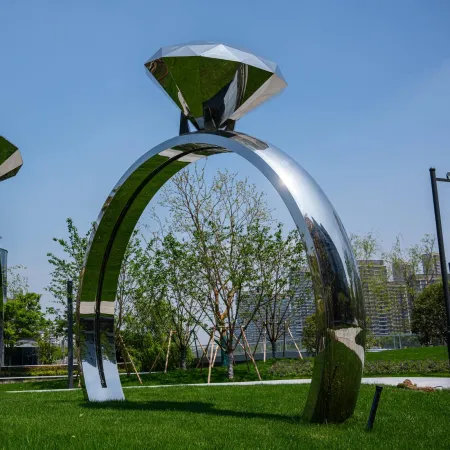
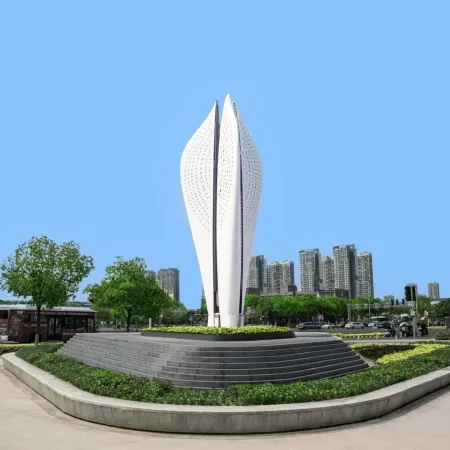
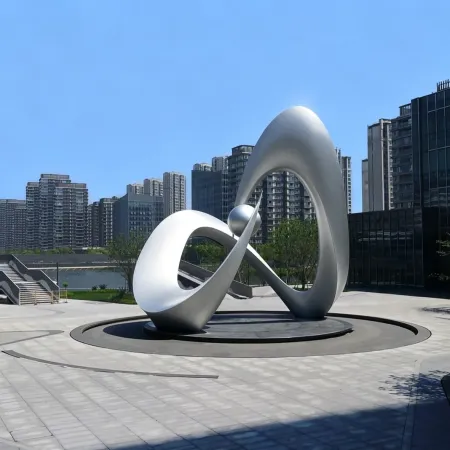
Certain formal strategies consistently succeed in plaza settings because they answer how people actually use open space. A vertical landmark claims the plaza from a distance and becomes a beacon that draws people in; an arch or portal frames the view and invites passage beneath it; a ring or circle creates an interior gathering place that people instinctively enter; a water-integrated work gives the plaza life and sound; and a constellation of elements can guide movement across a large space. The choice depends on the plaza size, the pedestrian flows and the character the city wants.
| Strategy | How It Organises the Plaza | Best Suited To |
|---|---|---|
| Vertical beacon | Draws people from a distance | Large civic plazas |
| Arch and portal | Frames views, invites passage | Entries and axial plazas |
| Gathering ring | Creates an interior gathering place | Community plazas |
| Water feature | Adds life, sound and cooling | Hot-climate and event plazas |
Designing for Crowds, Events and Everyday Life
A landmark plaza sculpture must serve two very different lives: the everyday life of a few people crossing the space and the extraordinary life of a market, concert or celebration that fills it. The work must not block the flows that events depend on, must not create hidden corners that feel unsafe, and must tolerate the extra wear that crowds bring. Its base should handle people sitting on it, leaning against it and photographing in front of it, and its relationship to temporary structures such as stages and stalls should be considered by the plaza management.
The plaza also asks for a night life. A landmark that disappears after dusk wastes half its presence, so lighting design should be integral, revealing the form against the dark facades and giving the evening plaza its own identity. Lighting also serves safety, drawing activity and visibility to the centre of the space. The electrical design, fixture access and maintenance responsibility should all be settled in the commission, because beautiful lighting that cannot be serviced becomes a sad ghost.
- Flow: sculpture guides rather than blocks movement
- Events: base tolerates stages, stalls and crowds
- Night: lighting reveals the form after dark
- Safety: no hidden corners, no unsafe surfaces
Engineering a Plaza Landmark for Public Life
Plaza sculpture is public sculpture in its most concentrated form, and the engineering must reflect the crowds it will host. The structure is designed for the site wind load and for the dynamic loads of public use, the foundation is engineered to the ground conditions, and the surfaces are specified to survive years of touch, weather and cleaning. Drainage is detailed so the base never becomes a puddle, access is planned for maintenance and the fixings are designed to be inspectable. A plaza landmark is an infrastructure of joy, and it must be engineered like infrastructure.
Signs of a Plaza Landmark That Will Live
It organises movement, not merely decorates
It reads strongly by day and by night
It survives crowds, events and weather
It gives the plaza a name and a meeting point
Commissioning a Landmark That Makes the Plaza a Destination
Commissioning a landmark plaza sculpture begins with understanding the plaza itself: how it is used, what it lacks, what events it hosts and what the surrounding buildings and streets contribute. From that understanding the studio can propose concepts that organise the space rather than merely occupy it, and the chosen concept should be tested at true scale in the actual setting. Because a plaza is intensely public, early presentation to the community and stakeholders builds the welcome that protects the work, and the engineering should be completed and approved before fabrication begins.
Since 2003 our studio has designed and installed landmark plaza sculpture across twenty-three countries, for civic squares, commercial plazas and cultural districts. We design with the pedestrian flows, engineer for the crowds and light for the night, because a plaza landmark must earn its place twenty-four hours a day.
A landmark plaza sculpture is the centre around which a public space finds its life, turning an open area into a destination that people seek out, photograph and remember. Commissioned with an understanding of movement and light, it serves its plaza every day and every night for decades.
Pedestrian Flows and the Placement Decision
The placement of a landmark plaza sculpture is a decision about movement, and the study of pedestrian flows should precede the choice of position. Plazas carry streams of people moving between streets, buildings and transport, and the sculpture must be placed where it enriches those flows rather than obstructs them, where it can be seen from the approaches that matter and where it creates gathering space without blocking the passages that events depend on. The analysis of the flows, the sightlines and the existing furniture should be mapped before the concept is developed, because the position and the form must be designed together, and a beautiful sculpture in the wrong position will always feel wrong.
The scale of the sculpture in relation to the pedestrian experience is the second half of the placement decision. A landmark must claim the plaza from a distance, but it must also welcome the people who arrive beneath it, so the design often works at two scales at once, monumental in its distant reading and intimate in its base. The base may offer seating, shelter and a human scale that invites people to stay, while the upper form claims the sky and the approach. Testing the position and the scale in the real plaza, with mock-ups or accurate visualisation, is the only reliable way to judge the relationship, and a studio that insists on this testing is protecting the sculpture from the errors that photographs cannot reveal.
Frequently Asked Questions About Landmark Plaza Sculpture
How does a sculpture organise a plaza?
A well-placed landmark becomes the meeting point, the photographic focus, the event anchor and the identity of the space, giving people a reason to stop and giving movement a centre around which to flow.
What scale suits a landmark in a public square?
Scale follows the plaza size, the surrounding facade heights and the pedestrian sightlines. The work must hold the space without blocking views, and full-scale testing on site is the reliable way to judge it.
Should plaza sculpture include lighting?
Lighting is essential to a plaza landmark presence after dark and contributes to evening safety. Integrated lighting should be designed with the engineering and planned for accessible maintenance.
How do we protect a plaza sculpture from heavy public use?
Durable surfaces, rounded safe edges, engineered foundations and a maintenance plan are the core protections. Siting that keeps the work visible and surrounded by activity also deters misuse.
Can a plaza landmark include seating or water?
Yes. Sculptural seating extends the life of the work, and water features add sound and cooling, but both must be integrated into the design and engineering from the start and planned for maintenance.
A landmark plaza sculpture succeeds when the plaza would feel empty without it, when people navigate by it and gather beneath it, and when it gives the city a new place to love. That is a high standard, and it is the only standard worth commissioning to.
Bring us your plaza and its ambitions, and we will show you the landmark plaza sculpture that can make it a destination.