How Outdoor Large Sculpture Survives Weather, Time and Public Life
An outdoor large sculpture is a permanent resident of the elements, and it must be designed, engineered and detailed for a life that no indoor work will ever know, facing wind, rain, frost, salt and the daily touch of the public for decades on end. Getting that right demands a discipline that begins with the first sketch and continues through material selection, structural calculation, fabrication and installation, because an outdoor monumental work has no roof, no caretaker and no second chance. After more than a decade creating outdoor large sculpture across twenty-three countries, I have made works that still look new after a decade in the open, and I have seen works fail in three years, and the difference was always in the design decisions made before the steel arrived.
This guide explains how outdoor large sculpture is made to endure and what to verify before commissioning one.
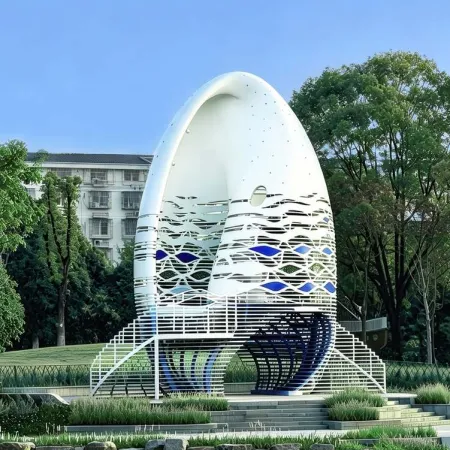
Our outdoor sculpture services cover the full route to a durable installation, the installed works archive shows our outdoor commissions, and the Bubble Fish demonstrates an outdoor large sculpture built for public interaction and the weather.
Designing for the Full Fury of the Site
An outdoor large sculpture must be designed for the worst that its specific site can offer, not for a pleasant average day. That means the engineer must know the site's wind climate and calculate the structure for the strongest storm it may ever see; the material must be chosen for the local air, whether that air carries coastal salt, industrial pollution or clean mountain dryness; and the details must survive the freeze and thaw of the local winters. A sculpture designed for the real site will still be standing when the seasons have done their worst, while one designed for a brochure will begin to fail the first time the weather turns.
The design must also consider the full cycle of the day and the year. A work that looks bold at noon may vanish against a bright sky, so the silhouette must hold its own in every light; a form that is elegant in summer may be buried in snow, so the design must tolerate the load; and a finish that glows in sun may look dead in grey weather, so the surface must carry interest in all conditions. Outdoor sculpture is judged in every season and every hour, and the design that forgets any of them will be reminded constantly.
Material Choices for a Decade in the Open
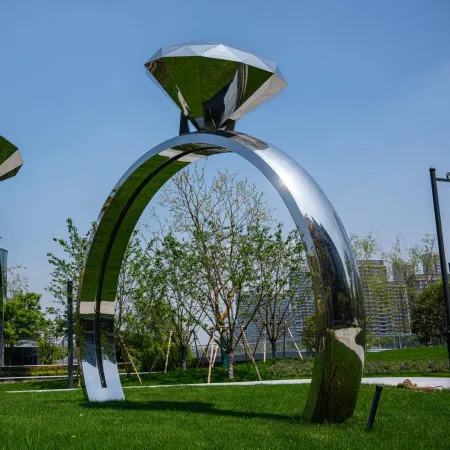
The material of an outdoor large sculpture must be chosen with its whole life in mind, and each metal carries a different contract with the weather. Stainless steel offers the longest service with the least care, especially in marine-grade alloys for coastal sites, and it can be mirror-polished, satin-finished or coloured. Painted steel delivers vibrant colour but depends entirely on its coating system, which must be specified for the climate and renewed on schedule. Weathering steel develops a stable patina that suits landscape settings, and bronze ages with dignity when its patina is properly sealed. There is no single best material, only the right material for the site, the design and the owner's maintenance capacity.
The honest conversation about maintenance is part of the material decision. A mirror-polished outdoor large sculpture in an industrial city will need periodic cleaning to keep its brilliance; a painted work will need recoating within a known cycle; and even the most durable metal needs annual inspection to catch problems while they are small. A studio that presents these truths before fabrication is protecting the client and the work, while one that promises a lifetime of no care is selling a fantasy that the weather will eventually expose.
| Material | Outdoor Strength | Maintenance Truth |
|---|---|---|
| Stainless steel | Superb corrosion resistance | Cleaning to keep mirror surfaces bright |
| Painted steel | Colour and full design freedom | Recoating on a realistic cycle |
| Weathering steel | Stable, self-protecting patina | Runoff management on hard paving |
| Bronze | Centuries of proven endurance | Sealing and periodic conservation |
Engineering for Wind, Load and the Long Term
The engineering of an outdoor large sculpture is where its survival is truly decided. Every monumental work must be analysed for the wind loads of its site, with the internal structure, connections and foundation calculated to carry those forces safely; the dynamic behaviour must be checked so the work does not vibrate dangerously in certain winds; and the details must allow the thermal movement that temperature change causes across large spans. These calculations are not paperwork but the difference between a work that stands for generations and one that fails in a storm, and they must be done by engineers who understand sculpture.
Water is the quieter enemy of outdoor sculpture, and the engineering must defeat it everywhere. Every internal cavity must either be sealed or drained, because trapped water corrodes from within where no one can see it coming; every horizontal surface must shed water so it does not pool and stain; and every junction with the ground must keep moisture away from the structure. The difference between a sculpture that looks clean after twenty years and one that weeps rust stains after five is almost always in these unseen details of drainage and sealing.
Public Life: Designing for Contact and Safety
An outdoor large sculpture lives among people who will lean on it, climb it, photograph it and occasionally test it, so the design must welcome public life while protecting both the work and the public. Surfaces must tolerate touching and cleaning, edges must be safe for children, and any interactive or kinetic element must be engineered so that play cannot cause injury or damage. The most loved outdoor sculptures are those that invite contact without being harmed by it, and achieving that balance is part of the design discipline.
Vandalism is a fact of public life that responsible designers plan for rather than ignore. Graffiti can be resisted with appropriate surface treatments, climbing can be managed through design that does not create tempting but dangerous routes, and minor damage should be repairable without re-fabrication. A studio that has installed outdoor work for years knows where these problems arise and designs against them quietly, so the sculpture stays beautiful with reasonable maintenance rather than requiring heroic intervention.
- Design for the worst weather: the site decides the structure
- Defeat water invisibly: drainage and sealing protect from within
- Welcome public life: safe contact builds love, not damage
- Plan the care honestly: maintenance keeps the first day alive
Enduring Outdoor Work Gives a Place
Beauty that survives every season and decade
Safety engineered for the people around it
A landmark that needs only reasonable care
A legacy that outlasts its own generation
Commissioning Outdoor Large Sculpture That Lasts
The commissioning of an outdoor large sculpture should be treated as an engineering project with an artistic soul, because the work will live in conditions that demand both. The studio should begin with the site and its climate, develop the concept against those realities, carry the design through full structural engineering, fabricate with proven monumental capacity and install with crews who understand outdoor work. The contract should define the engineering deliverables, the materials, the maintenance expectations and the installation responsibility, so that the client knows exactly what they are commissioning and what the work will require over its life.
Since 2003 our studio has designed, engineered, fabricated and installed outdoor large sculpture across twenty-three countries, and every work carries the lessons of the ones before it. We would be glad to show you installed works that have weathered a decade, walk you through the engineering that keeps them standing and help you commission a sculpture that will still be beautiful when the seasons have tested it for a generation.
Frequently Asked Questions About Outdoor Large Sculpture
How long does outdoor sculpture last?
With correct engineering, suitable materials and reasonable maintenance, several decades and often far longer. The design must be matched to the site from the start.
What is the best metal for outdoor conditions?
Stainless steel is the most carefree choice, with painted steel, weathering steel and bronze each offering different character and maintenance demands. The site climate should guide the selection.
Do outdoor sculptures need special foundations?
Yes. Monumental outdoor work needs engineered foundations to carry its weight and resist wind, and often requires local authority approval, so structural documentation is essential.
How do I protect a sculpture from graffiti and vandalism?
Through appropriate surface treatments, design that avoids dangerous climbing routes and materials that can be cleaned and repaired. Experienced studios design against these realities quietly.
What maintenance will my outdoor sculpture need?
Annual inspection plus care appropriate to the finish, such as cleaning mirror surfaces or recoating painted work on schedule. The studio should provide a realistic maintenance plan.
An outdoor large sculpture earns its place by enduring, and endurance is not an accident but a design outcome. Choose materials for the site, engineering for the weather and a studio that has proven it can deliver work that lasts, and your sculpture will greet every season with the same confidence.
Let our studio build you an outdoor large sculpture that the weather will respect and the public will love for generations.