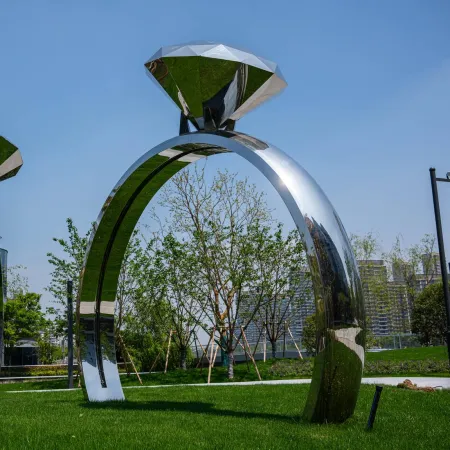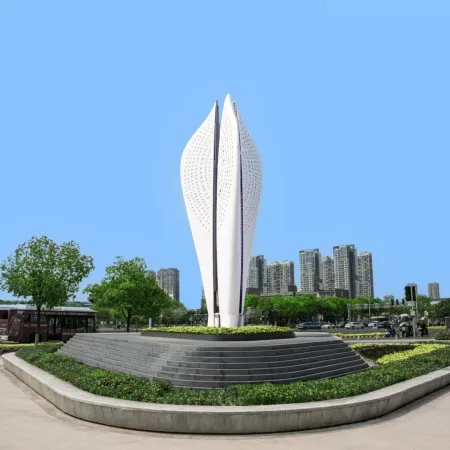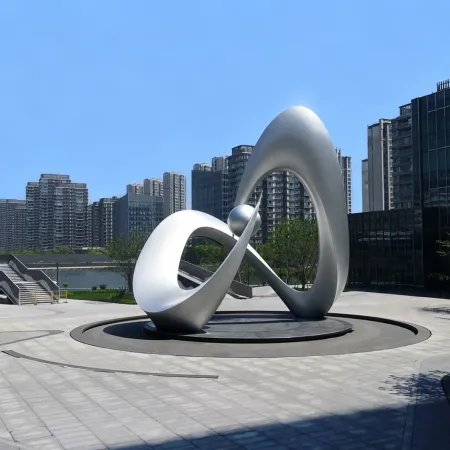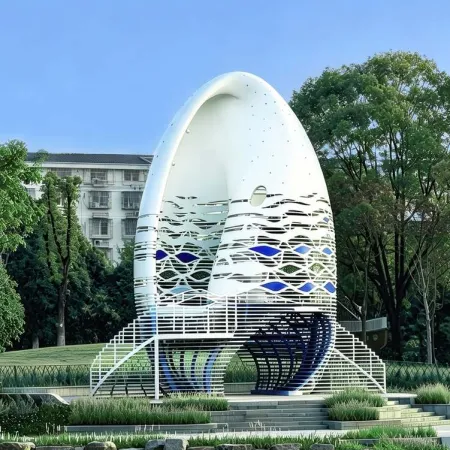
How an Urban Art Installation Gives a City Street a Soul
An urban art installation operates in the most demanding gallery on earth: the working street, where the audience never chose to attend and the artwork must compete with traffic, signage, shopfronts and the daily rush of a city. Yet when urban sculpture succeeds, it does something no building can — it gives a district an identity, a meeting point and a reason to slow down, turning a passage into a place. Yifeng Sculpture Studio has designed urban art installations for streets, plazas and waterfronts since 2003, and this guide explains how artwork earns its place in the dense, fast, layered environment of the modern city.
The sections below cover the urban context, the three audiences of street-level art, scale and sightlines in the city, durability under urban life, and how an urban art installation activates public space economically and socially.
Cities are full of objects competing for attention; the urban artwork that endures is not the loudest but the most necessary — the piece that becomes part of how people navigate, meet and remember the city, until removing it would feel like removing a landmark from the map.
The services overview maps how urban commissions are delivered end to end, the project archive shows installed urban works, and Heart of Changfeng demonstrates a landmark that anchors a district's public life.
Reading the Urban Context Before Placing the Art
An urban art installation lives in a context that is part architecture, part infrastructure and part human habit. The designer must read the street's rhythm — where people wait, where they cross, where they pause to check a phone or meet a friend — because the work should sit where life already gathers, not where the render looks best. The visual context matters equally: the height and materiality of surrounding buildings set the scale the work must answer, street furniture defines the language it joins, and existing signage and lighting determine how it will be seen. Urban art that ignores its context becomes visual noise; urban art that absorbs its context becomes a landmark people navigate by.
The Three Audiences of Street-Level Art
A successful urban art installation speaks to three audiences at once, each moving at a different speed. The driver or transit rider sees it for seconds from a distance, so it must carry a bold silhouette that reads at speed. The pedestrian sees it from across the street and then up close, so it must unfold — drawing the eye at first glance and rewarding approach with detail, texture or interaction. And the resident sees it every day, so it must have depth that outlasts novelty — a changing light, a seasonal mood, a story that deepens with familiarity. Designing for all three audiences is the core discipline of urban art, and it is why the strongest urban works are simple from afar, rich up close and inexhaustible over years.
| Audience | How They See It | What the Work Must Offer |
|---|---|---|
| Transit rider | Seconds, from a distance, at speed | An unmissable silhouette and color signature |
| Pedestrian | Minutes, from across the street and close up | A presence that draws, then detail that rewards |
| Resident | Daily, for years, in every season | Depth that changes and deepens with time |
Scale, Sightlines and the Urban Frame
Scale in the city is negotiated with architecture, and getting it wrong is the most common urban art failure. A work sized against a render can vanish against a twenty-story facade or bully a narrow street; the honest method is testing the proposed form at true size against the actual sightlines of the site — from the far end of the street, from the crossing, from the building entrances that frame it. Axis and alignment matter as much as height: a work placed on the axis of a major approach reads as the street's destination, while one placed off-axis becomes a discovery. Lighting extends the urban frame after dark, and planting, paving and furniture complete it. When scale, axis and frame are composed together, an urban art installation makes the street around it feel more intentional, more designed, more cared for.
What Our Studio Delivers With Every Urban Commission
Street-rhythm and sightline studies before the form is designed
Three-audience design tested at true scale against the urban frame
Materials and detailing engineered for the hard life of the city street
Durability Under the Hard Life of the Street
Urban art endures a life that even park sculpture is spared: street-cleaning machines, festival crowds, bicycles chained to bases, food carts, advertising campaigns and the full chemical assault of an urban winter. Urban art installation design therefore specifies for abuse with affection — surfaces that shrug off scuffs, bases that resist carts and chains, materials that survive road salt and exhaust, and finishes that can be restored without a factory visit. Where the work invites sitting or climbing, it is engineered to be sat on and climbed safely; where it hosts events, it is anchored for the loads a crowd can apply. The urban work that is designed to be lived with hard becomes part of the furniture of the city — and the city protects what it has adopted.
Accessibility is part of urban durability too, because a work on a public street must welcome everyone who shares that street. Sightlines are kept open for wheelchair users and children; tactile or visual interest is placed at heights everyone can reach; and any interactive element is designed so no one is excluded by ability. Urban art that is genuinely accessible becomes a point of pride for the whole community rather than a spectacle for part of it, and the design conversation that includes accessibility from the first sketch produces works that are richer, not restricted — the constraints of universal design have a way of sharpening artistic decisions rather than dulling them.
Activating the City: What a Successful Urban Art Installation Returns
A well-placed urban artwork pays dividends that go far beyond aesthetics. It becomes a meeting point that draws foot traffic, a backdrop that makes a district photogenic and shareable, an anchor that helps people navigate, and a marker of civic care that lifts the perceived quality of an entire street. Developers and districts have learned that art is not a cost center but an activation tool — the difference between a block that people pass and a destination they seek out. The urban art installations that deliver these returns are the ones rooted in their site, sized to their frame, built for their street and loved by their residents; when all four are true, the work stops being an expense line and becomes infrastructure for the city's identity.
Frequently Asked Questions About Urban Art Installations
How do urban artworks avoid feeling like clutter?
By earning a role in the street's life rather than adding decoration to it. A work that serves as a meeting point, a landmark for directions, a shade structure or a stage reads as necessary; a work that only decorates competes with signage and is soon ignored.
What permissions are needed for art on city streets?
Urban sites typically involve planning approval, public-space permits, structural sign-off and often a public art or design review. We map the local approval path early and prepare each submission in the format the authority expects, so the process advances rather than stalls.
Can urban art be temporary as well as permanent?
Yes — cities increasingly use temporary and semi-permanent works to test sites, celebrate events or activate districts quickly. Temporary works need the same structural and safety discipline, plus a plan for removal, and they often become the evidence that leads to a permanent commission.
How do you design art that works with street lighting and traffic?
By treating the street as one visual system: the artwork's lighting is coordinated so it never dazzles drivers or disappears against existing illumination, and its placement respects sightlines, crossings and sight-distance requirements from the first sketch.
What makes an urban artwork become a true landmark?
A landmark is adopted, not declared. It becomes one when it sits on the axis of daily life, reads clearly at every distance, changes with light and season, and gives residents a name they use with pride. Those qualities are designed in deliberately, not discovered after installation.
An urban art installation is an act of confidence in a city's future — a statement that a street, a plaza or a waterfront deserves to be more than a passage, and that the people who use it deserve a landmark that honors their daily lives. The works that achieve this are designed from the street outward, sized against the urban frame, built for the hard life of the city and given the depth that keeps them loved for generations. If your district is ready to make that statement, our studio would be honored to help — tell us about the street and the identity it deserves, and we will design an urban art installation that becomes part of how your city is known.