How a China Public Art Installation Factory Earns Your Trust
A China public art installation factory is where a public commission becomes physical, and the choice of factory decides how faithfully the design survives the journey from screen to site. Buyers who understand what happens inside a serious fabrication workshop can separate the genuine makers from the trading desks, and that understanding protects every stage of the project.
This guide explains what to verify when you choose a China public art installation factory, how a real workshop differs from a middleman, and which documentation turns a factory visit into a confident decision. We share these points from years of running a sculpture studio and fabricating public works for clients across more than twenty countries.
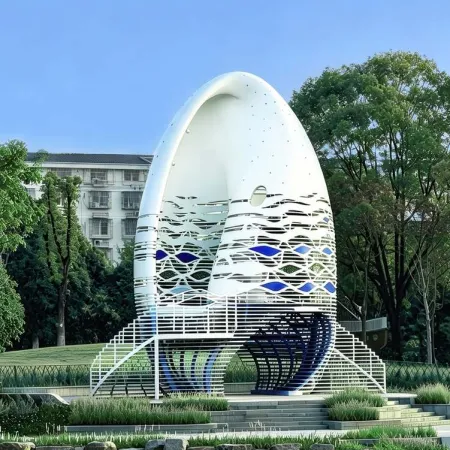
See how installations are realised from the first sketch to site in Wisdom Tree, Honeycomb Pavilion and our full fabrication services.
Factory or Middleman: the Question That Changes Everything
The first question a buyer must answer is whether the company they are talking to actually owns a workshop. A genuine China public art installation factory holds its own fabrication floor, its own welding bays, its own finishing stations and its own quality control team, so the people who quote the work are the people who answer for it. A middleman, by contrast, collects a commission on work made elsewhere, which means the quality, the schedule and the honesty of the making are all controlled by someone you never met and who has no contract with you.
The difference shows up most clearly when problems arise. A real factory can walk to the workbench, inspect the weld, correct the fault and show you the result the same day; a middleman must call their subcontractor, wait for a reply and hope the message is passed on faithfully. Buyers often discover this difference only after a crisis, and by then the schedule is already lost. Ask directly who owns the workshop, request a live video tour of the floor and look for the machinery in the background of every photograph, because the factory that fabricates your public art installation should be the factory you can see working.
What a Real Fabrication Floor Should Show You
When you tour a China public art installation factory, you are not looking for a spotless showroom; you are looking for evidence of genuine capability. Check whether the floor has the equipment the work demands: laser or plasma cutting tables for sheet metal, bending brakes for forming, welding stations with trained welders, grinding and polishing bays, paint booths with proper extraction, and a separate area for assembly and trial fitting. Ask which processes happen in house and which are subcontracted, because a factory that outsources its core process has quietly become a middleman itself.
Also read the workshop culture rather than only the equipment list. Look at the works in progress: are they similar in scale and finish to your project? Do the workers wear proper protection and follow tidy working habits? Is there a quality control station with inspection records, or does work simply flow from bench to bench? The confidence a buyer needs is built from hundreds of small signals like these, and a factory that is proud of its discipline will show it without being asked. The right workshop feels like a place where your sculpture would be handled with care, because care is a habit, not an occasional decision.
The Documentation a Serious Factory Provides
Documentation is the quiet language in which a trustworthy China public art installation factory proves its claims, and the buyer should ask for it before committing. Request the material certificates for the steel or bronze specified, the welding procedure qualifications for the welders assigned to your work, and the surface treatment records showing how the finish was prepared and applied. For large public installations, engineering reports on wind load and structural integrity should come from a qualified engineer, and the factory should share them openly rather than treat them as a secret.
The factory should also document the making itself: progress photographs at defined milestones, inspection sign-offs at each critical stage and a final pre-shipment report with the measurements and finishes verified against the approved drawing. A buyer who receives this paper trail can track the work from raw material to crated sculpture, and a factory that cannot produce it is asking you to trust a process you cannot see. Documentation is not bureaucracy; it is the only way a remote buyer can watch the making, and a genuine factory treats it as part of the service.
| Verification point | What to ask for | Why it matters |
|---|---|---|
| Ownership | Live workshop tour and floor evidence | Confirms maker, not middleman |
| Equipment | Cutting, welding, finishing capacity | Shows the work can be done in house |
| Materials | Mill certificates and grade traceability | Guards against substituted quality |
| Engineering | Structural and wind load reports | Protects safety and public liability |
| Records | Milestone photos and sign-offs | Lets you watch the making remotely |
Materials, Finishes and the Climate Conversation
A China public art installation factory that advises honestly on materials will save its clients from expensive failures. Public installations live outdoors, and the material choice must begin with the climate of the final site rather than with what looks good in a showroom. Coastal cities demand grades of stainless steel that resist chloride attack; cold climates demand joints that tolerate freezing; high-traffic urban sites demand finishes that can survive cleaning and casual contact. The right factory asks where the work will live before it quotes a material, and it explains the trade-offs between options in plain language.
Finishes deserve the same honesty. A mirror polish on stainless steel is a different product from a satin finish, with different costs, different maintenance and different behaviour in the light; a painted steel sculpture depends entirely on the quality of its coating system; a bronze patina is a living surface that changes with weather. The factory should specify the finish, explain how it will age and document the maintenance it will need, and it should warn against finishes that cannot survive the site. Material honesty is the mark of a partner who expects to see you again, and it is exactly what distinguishes a genuine China public art installation factory from a seller of photographs.
Design Ownership and the Art of the Commission
Before you hand a design to a factory, agree clearly who owns it. A genuine China public art installation factory fabricates your design and respects your ownership; it does not reuse your concept for another buyer, pass your drawings to a competitor or claim authorship of work it only made. The contract should state that the design remains yours, that the factory will not reproduce it without written permission and that your drawings and models are returned or destroyed after the project. These clauses are not distrust; they are the normal hygiene of a professional commission.
The factory should also respect the chain of authorship in the other direction. If an artist or designer created the work, the factory must fabricate it faithfully, without silently altering proportions, surfaces or details to simplify its own work. The best factories flag difficulties early and ask questions when a drawing is ambiguous, because they understand that the sculpture belongs to its creator and their role is to serve the vision with skill. When buyer, designer and factory each respect the boundaries of the others, the commission moves smoothly, and the finished installation carries the intention of everyone who touched it.
What a Trusted Factory Gives You
One accountable maker from quote to crate
Certified materials and honest engineering
Documentation that lets you watch remotely
Design ownership protected in writing
Budgets, Timelines and Honest Milestones
A professional China public art installation factory quotes a budget that reflects the real work, and it itemises enough for the buyer to understand what they are paying for. The quotation should separate design support, materials, fabrication, finishing, crating and any engineering work, so that changes can be priced fairly when they arise. Be wary of a quote that is dramatically lower than the others, because a factory that cannot make the work for that figure will either cut quality, add charges later or disappear when the work becomes difficult. The honest price is the one that allows skilled people to do the job properly.
Timelines should be built from real capacity, with milestones that let the buyer check progress without nagging. A good factory proposes a schedule that names the design freeze, the material order, the fabrication start, the finishing window and the packing date, and it tells you early if a milestone is at risk rather than surprising you at the end. Payment terms should follow the milestones, protecting both sides: the factory is funded as it works, and the buyer never pays fully for work they have not seen. A factory that proposes this structure openly is confident in its own delivery, and that confidence is worth more than any promise.
Crating, Shipping and the Journey to Site
The journey from factory to site is where public installations are most often damaged, and a China public art installation factory that takes crating seriously protects its own work. Large sculptures travel as steel frames or bespoke crates, with padded cradles that hold the work clear of every surface, and fragile finishes are wrapped in layers that resist both impact and moisture. The factory should design the packing for the actual route, knowing whether the piece will travel by sea, air or road, and should mark the crates so that handlers understand which face is up and where the weight sits.
Shipping is also where the terms must be clear. The quotation should state which party arranges the freight, who insures the cargo and at what point responsibility passes from factory to buyer, because a public installation is an expensive object and its insurance is not a detail. Ask whether the factory will advise on the import formalities of your country and whether it provides the documentation customs will expect, and check that a representative will be available when the crate arrives. The best factories treat the delivery as part of the making, checking in until the sculpture is safely on site, because a work damaged in transit reflects on the maker as much as on the carrier.
Frequently Asked Questions About a China Public Art Installation Factory
How do I confirm a factory really owns its workshop?
Ask for a live video tour of the floor and look for the machinery in the background of every photo the company shares. A genuine maker can show you the workshop in real time without preparation.
Can I visit the factory before placing an order?
A serious factory welcomes serious buyers. If distance prevents a visit, arrange a video call that walks the floor and inspects works in progress that match your project's scale and finish.
What documents should the factory provide?
Material certificates, welding qualifications, engineering reports where relevant, milestone photographs and a pre-shipment inspection record. A factory that shares these openly is protecting you both.
How do payment terms protect a remote buyer?
Milestone payments that follow visible progress, with the final balance tied to pre-shipment inspection. This funds the work while ensuring you never pay fully for work you have not seen.
Should the factory handle installation too?
Ideally yes, or at least supervise site installation. The team that made the work understands its structure, its lifting points and its finishes, and that knowledge prevents the accidents that happen at handover.
Choosing a China public art installation factory is a decision about trust, and trust is built from verifiable evidence rather than promises. Visit the workshop or watch it live, read the documentation, question the materials, agree the ownership and the milestones, and choose the factory that behaves like a partner from the first conversation. The right factory does not simply make your sculpture; it carries your confidence through every stage, from the first drawing to the moment the work stands in its public home, and that confidence is what turns a commission into a lasting success.
Choose a China public art installation factory that opens its workshop, shares its documents and stands behind its work, and your installation will be made with the honesty it deserves.