How Outdoor Park Sculpture Serves the Public, the Landscape and the Years
Outdoor park sculpture belongs to everyone, and that is both its joy and its discipline, because a work in a park must delight children, move adults, survive constant public life and still serve the landscape after decades of weather. The parks that commission sculpture well understand this contract between art and public, and the works they choose become part of the community's shared memory.
This guide explores how outdoor park sculpture is chosen, sited and engineered for public green space, and how to commission a work that earns its place in the park's life.
See sculpture made for park life in Rainbow Windmills, the community warmth of Wisdom Tree and the playful spirit of Family Playground Elephant Troop.
The Special World of the Park
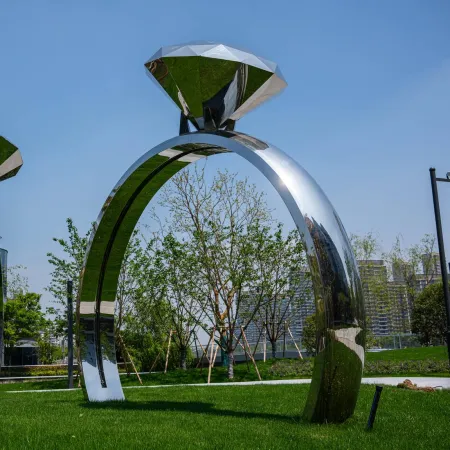
A park is unlike any other setting for sculpture because it is used by everyone and by every generation at once. Children climb and run, families picnic and play, teenagers gather, adults exercise and older visitors rest, and a park sculpture must share this busy, informal life without complaint. It must tolerate touch, weather, balls and bicycles, and it must never present a hazard to the very young or the less able. This is a demanding brief, and it is why outdoor park sculpture deserves its own design discipline rather than a recycled plaza formula.
The park is also a living landscape that changes through the day and the year. A work that reads clearly among summer foliage must also hold its own against bare winter branches; a piece placed for morning light must earn its place at dusk; and a sculpture near a playground must coexist with noise and energy, while one in a quiet glade must keep the calm that drew visitors there. The best park sculpture responds to this variety, giving the park landmarks that work in every season and for every visitor.
Types of Park Sculpture and Their Roles
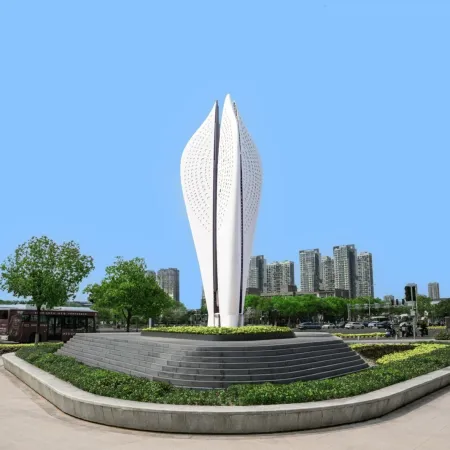
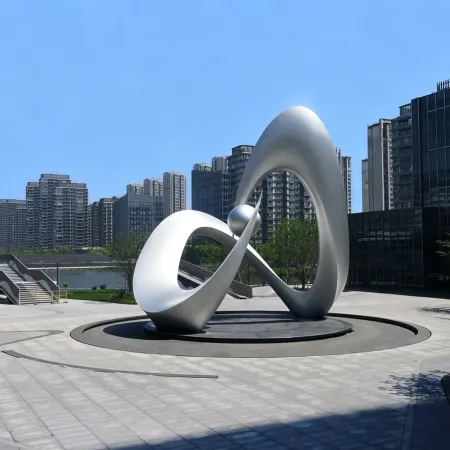
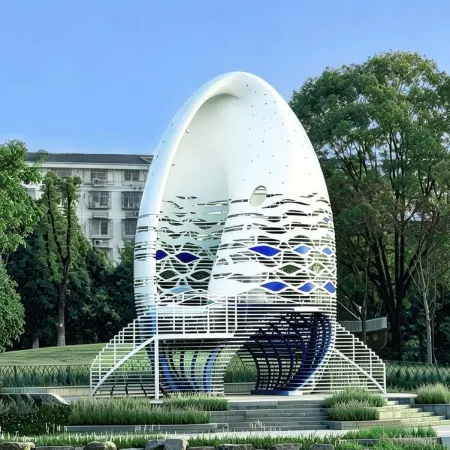
Park sculpture programmes usually mix several roles. Landmark works anchor entrances and major spaces, giving the park an image that visitors remember and share; playful and interactive works serve children and families, often doubling as play features; contemplative works give quiet corners a focus for reflection; and educational or themed works tell the park's story, its ecology, its history or its community. Each role has its own design language, and a programme that balances them serves the park's full range of visitors.
The balance should follow the park's character and community. A city park beside a playground may lead with playful and interactive sculpture; a heritage park may favour commemorative and narrative works; and a nature park may choose sculpture that celebrates wildlife and landscape without competing with them. When the park authority, the landscape team and the artists define these roles together, the sculpture programme becomes part of the park's identity rather than a random collection of objects.
| Role | Where it works | Design priority |
|---|---|---|
| Landmark | Entrances and main spaces | Bold silhouette and identity |
| Playful and interactive | Near playgrounds and family zones | Safety and robust play value |
| Contemplative | Quiet corners and glades | Calm presence and focus |
| Educational and themed | Along paths and feature areas | Story and legibility |
Safety, Children and the Public Contract
Safety is the first duty of outdoor park sculpture, because parks are full of children doing exactly what children do, climbing, hanging, jumping and testing every surface. Works must be engineered so that climbing is either designed for or made safe, with no sharp edges at child height, no pinch points, no unstable elements and surfaces that do not burn in summer sun or grow dangerously slippery. Interactive works intended for climbing and play should be designed and engineered for that use, with the same structural rigour as playground equipment.
Durability is the other half of the public contract, because a park sculpture faces harder treatment than almost any other art. Materials must resist vandalism, tolerate cleaning, survive balls and bicycles and endure decades of weather, and the finishes should be chosen so that minor wear does not ruin the work. The studio should discuss these realities openly, because a sculpture that cannot survive its public is not public art but a public problem, and the parks that commission successfully are those that design for the life the work will actually live.
Commissioning for the Park
Commissioning outdoor park sculpture works best as a collaboration between the park authority, the landscape architects and the artists or studios. The brief should define the site, the role of the work, the audience and the maintenance reality, and the landscape team should be involved from the start so that the sculpture and the planting are designed together. Community consultation can also strengthen the outcome, because parks belong to their neighbourhoods and a work that the community has helped shape is a work the community protects.
Choose a studio that has made sculpture for public green space and can show works that have survived park life for years. Visit those works, ask their owners about maintenance and public response, and verify the engineering behind them. Agree the safety standards, the materials and the maintenance guidance in writing, and plan the installation so the park and its users are protected through the works. When the art, the landscape and the public are all honoured, outdoor park sculpture becomes one of the most loved investments a community can make.
- Define the role: landmark, playful, calm or educational
- Design for children: safety engineered into every form
- Survive the public: robust materials and honest finishes
- Involve the community: shared ownership protects the work
Sculpture That Serves the Park
Roles chosen for the park's own character
Children and community kept safe
Materials that survive public life
Landscape and art designed together
Designing With the Park's Ecology and Seasons
A park is an ecosystem as much as a landscape, and outdoor park sculpture that honours the ecology earns a deeper place in the park's life than a work that ignores it. The sculpture should be sited to respect the trees, the wildlife corridors and the habitats around it, avoiding the roots of specimen trees, the nesting areas of birds and the routes of the animals that call the park home, and the materials should be chosen so that they neither harm the life around them nor suffer from it, which is a matter of genuine design rather than mere placement.
The seasons multiply this relationship, because a park changes more dramatically than any other public setting and the sculpture must live through all of it. In spring the work may be framed by blossom; in summer it stands among full foliage and long light; in autumn it is set against rich colour and falling leaves; and in winter it faces the park bare, when its silhouette must carry the composition alone, often against snow. The materials must tolerate frost and thaw, the surfaces must shed the water that freezing would damage and the design should look right in the low light of the dormant months.
Designing for the seasons also means planning the care that the park can actually provide. The maintenance team works with planting calendars, irrigation schedules and seasonal works, so the sculpture should be detailed to fit that rhythm, needing no more than the annual attention the park can give, and the studio should provide guidance written for gardeners rather than conservators. When the ecology, the seasons and the maintenance are all respected, outdoor park sculpture becomes a true member of the living landscape, as native to the park in January as in June, and the community accepts it as part of the place they love.
Frequently Asked Questions About Outdoor Park Sculpture
Can sculpture double as play equipment?
Yes, when designed and engineered deliberately for play, with the structural rigour of playground equipment. Climbing, sliding and interactive elements can be integrated safely, but they must be designed for that use from the start.
What materials survive best in a busy park?
Stainless steel, weathering steel, bronze and granite all endure public life well when properly specified. Finishes should tolerate cleaning and minor wear, and interactive works need especially robust construction.
How do we keep sculpture safe for children?
Engineer for the reality that children climb: no sharp edges at child height, no pinch points, stable bases and safe surfaces. Where climbing is intended, design and test it like playground equipment.
Should the community be involved in commissioning?
Community consultation strengthens outcomes, because parks belong to their neighbourhoods. Works the community has helped shape are works the community protects, and consultation builds that shared ownership.
How is park sculpture maintained over time?
With a simple routine suited to the materials: periodic washing, seasonal inspection and prompt attention to damage or graffiti. The studio should provide a written maintenance guide and the park should budget modestly for care.
Outdoor park sculpture is a gift a community gives itself, a work of art that belongs to everyone who walks, plays and rests beneath it. When it is chosen with care for its role, engineered with respect for its public and composed with its landscape, it becomes part of the park's memory and the community's pride.
Plan outdoor park sculpture for your green space with our experienced public art team.