How a Public Art Installation Design Company Works From Drawing to Site
A public art installation design company is the rare partner that designs works to be installed as well as beautiful, treating the foundations, the fixings, the transport and the lifting as parts of the art rather than problems left for someone else. Public art lives outdoors, in public and for decades, and the company that engineers the journey from drawing to site is the company whose works still stand when others have failed.
This guide explains what a public art installation design company actually does, why installation thinking must begin at the first sketch and how to choose a partner whose works survive the real world.
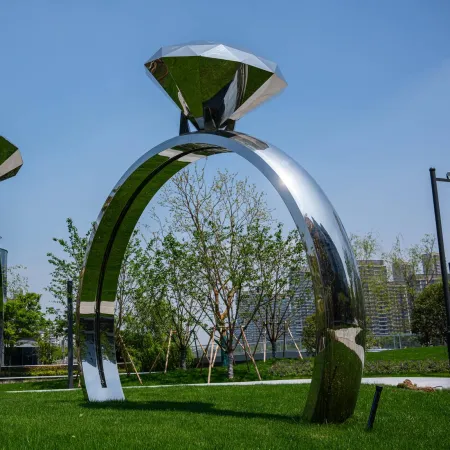
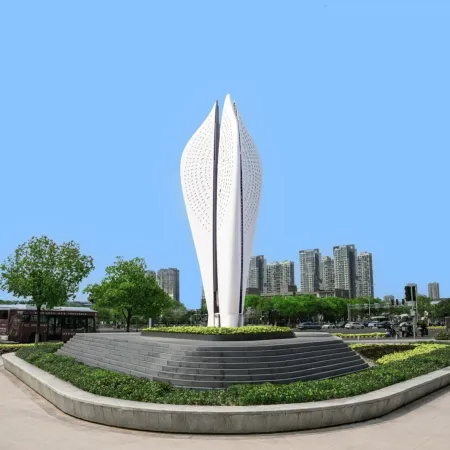
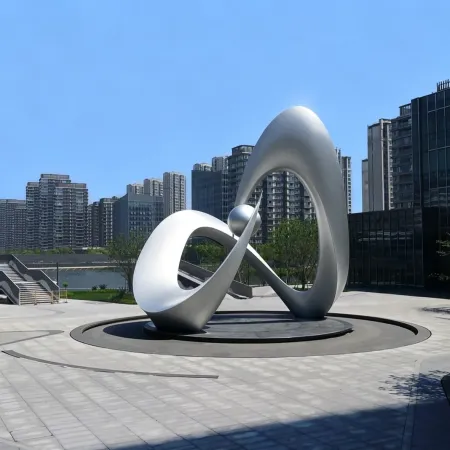
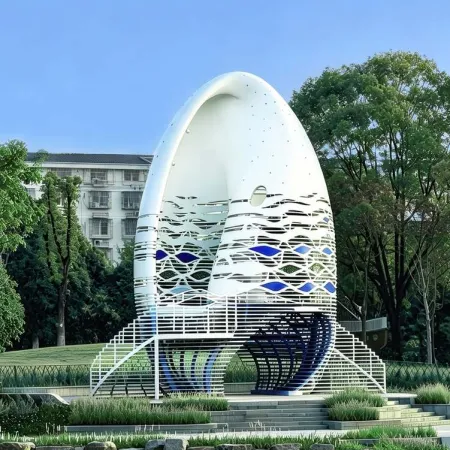
See installation-engineered works in Butterfly Dance, Heart of Changfeng and Summit of Nine Peaks.
Designing for the Day the Work Meets the Ground
A public art installation design company begins with the end in mind, because every public work must one day be transported, lifted, fixed and aligned, and those operations shape what can be designed. The company asks the installation questions at the sketch stage: how will this form break into transportable modules, where will the lifting points be, how will the modules be joined on site without visible scars, what foundation will carry the loads and how will the work be aligned and secured before the crowd arrives. Designs that ignore these questions arrive on site as problems; designs that answer them arrive as rehearsed assemblies that go together the way they were drawn.
The discipline applies to every scale, because even a modest sculpture must be delivered, placed and made safe. A company that thinks in installation will check the width of the gate, the strength of the path, the reach of the available lifting and the tolerance of the fixing points before the design is frozen, saving the client the discovery, always expensive, that the work cannot actually reach its own site. This forward thinking is the signature of the installation design company, and it is what separates works that arrive gracefully from works that arrive as emergencies.
| Installation question | Asked at the right time | Cost of asking too late |
|---|---|---|
| Transport | During concept, by the design team | A module that cannot pass the route |
| Foundation | With the structural design | A base that moves or settles |
| Lifting | Before the weight is fixed | A crane that cannot reach or lift |
| Alignment | In the jointing details | A work that cannot be made level |
The Engineering That Installation Demands
Installation is an engineering act, and a public art installation design company carries the full weight of that responsibility, because a work that falls or fails in service is a public danger as much as a public loss. The company engineers the structure for the loads of its whole life, the dead weight, the wind of the site, the seismic and thermal forces, and the loads imposed during installation itself, when a module may be lifted at angles its final position never demands; and it designs the foundation for the soil, the frost and the water of the exact place. Every fixing, every weld and every bearing is calculated and documented, because installation design is structural design applied to the moment of truth.
The company should share that engineering with the client as a matter of course, because the reports are the evidence that the risk has been managed. The wind calculation shows the work will stand in the worst storm the site can see; the foundation design shows the ground has been understood; the lifting plan shows the installation has been thought through before the crane arrives; and the maintenance schedule shows the owner what the work will need in year five and year twenty. A company that offers these documents without being asked is a company that has learned that the visible beauty of public art rests on invisible engineering.
The Site Survey That Prevents Surprises
A public art installation design company treats the site survey as a creative and technical necessity, because the ground decides what can be built and how. The survey must understand the soil beneath the surface, where a foundation can bear and where it cannot; the services buried below, the cables and pipes that rule out digging in one place and not another; the access for delivery, the width of gates, the strength of pavements and the turning circles for trucks; the trees whose roots must be protected; and the wind and weather of the exact location. The survey is the conversation between the design and the ground, and it must happen before the design is finished.
The survey also protects the client from the two great site surprises, the ground that cannot take the work as designed and the access that cannot deliver it. Both are discovered cheaply in a survey and expensively on installation day, when the foundations are half-poured or the truck is stuck at the gate; and both are the kind of problem that installation companies have learned to find early through the costly lessons of projects that skipped the survey. The client should insist that the site is properly surveyed and that the findings shape the design, because a design made for the real ground is a design that will actually stand on it.
Installation Day as a Rehearsed Performance
For a public art installation design company, the installation day is the performance that all the design has been rehearsing, and it is managed with the discipline of a well-run theatre. The method statement is written before the day, naming the sequence, the equipment, the crew, the safety measures and the weather limits; the modules have been pre-assembled and tested in the workshop so that the site work is a reunion of parts that have already met; the crane and its reach have been matched to the weights and the site; and the contingencies have been thought through, because cranes break and weather changes and the plan must bend without breaking. The client watches an installation that looks inevitable because the company has made it so.
After the work is placed comes the quieter discipline of the handover, when the company documents what the owner must know. The maintenance manual explains how to clean the work, what to inspect and when, which fixings to check and which finishes to protect; the as-installed records show where the services and the fixings lie for the benefit of future workers; and the warranty names who answers if something fails. Public art is installed in a day and maintained for decades, and the company that treats the handover as part of the installation is the company that understands where the real life of the work begins.
The Installation Company Difference
Installation questions asked at the sketch stage
Engineering shared as part of the service
A real survey of the ground and the access
Installation rehearsed and documented
Choosing a Company Whose Works Still Stand
The reputation of a public art installation design company is written in its older works, and the client should ask to see them rather than only the newest photographs. Ask which works the company installed ten or twenty years ago and how they look today; ask what maintenance they have needed and which installations taught the company its hardest lessons; and ask to speak to the owners of those works, who will confirm whether the company returned when it was needed and whether the documentation proved its worth. A company proud of its old works is a company whose installation design has been tested by the only fair examiner, time.
The company should also demonstrate its current capability rather than resting on its history, and the client should verify the workshop, the engineering and the installation crews that would serve the project. Ask who will engineer the structure, who will manage the installation and what their track record is; ask for the method statements and the reports of comparable past projects; and ask how the company handles the inevitable surprises, because every installation meets something unexpected and the quality of the response is the quality of the company. Our studio has designed and installed public works across more than twenty countries since 2003, and we measure ourselves by the works that still stand level and true, the ones whose owners still have the manuals we handed over and the confidence to call us when the first maintenance season arrives.
Frequently Asked Questions About a Public Art Installation Design Company
Why must installation be considered at the design stage?
Because transport, foundations, lifting and alignment limit what can be designed. A company that asks the installation questions early produces works that arrive gracefully instead of as emergencies.
What engineering does an outdoor work need?
Structural calculation for weight, wind and site forces, a foundation designed for the soil and fixings that carry the loads with margin. The reports should be shared with you as part of the service.
What does a proper site survey cover?
Soil conditions, buried services, delivery access, tree protection and local wind and weather. The survey shapes the design and prevents the surprises that appear on installation day.
Who manages the installation day?
The company should provide a named installation manager with a written method statement. Pre-assembly in the workshop and a rehearsed sequence make the site work safe and predictable.
What should we receive at handover?
A maintenance manual, as-installed records, the warranty and a named contact. These documents are what let the owner care for the work through the decades of its public life.
A public art installation design company earns its name by thinking from the ground up, designing works that can be transported, lifted, fixed and maintained as naturally as they can be admired. Choose a company that asks the installation questions at the sketch stage, shares its engineering, surveys the real site and rehearses the installation, and the work you commission will stand safely and beautifully for the decades that follow. The most photographed moment of a public work is its unveiling, but the moments that decide its fate are the quiet ones, the survey, the engineering and the fixing, and the company that masters those is the company whose works endure.
Commission a public art installation design company that thinks from the ground up, and your work will still be standing when the trends that shaped it have passed.