Why Commercial Plaza Public Art Design Builds Value Beyond Beauty
Commercial plaza public art design is an investment decision as much as a cultural one, because the work placed in a shopping district, office plaza or mixed-use square either pays for itself through footfall, dwell time and brand recall or becomes an expensive ornament nobody notices. The plazas that people remember are rarely the ones with the most retail signage; they are the ones with a work of art that gives the space a reason to be visited, photographed and shared.
This guide explains what commercial plaza public art design must achieve to earn its place in a commercial environment, how the work interacts with foot traffic and trade, and how to commission a piece that serves the business case and the public equally.
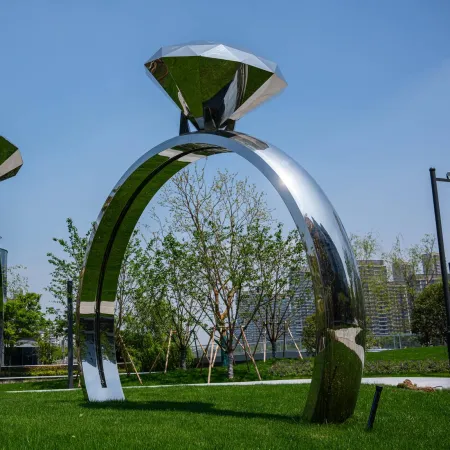
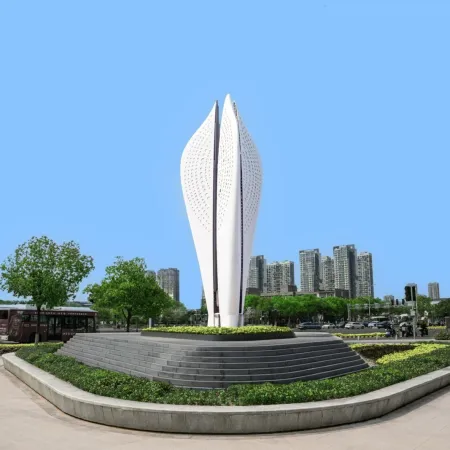
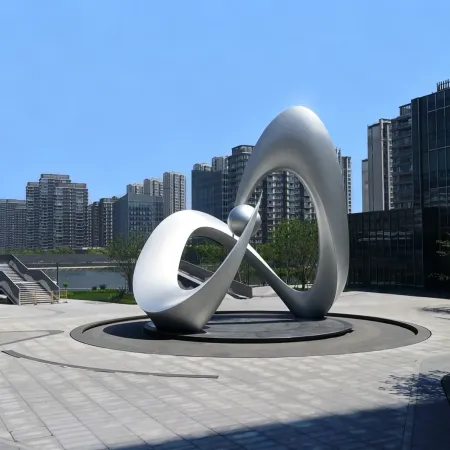
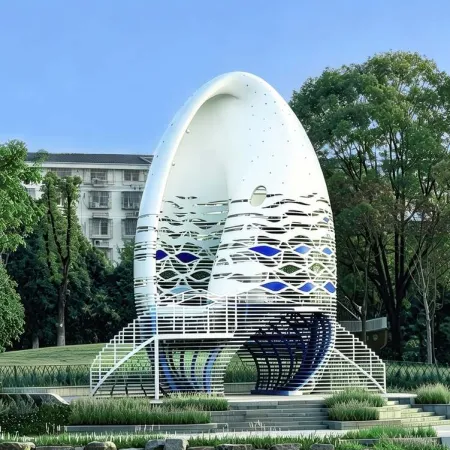
See plaza-defining works in The Diamond Rings, Wind Sail and Eye of the Phoenix.
The Commercial Case for Public Art
Developers once treated art as an obligation to be satisfied as cheaply as possible, but the evidence of successful districts has changed that calculation, and commercial plaza public art design now sits at the heart of placemaking strategy. A distinctive work gives a plaza an identity that marketing cannot fabricate: it becomes the backdrop for photographs that spread across social media, the landmark that people use to arrange meetings, the reason a visitor crosses the street and the memory that separates one mall from the next in a crowded market. Measured against the rent roll of the buildings around it, a well-designed work is one of the cheapest and most durable marketing assets a development can buy.
The commercial benefit also appears in the behaviour of the space itself. Art that people stop to look at increases dwell time, and dwell time is the currency of retail and dining; art that frames a seating area makes it feel intentional rather than leftover; art that gives the plaza a seasonal presence through lighting or water draws return visits through the year. A plaza designed around a strong work stops being a corridor that people hurry through and becomes a destination where they stay, and every minute of extra stay is value delivered to every tenant around the square.
| Design goal | Commercial effect | Design response |
|---|---|---|
| Dwell time | Visitors stay and spend longer | A work that rewards lingering and framing |
| Shareability | Free promotion through photography | Iconic form readable from many angles |
| Wayfinding | The plaza becomes a meeting landmark | Scale and silhouette tuned to sightlines |
| Seasonality | Reasons to return across the year | Lighting, water or seasonal staging |
Designing for the Flow of the Plaza
Commercial plaza public art design must respect the movement of the space before it can shape it, and the best plaza works are placed like actors on a stage, aware of the audience and the entrances. The designer studies where people arrive, which routes they take to the shops and restaurants, where they pause, where the light falls and where a queue forms at lunch, and the work is positioned to catch the eye without blocking the flow, to be seen from the approach and enjoyed from the seating. A work that interrupts the circulation of a busy plaza will be resented no matter how beautiful it is, while a work that sits beside the flow becomes part of the rhythm of the place.
Scale in a commercial plaza is a careful negotiation. The work must be large enough to hold its own against the buildings, the signage and the crowds, yet not so large that it dwarfs the human life of the square; it must read from the upper floors of the surrounding towers and from the street level of a child. The most successful plaza works reward both distances, offering a bold gesture that announces the place from afar and a finer level of detail that reveals itself on closer approach, so the office worker who passes it daily never quite exhausts it.
Material and Durability in a Commercial Environment
A commercial plaza is a hard environment for sculpture, and commercial plaza public art design must specify materials for crowds, weather and maintenance regimes that are often managed by a facilities team with many priorities. The work will be touched, leaned on and photographed constantly; it may face food and drink, cleaning chemicals, delivery vehicles and the occasional skateboard; and it must survive all of this while staying presentable for the tenants who pay for the impression the plaza makes. Stainless steel, bronze and engineered stone each bring different strengths, and the choice should reflect the level of care the plaza can actually commit to maintaining.
Maintenance is a design responsibility, not an afterthought. A mirror-polished surface may be stunning but will show every fingerprint and demand constant care, while a textured or patinated finish may suit a plaza with a lean facilities budget; a work with inaccessible high surfaces needs a plan for how it will be cleaned and inspected; and lighting systems need service access. The studio should present a realistic maintenance schedule with the design, so the developer knows the true lifetime cost before committing, because a work that cannot be maintained will quietly decline no matter how well it was made.
Making the Work Belong to the Brand and the City
The strongest commercial plaza works balance two loyalties: they carry the character of the development and they give something to the wider city. A work that merely repeats a logo is advertising, not art, and the public will treat it as such; a work that ignores the commercial context entirely may be loved by critics but fail to serve the plaza. Commercial plaza public art design finds the territory between the two, a work that expresses the values of the brand, innovation, heritage, community, quality, through a form that stands on its own as art and gives the city a new landmark it can be proud of.
Community response is part of the commercial calculation, because a work the public dislikes becomes a liability that no advertising budget can repair. The design process should include genuine engagement with the people who will use the plaza, testing concepts with residents, workers and visitors and listening to how they read the proposals, not as a box-ticking exercise but as a way of making the work better. A plaza work that the community has partly shaped arrives already adopted, and an adopted work is protected, photographed and defended, which is exactly the behaviour that turns art into an asset.
A Plaza Work That Earns Its Place
Increases dwell time and footfall around the square
Creates a shareable landmark for the development
Engineered for crowds, weather and real maintenance
Adopted by the community that uses it daily
Budgeting Realistically for a Plaza Commission
Plaza projects fail commercially when the budget is set before the ambition, and commercial plaza public art design should begin with an honest conversation about what a given budget can truly deliver. The budget must cover design and community engagement, engineering and foundation works, fabrication in quality materials, transport, installation and the initial lighting or water systems, and it should reserve something for maintenance in the early years. A developer who divides a figure meant for one complete work across several smaller purchases usually ends with several forgettable objects instead of one landmark.
Professional studios are transparent about where the money goes, because transparency is what allows the client to make intelligent trade-offs. If the budget cannot carry a monumental bronze, the studio should say so and propose alternatives, a smaller work of exceptional quality, a different material, a phased programme that grows over time, rather than quietly compromising the work to fit the figure. Our studio has placed works across commercial districts in more than twenty countries since 2003, and the plazas that became destinations were almost always the ones whose owners understood that a single strong work outvalues several weak ones.
Frequently Asked Questions About Commercial Plaza Public Art Design
Does public art actually increase commercial returns?
Developers report that distinctive art increases dwell time, footfall and the perceived quality of a destination. The work becomes free marketing through photography and gives the plaza an identity that signage alone cannot create.
How large should a plaza sculpture be?
Large enough to hold its own against buildings and crowds, yet scaled to the human life of the square. The designer balances the view from upper floors, the approach at street level and the experience of people passing beside it.
What materials suit a busy commercial plaza?
Stainless steel, bronze and engineered stone tolerate crowds and weather well. The final choice should match the maintenance regime the plaza can genuinely commit to over decades.
How do we balance branding with artistic integrity?
The work should express the values of the brand through a form that stands as art in its own right. A logo repeated in metal is advertising; a work that embodies the brand character is a landmark.
Should the public be consulted on plaza art?
Yes. Genuine engagement makes the work better and builds adoption. A plaza work the community has partly shaped is protected and celebrated rather than ignored or resented.
Commercial plaza public art design succeeds when it serves the business case and the public equally, because in a commercial plaza those two interests are the same interest. A work that draws people, holds their attention and gives the place an identity is a work that pays its way through the life of the development, and a work that does none of those things is a cost whatever it cost to buy. Design for the flow, engineer for the environment, respect the community and spend on one strong work rather than several weak ones, and your plaza will be remembered long after the leases around it have changed hands.
Let commercial plaza public art design turn your square into a destination that works as hard as the businesses around it.