How to Choose an Outdoor Sculpture Fabricator Whose Work Survives the Weather
An outdoor sculpture fabricator carries a responsibility that no photographer, renderer or salesman can share, because the welds, the alloys and the finishes that leave the workshop decide whether a public work stands for decades or fails within years. Choosing the fabricator is therefore the most consequential decision in the whole commission, and it deserves the same rigour as choosing the design itself.
This guide explains what separates a genuine outdoor sculpture fabricator from an ordinary metal shop, how to verify the craft, and how to brief and inspect fabrication for outdoor endurance.
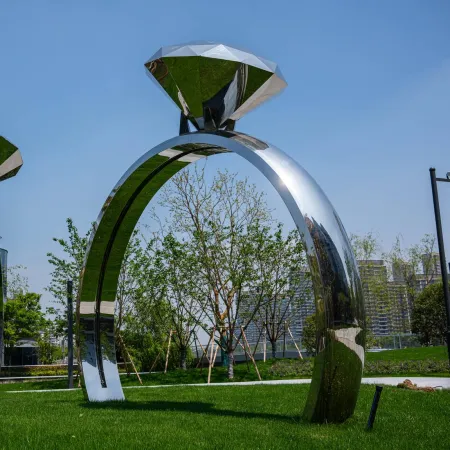
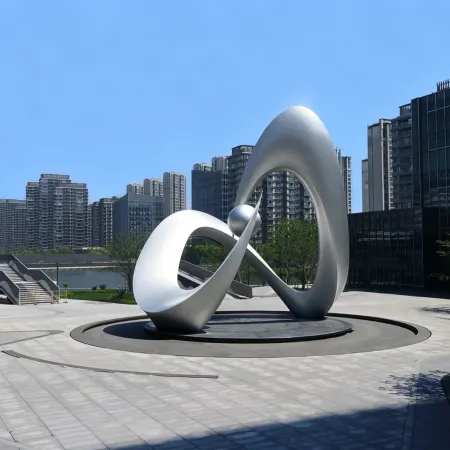
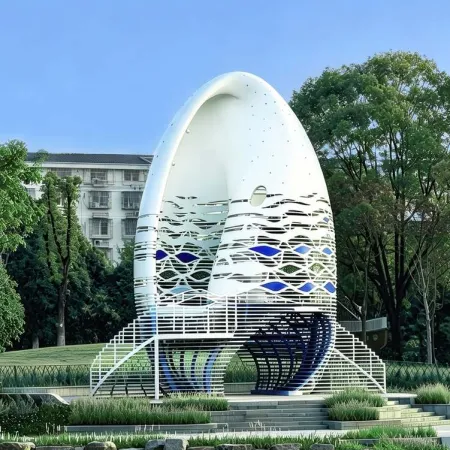
Judge fabricator craft in Wind Sail, the precision of The Radiant Galaxy and the endurance of Butterfly Dance.
What an Outdoor Fabricator Must Know
Fabricating for outdoor life demands knowledge that ordinary metalwork does not require. An outdoor sculpture fabricator must understand how alloys corrode in different atmospheres, how welds and joints must be detailed so water drains rather than traps, how thermal movement is accommodated across a large structure and how finishes are built and protected for decades of sun, frost and pollution. These disciplines are learned through years of outdoor commissions, and they are precisely what a shop that only builds indoor or structural work may lack.
The fabricator must also think as a maker of art, not merely a maker of metal objects. Sculpture presents problems that standard fabrication never meets, double-curved surfaces, mirror finishes that magnify every flaw, forms that must carry their own weight with elegance and sections that must join invisibly, and solving these requires craft judgement as much as technical skill. A genuine outdoor sculpture fabricator is an artist of material, and clients should look for that depth rather than assuming any competent workshop can build art.
Verifying the Workshop and the Work
Verification of an outdoor sculpture fabricator begins in the workshop, because the disciplines that decide outdoor endurance are visible there. Look for stainless steel fabricated in isolation from carbon steel tooling, clean finishing areas where mirrors and paints are protected, controlled welding with the right consumables, material stored properly and work in progress at a scale that matches your ambition. Ask how drainage, sealing and contamination are handled, and ask to see the people who would actually build your piece, because their answers reveal the craft more honestly than any tour.
Completed work is the second evidence. Ask for outdoor sculptures that have stood for several years in environments like yours, visit them if you can and inspect their condition, because a work that still looks right after five winters is worth a thousand renderings. Speak to the owners about maintenance and any problems, and ask what the fabricator learned from earlier works and changed in later ones. The fabricator who discusses these lessons openly is the fabricator who has earned them, and that accumulated learning is what your commission will inherit.
| Check | What to look for | Why it matters |
|---|---|---|
| Alloy knowledge | Grades matched to the site | Corrosion starts with the wrong alloy |
| Stainless isolation | Separate tooling and areas | Carbon contamination causes rust spots |
| Drainage detailing | Joints that shed water | Trapped water is the hidden killer |
| Finish protection | Clean rooms and peelable film | Surfaces must leave the shop perfect |
| Field record | Works standing for years | Time is the only true test |
Documentation and Engineering Integrity
A professional outdoor sculpture fabricator works to documentation, because outdoor endurance cannot be left to memory or goodwill. Material mill certificates prove the alloy is what the specification demands; fabrication drawings define the geometry and the details before metal is cut; weld inspection records, including non-destructive testing where the structure requires it, prove the joints are sound; and structural calculations demonstrate that the work will withstand the wind and the weight of its site. Clients should require this documentation as part of the contract, not request it as a favour.
The documentation also protects the client across time. When a work needs maintenance, repair or assessment years later, the records explain how it was built and what it contains, and when ownership changes, the documentation passes the knowledge on. A fabricator who keeps and shares full records is treating the commission as a long-term relationship rather than a transaction, and that attitude is worth as much as the welding itself. Clients should ask to see sample documentation before signing, because its quality predicts the quality of the work.
Briefing and Working With the Fabricator
The best work comes from briefs that give an outdoor sculpture fabricator everything needed to build well. Share the full design intent, the site conditions, the environment, the maintenance capacity and any constraints on access, transport or installation, and agree the specification in writing, including alloys, finishes, fabrication standards and inspection points. Then work in a rhythm of approvals and milestones, visiting or video-calling at key stages, so that problems are caught while they are still cheap to fix and the work arrives on site as agreed.
A good fabricator will challenge the brief where physics or materials demand it, suggesting a different alloy for the coast, a revised detail for drainage or a stronger section for the wind, and clients should welcome that challenge, because it is the voice of experience protecting the work. Equally, the fabricator should honour the design's intent, finding solutions that serve the art rather than shortcuts that betray it. When the client, the designer and the outdoor sculpture fabricator work in this mutual respect, the sculpture that results carries the best of all three, and it shows in every weld and every surface for decades.
- Verify in the workshop: disciplines are visible on the floor
- Inspect the field record: standing works are the real portfolio
- Demand documentation: certificates, drawings and weld records
- Welcome the challenge: experience protects the work
A Fabricator You Can Trust
Alloy and finish knowledge proven outdoors
A workshop that practises the disciplines
Full documentation from steel to site
A record of works that endured
Protecting the Client Through Documentation
A rigorous outdoor sculpture fabricator protects the client with paper as much as with welding, because documentation is the only way a buyer can verify work performed far away and the only record that will serve the sculpture for the decades ahead. The file for a serious commission should include the material mill certificates that prove the alloy, the fabrication drawings that define the geometry, the weld inspection records and non-destructive test reports where the structure demands them, the finish specification and the surface samples, and the structural calculations that demonstrate the work will stand. Each document closes a gap where a less honest fabricator could hide.
The documentation also carries the work into its future, because maintenance, repair and assessment all depend on knowing what was built and how. When a new owner takes over the site, when an engineer must assess the work after a storm or when a conservator must repair a damaged surface, the records answer the questions that would otherwise be guesswork, and a fabricator who keeps full records is treating the commission as a long-term responsibility rather than a transaction. Clients should specify the documentation in the contract, review it at each milestone and keep it with the sculpture's other records, because the paper trail is the warranty of the invisible work.
Choosing a fabricator is ultimately a decision about who will be accountable when time reveals what the workshop hid, and the fabricator who documents openly is the fabricator who has nothing to hide. The workshop tour shows the craft, the field record shows the endurance and the documentation shows the honesty, and a client who verifies all three has done everything possible to protect the commission. When the records are complete and the work is delivered, the sculpture arrives with its whole history in writing, and that history is the foundation of the trust that carries both the work and the relationship forward for decades.
Frequently Asked Questions About an Outdoor Sculpture Fabricator
How is an outdoor fabricator different from a metal shop?
An outdoor sculpture fabricator understands alloys, drainage, thermal movement, finish protection and the craft of art-making, disciplines learned through years of outdoor commissions. A general metal shop may lack all of them.
What should we see when visiting a fabricator?
Stainless isolated from carbon steel, clean finishing areas, controlled welding, proper material storage and work in progress at your scale. Then question the people who would build your piece directly.
Which documents should a fabricator provide?
Mill certificates for materials, fabrication drawings, weld inspection records and structural calculations. Together they prove the work is built to specification and engineered for its site.
How do we verify outdoor durability before commissioning?
Ask to see works that have stood outdoors for several years in environments like yours, visit them and inspect their condition, and speak to their owners about maintenance and any issues that arose.
Should the fabricator install the work too?
Ideally yes. The team that built the sections understands exactly how they must be handled, aligned and connected, and supervising installation protects both the work and the warranty. Confirm installation scope in the contract.
An outdoor sculpture fabricator is the guardian of a public work's future, and choosing one with rigour is the surest investment a client can make. When the workshop practises the disciplines, the documentation proves the integrity and the field record shows the endurance, the sculpture that rises on site will carry its maker's craft for decades.
Bring your drawings to our outdoor sculpture fabricator and see how craft and endurance are built in.