How Commercial Art Sculpture Serves Art and Business at the Same Time
Commercial art sculpture sits at the point where aesthetic ambition meets commercial purpose — a work commissioned by a business, developer or institution that must be genuinely good art while also doing a job. That job may be branding a hotel, warming a corporate lobby, drawing footfall to a mixed-use district or giving a medical campus a moment of calm. The commission succeeds only when both sides of the bargain are honored: the art must be worthy of the word, and the commercial return must be real. Yifeng Sculpture Studio has created commercial art sculpture for clients across more than twenty countries since 2003, and this guide explains how to commission work that delivers on both accounts.
We cover the difference between commercial art and decoration, how to brief for artistic quality with commercial discipline, and how to structure a commission that protects the art through the approvals process.
Our project archive shows commercial art sculpture in operation, the services overview explains our commissioning structure, and the Heart of Changfeng installation demonstrates a work that gives a development its emotional center.
The Two Masters Every Commercial Art Sculpture Must Serve
The phrase commercial art is not a contradiction; it is a discipline. The work must first be art — coherent, original, crafted to a standard that rewards daily looking for decades — because a piece that is merely competent decoration will not hold the space, and its commercial value collapses with its artistic one. But it must also serve the commissioner: reinforce the brand, welcome the visitor, justify the square meters it occupies. The studios that deliver best on this double brief treat the two masters as one: they understand that the most commercially effective sculpture is usually the most honestly artistic, because people respond to authenticity with attention, and attention is the currency commerce wants. A work that is only decorative saves money on art and loses it on impact.
From Decoration to Commission: Raising the Standard
Most commercial spaces are decorated, not commissioned — they buy sculpture the way they buy furniture, from catalogs, chosen by size and finish. A commission is different in kind, not degree: an artist or studio develops a concept in response to the specific place, its architecture, its users and its purpose. The result cannot be found in any catalog because it did not exist until this site asked for it. For a business, the commission also signals intent: it says the organization believes in what it builds well enough to invest in original work. That signal is itself part of the commercial return, read by employees, clients and the public alike.
What a Commission Adds Beyond a Purchase
- Site-specific meaning: the concept grows from the place, its history and its people
- Originality: no other building in the world has this work, which is the point
- Craft accountability: a studio stands behind materials and engineering for the long term
- Narrative asset: the story of the commission becomes part of the brand's own story
How to Brief So the Art Survives the Process
Commercial projects are governed by committees, brand guidelines and opening dates — the three forces that most reliably dilute art. A brief that protects the work sets boundaries without prescribing the answer: the budget, the site constraints, the safety and maintenance requirements, and the schedule are fixed; the artistic direction is left open within a described intent. The commissioning client then appoints a single artistic approver — one person whose taste and authority carry the decision — so that feedback from the many is channelled through one informed voice. Studios can design for a strong single opinion; they cannot design for a committee that changes its mind at every round. Protecting the art is not indulgent; it is the client's own interest, because diluted art is precisely the decoration the business said it did not want.
Materiality: Choosing the Voice of the Work
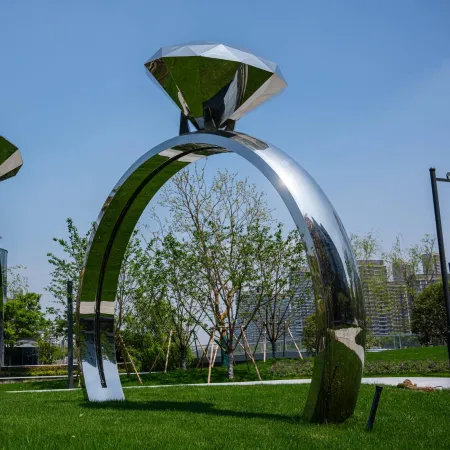
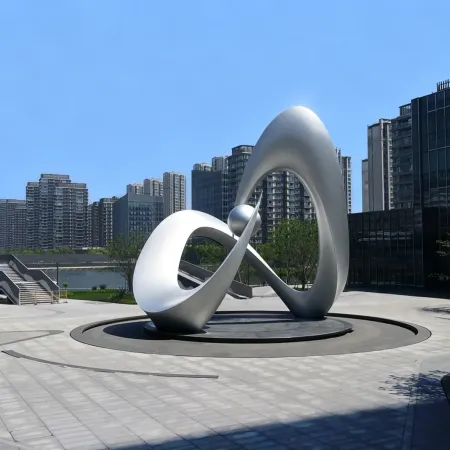
Material is the sculpture's voice, and in commercial settings that voice must suit both the architecture and the maintenance reality. Polished stainless steel speaks of precision and modernity and photographs like a jewel — ideal for lobbies and flagship retail. Bronze speaks of permanence and warmth, anchoring heritage hotels, banks and institutions. Painted steel allows full expression of brand color at controlled cost, while weathering steel belongs in landscape settings where its earth tones age with the planting.
| Material | Best Commercial Setting | Character It Lends |
|---|---|---|
| Polished stainless | Lobbies, retail, tech campuses | Precision, light, contemporary confidence |
| Bronze | Hotels, banks, institutions | Permanence, warmth, heritage |
| Painted steel | Brand-driven interiors and plazas | Color energy, playful identity |
| Weathering steel | Landscapes, resort grounds | Earth, time, natural belonging |
Structuring the Commission for Quality and Control
A professional commercial commission follows a structure that gives the client control and the artist freedom in the right proportions. It begins with a concept phase — often with two or three directions presented — followed by selection of a single direction, development to a detailed design with material and finish samples, engineering sign-off, fabrication with scheduled inspections, and installation with a documented handover. Payments are tied to these milestones so that both sides stay honest. Within that framework the studio carries the artistic and technical risk, and the client carries the decisions. This is not bureaucracy; it is the container that lets the art happen without the process destroying it.
What Our Studio Delivers on Commercial Commissions
Concept directions developed from your brief, not from a catalog
A single artistic approver structure that protects the work
Material, finish and scale decisions matched to the space
Milestone pricing, engineering and full installation service
The Commercial Return on Original Art
Businesses are right to ask what original sculpture returns that a catalog piece would not. The answer compounds over time: the work becomes the building's visual signature, appearing in marketing, media and visitor photographs for decades without a license fee. It gives employees a point of pride and visitors a memory, which supports retention and word-of-mouth in ways that are hard to measure but easy to feel. It raises the perceived quality of the whole development — a place that commissions art reads as a place that invests in itself. And unlike most marketing, the sculpture does not depreciate; well maintained, it becomes more valuable and more loved with every year. On any balance sheet that counts attention, reputation and longevity, original art is not an expense line; it is an asset line.
One more consideration separates commercial commissions that thrive from those that merely survive: the plan for how the work will be seen at night. Many commercial art sculpture projects are at their most valuable after dark — hotel entrances, retail frontages and public plazas live in the evening — so lighting design should be part of the commission from the start rather than an afterthought added by an electrician. The studio should specify lighting that honors the form: grazing light to reveal surface, accent light to draw the silhouette, and controls that let the work shift mood through the evening. When the night image is designed with the same care as the day image, the sculpture earns its keep across the full commercial cycle, and the organization receives art that works as hard after sunset as it does at noon.
Frequently Asked Questions About Commercial Art Sculpture
How is commercial art sculpture different from fine art?
Only in the brief. Commercial work is commissioned by an organization to serve a defined purpose, but the standard of artistry should be identical — the moment the art is downgraded to decoration, its commercial value is lost too.
How do we keep brand guidelines from strangling the art?
Translate the brand into themes — energy, trust, innovation — rather than logos and colors, and let the sculptor find the visual language. The work should be in conversation with the brand, not illustrating it.
Who owns the artwork and the design after installation?
The client owns the physical work; copyright of the design is typically licensed for the site. Terms are set in the commission agreement, including any rights to reproduce the work in marketing.
Can a commission be delivered within a construction schedule?
Yes, when the studio is engaged early enough. The sculpture's foundations and structure must coordinate with the build, so involving the studio at design stage protects both the art and the opening date.
Do you work with the client's own architect or designer?
Always. We coordinate foundations, sightlines, lighting and access with the project team, and we are experienced in presenting to design review boards so the sculpture is approved as part of the architecture.
The best commercial art sculpture does not choose between art and business; it makes each serve the other until they are indistinguishable. That is the standard our studio has worked to since 2003 — creating works that stand in commercial spaces across more than twenty countries, admired as art and valued as assets. If your organization is ready to commission rather than decorate, bring us your place and your purpose, and we will design a commercial art sculpture that earns its square meters every day for the next fifty years.
Begin the conversation by sharing the space and the story behind it — a photograph, a floor plan and a paragraph of intent are enough to start. From that first exchange, every commercial art sculpture we have built together has begun, and the best ones have ended with a place people love because of what it chose to make.