How Environmental Landscape Art Connects People to the Land They Live On
Environmental landscape art succeeds when it strengthens the bond between people and the land around them, echoing a river, a coastline, a harvest or a local history in a form that makes the place more legible and more loved. I have spent more than a decade creating works for landscapes, and the pieces that matter most to their communities are rarely the loudest; they are the ones that helped people notice what was already around them. This guide explains how environmental landscape art is conceived, designed and delivered, and how to commission work that deepens a landscape rather than competing with it.
We will look at the relationship between art and landscape design, the forms that suit open land, and the practical process of building art into a living landscape.
Our services overview shows how we work with landscape teams, the project archive records installed landscape works, and the Flow of Fenghua River piece shows art born from a river's story.
The Dialogue Between Art and Landscape
Environmental landscape art works best when it enters a genuine dialogue with the land, and that dialogue begins with listening. The studio should study the landscape's natural systems, its waterways, its planting, its wildlife corridors and its seasons, as well as the human story of the place, how it was farmed, fished, built or remembered. From that study comes a concept that echoes the landscape without imitating it, a curve that follows the river, a rhythm that recalls wind in the reeds, a material that matches the local stone. When art and landscape are developed together, each makes the other more legible, and visitors leave understanding the place better than when they arrived.
Forms That Belong in Open Land
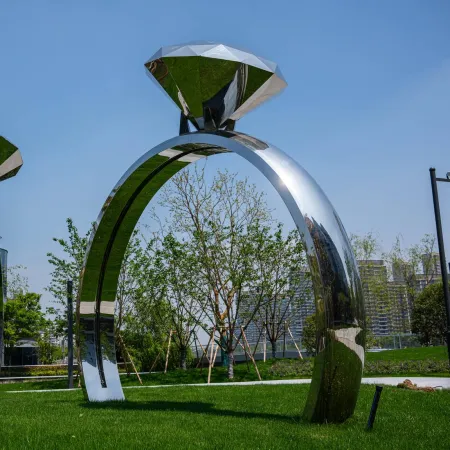
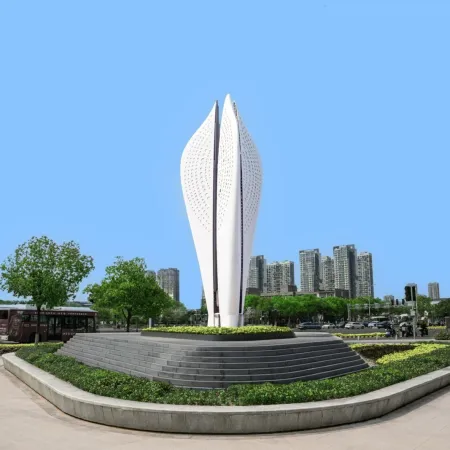
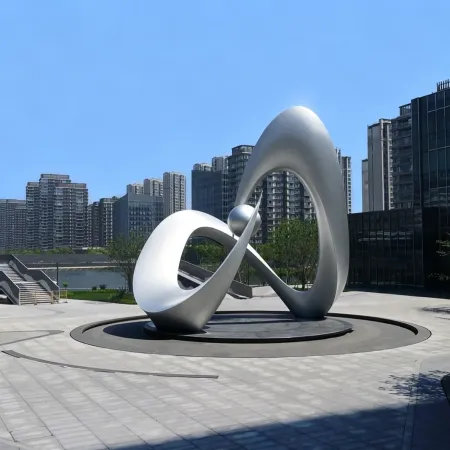
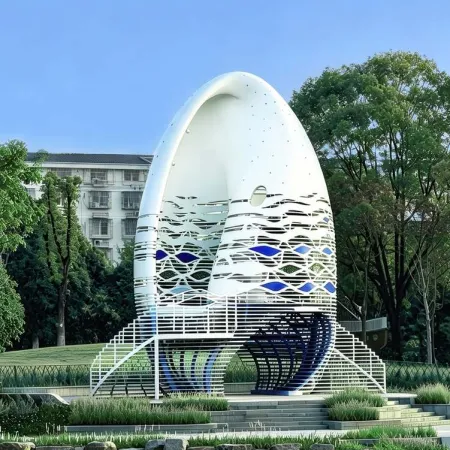
Open landscape rewards forms that respect its scale and its emptiness. A work set in a wide meadow or along a shoreline must hold its own against the horizon without shouting, which often means compositions of repetition and rhythm rather than a single shout, a line of forms that march with the land, a cluster that echoes a flock, a single element placed with perfect confidence where the land itself suggests it. The landscape context also decides the material language: weathering steel harmonises with earth tones, stainless steel catches the sky, stone sits naturally among rock and grass. The form should feel like a native response to the place.
| Landscape Setting | Artistic Response | Natural Material Partner |
|---|---|---|
| Riverfront | Flow, current and movement | Stainless steel and stone |
| Coastline | Tide, wave and salt air | Marine-grade stainless |
| Farmland | Harvest, furrow and growth | Weathering steel and timber |
| Woodland edge | Canopy, shadow and shelter | Corten and painted steel |
Working With the Landscape Architect
The best environmental landscape art is created with the landscape architect, not after them. When the art studio joins the design conversation early, the sculpture's position, scale and foundation are coordinated with the planting plan, the drainage and the sightlines, and the landscape is composed around the art as the art is composed around the landscape. Late additions, by contrast, disturb mature planting, clash with irrigation and feel bolted on. Ask any studio whether it is used to collaborating with landscape architects and whether it will join your design meetings, because that collaboration is the difference between art in a landscape and art as a landscape.
Designing With Planting, Water and Time
Living landscape changes, and environmental landscape art must be designed for that change. Planting will grow and may eventually frame, shade or partially conceal the work, so the design should anticipate the landscape at five, ten and twenty years rather than on opening day. Water features must be engineered with the site's drainage and ecology in mind, and any lighting must respect both the artwork and the landscape's night-time character. The most durable landscape works are those that embrace change, allowing moss, weather and seasonal planting to become part of their surface and their story.
- Seasonal reading: the work designed to look right in every month of the year
- Growth planning: planting maturity considered in scale and position
- Ecological care: drainage, runoff and habitat respected in the design
- Low-footprint fixings: foundations that disturb the ground as little as possible
When Landscape Art Works Best
It echoes the land rather than interrupting it
It deepens how people read the place
It is planned with the planting and water
It ages gracefully with the seasons
Material Honesty in the Landscape
Landscape materials must be honest about how they age. Weathering steel develops a stable patina that belongs among earth tones, but it must be detailed so runoff does not stain paving or water; stainless steel holds a mirror that reflects the changing landscape, but coastal sites demand marine-grade alloys; painted steel allows colour but depends on its coating system and its maintenance. The studio should show clients how each proposed material will age in their specific environment and should choose finishes that the landscape team can maintain. Material honesty is what keeps a landscape work beautiful in year fifteen, not just on opening day.
Wayfinding and Narrative in the Landscape
Environmental landscape art can carry a quieter duty alongside its beauty: helping people read the land and find their way through it. A sequence of forms can mark a path, a change of material can signal a threshold, and a sculptural element can draw visitors toward a viewpoint or a feature they would otherwise miss. When art takes on this wayfinding role, it earns its place in the landscape daily function rather than standing apart from it, and it rewards the walker who follows the forms from one discovery to the next. Narrative deepens the effect, because a landscape that tells its own story, of a river history, a community past, a coastline ecology, becomes a place people want to explore and explain to others.
Designing for wayfinding and narrative requires the studio to think like both artist and landscape interpreter, mapping the routes people take and the moments where a gesture will guide them. We develop these works with the landscape architect so the art and the planting reinforce each other, the forms leading the eye exactly where the design intends. The result is a landscape that unfolds as a story, with the sculpture as its punctuation, and visitors who leave with a sense of having discovered something. When art carries meaning in this way, it stops being an object to look at and becomes part of how people experience and remember the land itself, which is the highest purpose of landscape art.
Narrative landscape art is enriched when the studio researches the place properly, speaking with local historians, ecologists and residents rather than relying on the stories that appear in a marketing brief. A river work is stronger when it knows the river history, the floods, the trade, the songs; a coastal work is stronger when it knows the tides and the fishing families; a farm work is stronger when it knows the crops and the seasons that shaped the land. This research does not need to be academic, but it needs to be genuine, because communities detect borrowed stories instantly and honour true ones. The works that earn a place in local memory are the ones built on the place real history, told with respect and shaped into art that the community recognises as its own.
Frequently Asked Questions About Environmental Landscape Art
Should the art be designed before or with the landscape?
With the landscape. Early collaboration lets the sculpture's position, scale and foundations be composed together with planting, drainage and sightlines, producing a result that feels native rather than added. Late additions are always a compromise.
Can landscape art be interactive or functional?
Yes, where the setting allows. Works can double as lookouts, seating, wayfinding markers or wind-responsive pieces, but every function must respect the landscape's ecology and character. Not every landscape wants interaction.
What materials work best in coastal landscapes?
Marine-grade stainless steel and weathering steel tolerate salt air well, with stone excellent for mass. The key is correct specification for the actual distance from the sea, because salt attacks standard grades aggressively.
How do we protect wildlife and ecology?
By designing with the site's ecology from the start: avoiding sensitive habitats, managing runoff, choosing non-toxic finishes and planning installation to minimise disturbance. An ecological review should be part of the concept stage.
How large should a landscape artwork be?
Scale follows the distances from which people see the work, across a meadow the presence must be generous, while a piece seen close from a path can be intimate. Testing scale at the site with a mock-up is the reliable way to decide.
Environmental landscape art is at its best when it helps a community see its own land afresh, turning a familiar riverbank or hillside into a place with a story people repeat to visitors. Since 2003 our studio has created environmental art across twenty-three countries, and the landscape works we treasure most are the ones that have become part of how people describe their home. That is the ambition we bring to every landscape commission.
Tell us about your land and the story it holds, and we will show you what environmental landscape art can add to it.