How Large Scale Public Art Installation Changes a Whole District
Large scale public art installation has the power to change not just a corner of a city but the way a whole district is seen, used and remembered. When a work is large enough to command its setting, it becomes an anchor for development, a destination for visitors and a source of identity that radiates far beyond its own footprint.
This guide explains what large scale public art installation can do for a place, the engineering and logistics that make big works possible, and how clients should plan a commission whose ambition matches its scale.
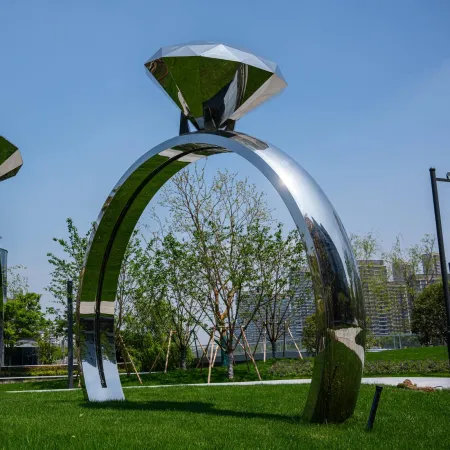
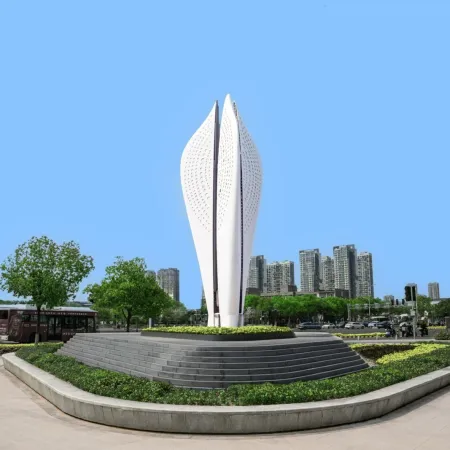
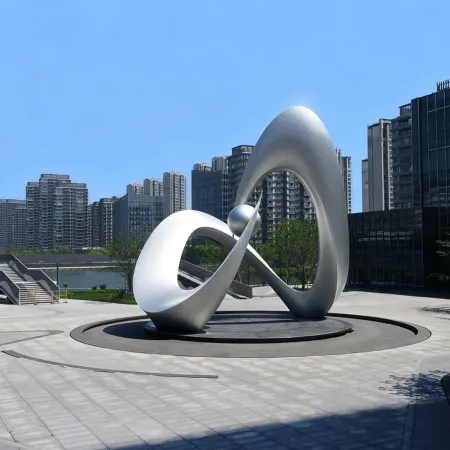
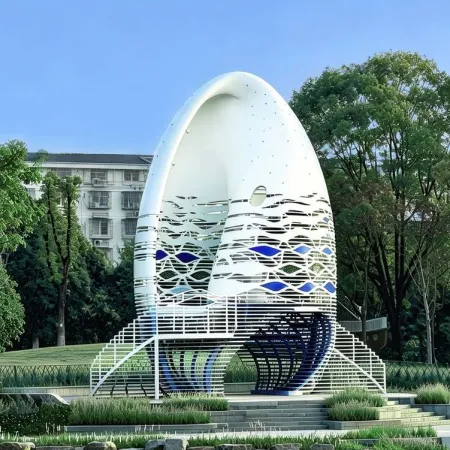
Witness the district effect of scale at Eye of the Phoenix, Wind Sail and Honeycomb Pavilion.
What Scale Unlocks That Nothing Else Can
Large scale public art installation unlocks effects that smaller works cannot approach, and the first of them is presence at the scale of the city itself. A work of sufficient size can be seen from approaching roads, from upper windows and from across a river or a plaza, entering the daily awareness of thousands who never walk beside it, and that constant presence makes the work a landmark in the truest sense. The scale also allows the work to shape the space around it, creating a gathering ground, framing a view or giving a district a vertical accent that the architecture does not provide.
Scale also changes the economics of attention. A large work is an event, reported by the media, photographed from every angle and visited deliberately rather than noticed in passing, and that attention transfers to the district around it. Developers understand this: a large scale public art installation can give a new quarter the identity that would otherwise take a generation of building to establish, and it can turn an unloved space into a destination overnight. The return is not measured only in the work itself but in the value it creates across the whole surrounding area, which is why the most ambitious urban projects now plan their large works as seriously as their towers.
Designing at the Scale of the City
Designing for large scale public art installation requires the designer to think at the scale of streets, sightlines and sky, and the discipline is different from designing an object. The work must compose with the buildings around it, holding its own against facades of glass and stone without either disappearing or shouting; it must read from the distances at which the district is first seen, whether from a highway approach, a railway line or a neighbouring tower; and it must still reward the person who walks right up to it, because a work that only works from afar is a disappointment waiting at its own base. The design must succeed at every distance simultaneously.
The studio should test the design against the real geometry of the district, using models, montages and site visits to see how the work will sit among the existing landmarks and sightlines. The scale should be chosen for the setting rather than for the record books, because a work that is merely big can overwhelm a space that needed a human presence, while a work precisely scaled to its sightlines can command a district without being the tallest thing in it. The dialogue between the work and its urban context is where large scale art is won or lost, and the studio that reads the district well will design a work that feels inevitable in it.
The Engineering of Very Large Forms
Large scale public art installation is engineering at the edge of what has been built, and every large work is a custom structural problem. The form must carry its own weight through a structure that may be invisible, resist wind loads that grow with height and exposure, and survive the seismic demands of its region, and the engineering must be performed by qualified engineers who understand both structures and sculpture. The reports they produce are not paperwork but the mathematical proof that the work is safe, and they must be shared with the client, the site owner and the authorities whose approval the project requires.
The fabrication of a very large work is equally demanding, because the sculpture must be built in sections that the workshop can handle and the road can carry, then assembled at the site with a precision that makes the joints invisible. Each section must be fabricated to tolerances that allow the whole to align, the surface treatment must be coordinated across the sections so that the finished work reads as one, and the assembly sequence must be engineered so that the structure is stable at every stage of its erection. The client should expect the supplier to present this planning openly, because the complexity of large scale work is not a secret to be hidden but a discipline to be demonstrated.
| Stage of a large work | The core discipline | What can go wrong |
|---|---|---|
| Design | Composing at city scale | A form that fights its context |
| Engineering | Structure, wind and seismic proof | Unsigned or unshared calculations |
| Fabrication | Sectional building to tolerance | Sections that will not align |
| Logistics | Transport and lifting planning | Route or crane miscalculation |
| Installation | Assembly with invisible joints | Damage at the critical moment |
Transport and Lifting: Moving the Immovable
The logistics of large scale public art installation can be as dramatic as the work itself, because moving a sculpture of many tonnes through a living city demands planning that borders on military. The route must be surveyed for bridge clearances, road widths, turning circles and weight limits; the transport must be arranged with the authorities who control the roads; and the lifting must be planned around the cranes available, their reach at the site and the access for delivering sections to the hook. Each of these plans should be written, checked and rehearsed, because a large work leaves no room for improvisation on delivery day.
The client should understand the sequence that logistics imposes. The foundation must be complete and cured before the sections arrive; the site must be prepared for the cranes and the delivery vehicles; and the weather must be watched, because wind can stop a precision lift at a moment's notice. The schedule should carry contingency for these realities, and the contract should name who bears the cost when a lift is delayed by weather or a route is blocked by events beyond anyone's control. The suppliers who deliver large works reliably are those who treat logistics as a discipline with its own timetable, and the client who respects that timetable protects the whole project.
Permission, Politics and the Public Process
A large scale public art installation is a public event, and its approval is a public process that the client should plan for from the start. The work may require planning permission, structural approval, heritage consultation and the blessing of design review panels, and each of these audiences needs to be addressed with materials that speak their language: clear images of the work in its setting, honest accounts of its materials and maintenance, and a narrative that explains what the work will mean to the district. The studio should be experienced in presenting large works to these audiences, because a beautiful concept poorly presented can fail where a modest one, well told, succeeds.
The politics of a large work also deserve honest attention. Works of this scale attract opinion, and the client should expect debate, some of it vigorous, and should have a plan for listening to it without being paralysed by it. The strongest large-scale projects are those whose process gives the public a genuine role, through consultation that shapes the brief, through transparency about the selection and the budget, and through patience while the work earns its place in public affection. The client who navigates this process with integrity gains more than permission; it gains the community's stake in the work, and that stake is what protects a large installation for the long life its scale promises.
What Scale Delivers to a District
Presence at the scale of the city itself
Identity that anchors a whole quarter
Attention that transfers to the district
A destination that draws visitors for decades
Planning the Commission and Its Budget
A large scale public art installation is a multi-year project with a budget to match, and the planning must be as ambitious as the art. The client should assemble the full picture early: the design and fabrication, the engineering, the foundations, the transport, the installation, the lighting, the insurance and the maintenance that will follow, because a large work whose budget covers only the sculpture will stall when the foundations and the cranes reveal themselves. A staged budget that matures with the design, from feasibility estimate to final quotation, keeps the client in control as the project takes shape.
The programme should be planned with the same honesty, because a work of this scale cannot be rushed without cost or risk. Realistic milestones for design, approval, engineering, fabrication, transport and installation, each with its contingency, protect the client from the surprises that ambitious projects always hold, and a client who has seen the whole map is a client who can navigate the terrain. Our studio has delivered large scale public art installation across more than twenty countries since 2003, and the projects that succeeded were those whose clients understood from the first meeting that they were undertaking a work of urban significance, to be planned, funded and stewarded with the seriousness that significance demands.
Frequently Asked Questions About Large Scale Public Art Installation
How large must a work be to transform a district?
Large enough to command the sightlines of its setting. The right scale is decided by the district's geometry and ambitions, not by size records.
What makes a large work expensive?
Materials, engineering, fabrication, transport, lifting, foundations and installation all scale with size. The budget should include every stage, not only the sculpture itself.
How is a large work transported and lifted?
In engineered sections, surveyed along a route and lifted by cranes matched to the weights and reach. The logistics are planned to the hour and coordinated with the authorities.
How long does a large-scale project take?
Typically a year or more from concept to installation, depending on approvals and complexity. A realistic programme with contingency protects the outcome.
What approvals does a large work need?
Planning, structural and often heritage approvals, plus the support of the public process. A studio experienced in presenting large works helps navigate each audience.
Large scale public art installation is one of the most powerful instruments a city or developer possesses, capable of giving a district an identity in a single stroke. Commission it with the seriousness its scale demands: a studio that designs at the scale of the city, engineers with published rigour, plans its logistics to the hour and navigates the public process with integrity. The large works that define our greatest districts were not accidents of size but triumphs of planning, craft and patience, and a large scale public art installation conceived for your place can carry that same power for generations.
Choose a large scale public art installation planned with the ambition of a whole district, and your place will be transformed by its presence.