What a Public Art Sculpture Installation Involves Beyond the Lift
A public art sculpture installation is the moment when months of design and fabrication are tested against reality, and a work that travelled beautifully can still fail on site if the foundations, the lift and the alignment are not handled with the same care as the making. The installation is not a delivery event but an engineering operation, and its success determines whether the sculpture the public sees matches the one the client approved.
This guide explains what a public art sculpture installation really involves, from the foundation that arrives first to the commissioning that finishes the job, and how to plan it so the site work is choreography rather than improvisation. Our studio has installed more than 3,000 works across 23 countries since 2003, including 47-metre structures and delicate kinetic pieces, and the practices below are the ones that make installation look easy.
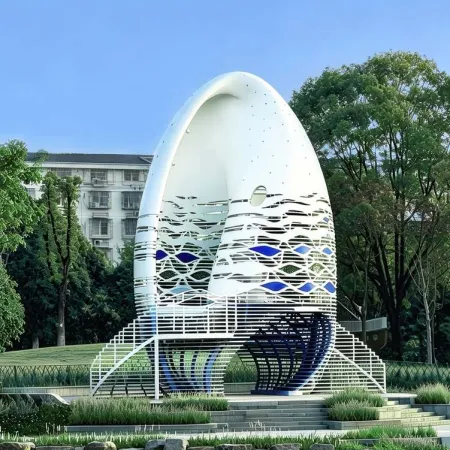
See how installation is managed through our services, the works delivered to their sites in the project gallery and a landmark that demanded careful placement like Hello Conch.
The Foundation: Where Installation Actually Begins
A public art sculpture installation begins with the foundation, often weeks before the sculpture arrives, and this is where many site schedules quietly die. The foundation design must reach the local contractor early enough for the concrete to be poured, cured and ready, with anchor positions that match the fabricated base within tolerance. If the interface drawings arrive late or the anchors are cast wrong, the sculpture sits in its crate while someone decides whether to re-pour or to modify the base.
The foundation also carries the engineering of the work. It must be sized for the actual loads, the wind overturning moment and the ground conditions, and it must be detailed so moisture cannot creep up into the sculpture's base. Experienced studios deliver the foundation package, drawings, load figures, anchor templates and grouting instructions, as part of the fabrication contract, because a foundation that is right the first time is the cheapest insurance an installation can buy.
| Installation stage | What happens | Failure if skipped |
|---|---|---|
| Foundation | Concrete poured to the drawings | Anchors that miss the base |
| Delivery | Sections arrive in sequence | Site not ready to receive |
| Lift and align | Crane places, crew aligns | Damage and misalignment |
| Fix and finish | Fixings torqued, joints closed | Loose or visible joints |
| Commission | Lighting, motion, safety tested | A work that does not perform |
Planning the Lift, the Access and the Sequence
The lift is the visible heart of a public art sculpture installation, and it must be planned with the precision of a military operation. The crane must be sized for the heaviest section at the reach required, the rigging points must be designed into the sculpture and the lifting sequence must place each section so the next can join it without rehandling. The site access must be confirmed for the crane and the delivery vehicles, and the ground must carry their weight.
The sequence is written, not improvised. Which section lands first, how it is temporarily propped, when the alignment is checked, at what point the fixings are torqued and how the joints are closed and finished, all of this belongs in an installation plan that the crew follows and the client can review in advance. On complex works we plan the installation in the same detail as the fabrication, because a sculpture assembled in the air is only as good as the order in which its parts meet.
Site Safety and the Public Around the Work
A public art sculpture installation happens in a live public space, and safety is the discipline that governs every other decision. The work zone must be secured against the public, the lifting area must be controlled and the crew must work to a safety plan that covers the crane, the rigging, the working at height and the public below. On busy sites the installation may be scheduled for hours when the space is quiet, and the plan must respect the community that lives around the work.
The client's team and the local authorities should know what the installation will involve before the trucks arrive. When a street must close, a square must be fenced or a crane must occupy a pavement, the notices and the permissions should be in place early, and the studio should coordinate the schedule with the site's other activities. An installation that respects the public's safety and the place's routines earns goodwill for the sculpture before it is even unveiled.
- Start with the foundation package, delivered early and exact.
- Write the lifting sequence so assembly is never improvised.
- Size the crane for reach, not only for weight.
- Secure the public zone around every stage of the work.
- Commission before unveiling, testing light, motion and safety.
What Planned Installation Prevents
Foundations cast to the wrong dimensions
Sections damaged in an improvised lift
A work misaligned or loosely fixed
Interactive elements that fail to perform
Commissioning, Handover and the Care That Follows
A public art sculpture installation ends with commissioning, the systematic testing that proves the work performs as designed. Structural fixings are checked to their specified torque, alignment is confirmed against the approved geometry, lighting and kinetic elements are run through their programmes, and safety systems are verified before the public is admitted. The commissioning record becomes part of the handover, giving the owner documented proof that the work was installed correctly.
The handover then passes the care to the owner. The documentation should explain the routine maintenance, the seasonal checks and the simple repairs an on-site team can make, plus the contact for specialist attention when needed. We treat the handover as the true end of installation because a sculpture is not finished when it stands, but when it will keep standing, and the owner who receives clear care documentation keeps the work beautiful for the decades it will serve the public.
Installing Kinetic and Interactive Sculptures
The installation of a kinetic or interactive public art sculpture carries duties that a static work never meets, and the crew must bring a different skill set to the site. Moving elements must be balanced and aligned so they run true, bearings must be seated and preloaded to the specification and lubrication must be applied where the design requires it. The electrical installation must be completed safely, the sensors must be calibrated to the actual conditions of the site and the control system must be configured and tested through its full programme before the public is admitted. Each of these steps has its own inspection point and its own record.
Commissioning a kinetic or interactive work is a performance test as much as a safety test. The studio should run the work through its complete cycle, verify the safety interlocks and the limits of movement, confirm the fail-safe behaviour if a sensor or a power supply fails and then observe the first public encounters to see that the interaction reads as designed. The owner's team should be trained on the daily operation, the simple checks and the first-line fault finding, so that small issues are cleared on site rather than escalating into long outages. An interactive work that is installed, commissioned and handed over properly becomes a dependable part of the city; one that is rushed into service becomes a repair ticket, and the difference is made in the discipline of the installation.
The relationship between the studio and the owner should continue past the installation day, because the first year settles the work into its life. We agree a short defects and support window with the client, during which the studio returns to adjust, to advise and to correct anything that the first seasons reveal, and we hand over the spare parts list and the contact chain so that the owner always knows whom to call. For interactive and kinetic works the first-year service is especially valuable, because the components bed in, the programme tunes itself to the site's real rhythms and the community's habits become clear. A public art sculpture installation that ends with a documented support window is not a transaction completed; it is a relationship begun, and that relationship is what carries the work through its first decade without drama.
Frequently Asked Questions About a Public Art Sculpture Installation
When does installation actually begin?
With the foundation, often weeks before the sculpture arrives, so the concrete is poured, cured and ready for the base within tolerance.
Who plans the crane and the lift?
The studio plans the sequence, sizes the crane for the heaviest section at the required reach and designs rigging points into the sculpture itself.
Can installation happen in a busy public space?
Yes, with a safety plan, a secured work zone and a schedule that respects the public, sometimes installing at hours when the space is quiet.
What is commissioning in sculpture installation?
The final testing that proves the work performs: fixings torqued, alignment confirmed, lighting and motion run and safety verified before the public is admitted.
What does the owner receive after installation?
A care handover with maintenance routines, seasonal checks, simple repairs and specialist contacts, so the work stays beautiful for decades.
A public art sculpture installation succeeds when the foundation is exact, the lift is planned, the public is protected and the commissioning proves the work before it is unveiled. Plan the site operation with the same discipline as the fabrication, and the sculpture will stand as the design promised.
If you are preparing a site for a public art sculpture installation and want a studio that treats the lift as engineering, send us your site details and we will plan the operation that delivers your work standing and commissioned.