What a Large Scale Metal Sculpture Commission Demands From Everyone Involved
A large scale metal sculpture commission is a different species of project from a modest custom piece, because at landmark scale the art, the engineering, the logistics and the budget all multiply in complexity together. A work that stands ten or twenty metres tall must be engineered like a structure, fabricated in sections, transported on roads, erected with cranes and anchored to foundations designed for its wind load, and every one of those steps can fail a project that was never planned for them. Having delivered large scale metal sculpture across twenty-three countries since 2003, I have seen the commissions that soar and the ones that stall, and the difference is almost always in the process.
This guide explains what a large scale metal sculpture commission involves and how to run one without the surprises that sink ambitious projects.
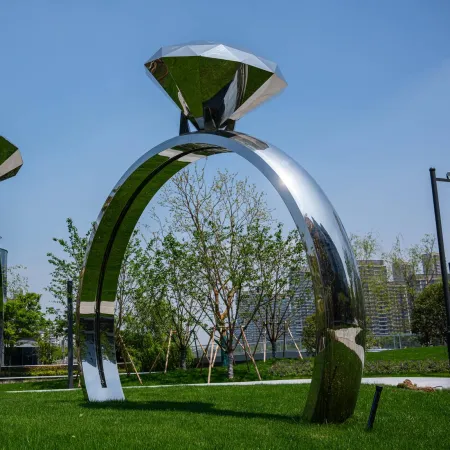
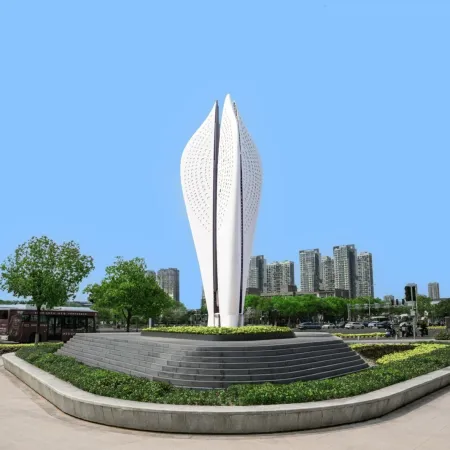
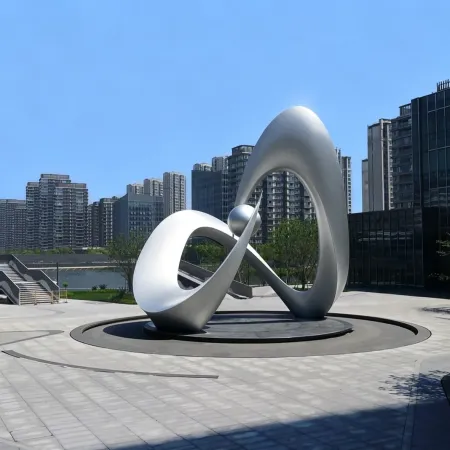
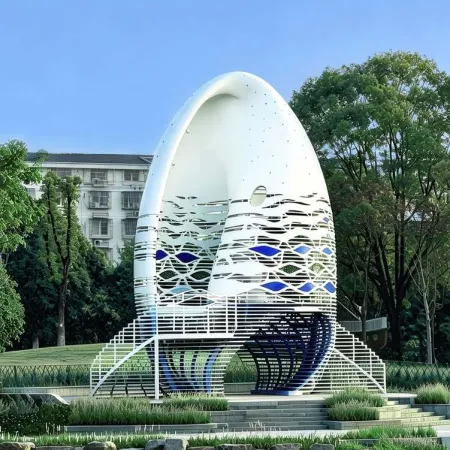
Study Heart of Changfeng as a landmark-scale civic commission, see how Zhong Gong Water Control handled narrative at monumental size, and review The Radiant Galaxy for the engineering of a large polished form.
Why a Large Scale Metal Sculpture Commission Is Different
A large scale metal sculpture commission differs from smaller work in three fundamental ways. The first is structural responsibility, a sculpture of this size is effectively a building in the public realm, subject to wind, seismic and snow loads, and it must be engineered and documented to the standards that public safety demands. The second is fabrication reality, the work cannot be built in one piece and then admired; it must be divided into sections that can be formed, welded, transported and erected, and every division is a design decision.
The third difference is the number of stakeholders. A large commission typically involves the client, the design studio, structural engineers, foundation consultants, local authorities, transport planners, installation contractors and often the community itself, and each stakeholder has approvals, constraints and schedules of their own. The studio that manages a large scale metal sculpture commission successfully is the one that treats these relationships as part of the artwork, coordinating them with the same care it gives to the form.
The Brief That Makes or Breaks the Project
Every successful large scale metal sculpture commission begins with a brief that is honest about the site and the ambition. The studio should walk the location, study how people move through it, note the sightlines from the approaches and the buildings around it, and understand what the place needs to become. The client should be equally honest about the purpose of the work, whether it is a landmark to put a district on the map, a gathering point for a new development or a symbol of civic identity, because the purpose shapes the scale and the form.
The brief must also be honest about the budget envelope and the timeline, because at this scale both are constraints that shape the art itself. A studio that understands budgets will propose forms and materials that achieve the ambition within the envelope rather than designing a dream that must then be compromised. When the brief aligns ambition, site and resources from the first meeting, the commission can move with confidence instead of lurching from crisis to crisis.
Design Development With the End in Mind
Design development for a large scale metal sculpture commission must run in parallel with engineering from the very beginning, because at this scale the structure shapes the art. A soaring cantilever, a wide span or a slender tower all demand structural solutions that influence the visual form, and a design team that ignores this will see its concept fail or its budget explode. The best large commissions are conceived as structure and sculpture together, with the engineering opening possibilities rather than closing them.
Approvals should be staged so that the client commits progressively rather than at a single terrifying moment. Concept approval establishes the direction, developed design approval fixes the form and materials, and fabrication approval locks the engineering and the section plan. Between these gates the studio should present scale models, digital studies and, where the budget allows, full-scale samples of the defining elements, so the client can feel the reality of the work before it is committed to steel.
| Commission stage | Key work | Approval point |
|---|---|---|
| Consultation | Site study, brief and budget alignment | Project brief confirmed |
| Concept development | Sketches, models and structural feasibility | Direction approved |
| Detailed design | Materials, engineering and section plan | Design fixed for fabrication |
| Fabrication and installation | Building, delivery, erection and finishing | Handover on site |
Engineering and the Reality of Scale
The engineering of a large scale metal sculpture commission is where ambition meets arithmetic. Wind loading must be calculated for the actual site and the actual form, accounting for the way large surfaces catch the wind and the way slender elements respond to it. Foundations must be designed for the local ground conditions and the overturning forces of the structure. Steel grades and connection details must be specified so that the work is safe, durable and buildable, and all of it must be documented to a standard that authorities and insurers accept.
Clients sometimes treat engineering as a bureaucratic cost to be minimised, but in a large commission it is the difference between a landmark and a liability. A studio with in-house engineering resolves the structure in dialogue with the design, so that safety is achieved without sacrificing the art. The result is a sculpture that stands with confidence in the worst weather the site will see, and documentation that gives every stakeholder, from the client to the local authority, the certainty they need to say yes.
- Engineer with the art: structure and form develop together
- Design for the journey: sections must be transported and erected
- Document everything: reports satisfy authorities and insurers
- Stage the approvals: commit progressively, not all at once
Fabrication, Transport and Installation
Once the design is fixed, a large scale metal sculpture commission becomes a logistics operation as much as an art project. Sections are fabricated to fit transport limits, finished as far as possible in the workshop and crated for the journey to the site. The studio must plan the route, considering bridge heights, road widths and turning radii, and coordinate the delivery so that sections arrive in the order the erection sequence demands. A large work that cannot reach its site is a very expensive lesson in planning.
Installation at scale demands cranes, rigging, temporary support and a crew that has done it before. Sections are lifted, aligned and joined on site, the structure is checked against its drawings, and the finishing work that must happen after assembly, welding out, polishing, coating touch-up, is completed to the same standard as the workshop finish. The studio that fabricated the work should either erect it with its own crew or supervise the local contractor closely, because the people who built the sections are the people best placed to join them true.
Budgets, Schedules and Honest Planning
Every large scale metal sculpture commission lives or dies by the honesty of its budget and schedule. The budget must cover design, engineering, materials, fabrication, finishing, transport, foundations, installation and the contingencies that large public projects always attract, and a studio that quotes only the fabrication is setting the client up for a painful discovery. The schedule must allow real time for approvals, because local authorities and community consultation do not move at the speed of a workshop.
An experienced studio will put these realities on the table in the first conversation rather than discovering them later. It will explain what the budget envelope can achieve, where the timeline has genuine risk and which decisions will affect both, so that the client can make informed choices from the start. That honesty is not pessimism, it is the professional discipline that allows ambitious commissions to be delivered, on budget, on time and to the standard the site deserves.
- Full-scope budgets: design to installation with real contingencies
- Realistic timelines: approvals need time that workshops do not
- Early risk talk: decisions and trade-offs explained up front
- Experienced coordination: stakeholders managed as part of the art
Commissioning Landmark Scale With Confidence
Art and engineering developed as one
Sections planned for transport and erection
Documentation that satisfies every stakeholder
Budgets and schedules stated honestly from day one
The Studio Behind Landmark Commissions
Yifeng Sculpture Studio has delivered large scale metal sculpture commissions since 2003, with design, engineering and fabrication integrated in our own Ningbo workshops and more than three thousand installed works across twenty-three countries. The studio's academy-trained artists and engineers develop each commission as a single creative and structural whole, and our crews carry the work from the workshop to the site, so the landmark that rises in your city square is the landmark that was approved in the boardroom.
Our international experience spans civic plazas, waterfronts, parks and cultural districts, and it has taught us to coordinate the full cast of a large commission, clients, authorities, consultants and contractors, with patience and precision. If you are planning a work that must stand at landmark scale and carry the identity of a place, we would welcome the chance to discuss it, and to show you how a large scale metal sculpture commission should be run.
Frequently Asked Questions About a Large Scale Metal Sculpture Commission
How large does a sculpture need to be to count as large scale?
There is no fixed line, but when a work must be engineered for wind and transported in sections and erected with cranes, it has entered the large scale category. These demands, not the height alone, define how the commission must be managed.
Who is responsible for the foundations?
The studio designs the structural requirements and interface details, while ground conditions are confirmed on site. In a full-scope commission the studio coordinates the foundation work with the local contractor so the anchor design and the structure match exactly.
How long does a landmark commission take from concept to installation?
Large commissions typically span many months from first consultation to handover, with design and approvals taking their own time before fabrication begins. An experienced studio sets a realistic master schedule at the start and reviews it at every gate.
Can a large sculpture be installed without closing the site for long?
Yes, when erection is planned properly. Foundations are prepared in advance, deliveries are sequenced, and the heaviest lifts are usually completed in a short, scheduled window, with finishing work continuing around the site's normal use.
What documentation do we receive with the completed work?
A complete package including structural calculations, material certificates, fabrication and installation drawings, a maintenance guide for the finishes and any warranties stated in the contract, giving the owner everything needed to care for the landmark.
A large scale metal sculpture commission succeeds when art, engineering and logistics are treated as one problem rather than three. Choose a studio that integrates them, brief it with honesty and manage the journey gate by gate, and the work will reward your site for generations.
Bring your site and ambition to our team and explore a large scale metal sculpture commission with us.