Inside an Art Installation Design Studio: How the Work Gets Made
An art installation design studio is where a public art project either finds its form or loses its way. Unlike a freelance artist working alone or a fabricator executing drawings made elsewhere, a studio brings creative direction, engineering judgment and production capability into one continuous conversation. At Yifeng Sculpture Studio that conversation has produced more than three thousand installed works since 2003, and this guide opens the door on how a studio actually functions.
Understanding how the studio works also tells you what to expect as a client: where your decisions matter, where our judgment leads, and how the two combine into a sculpture that belongs to its site for decades.
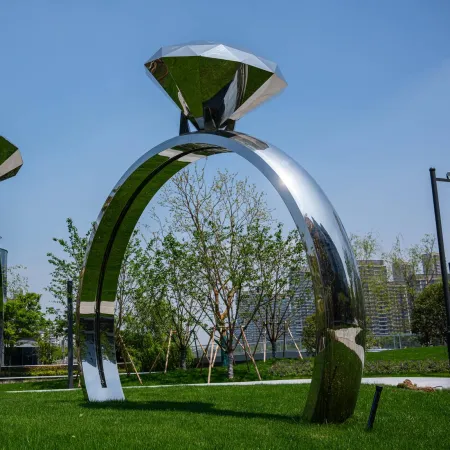
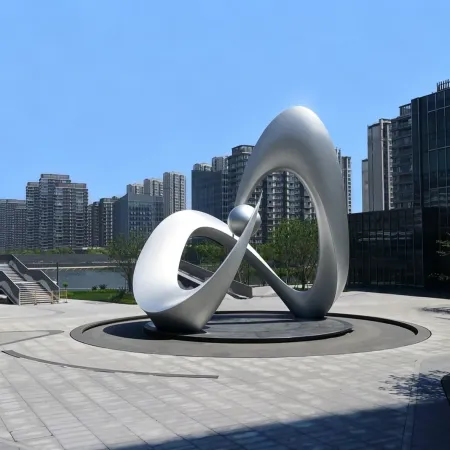
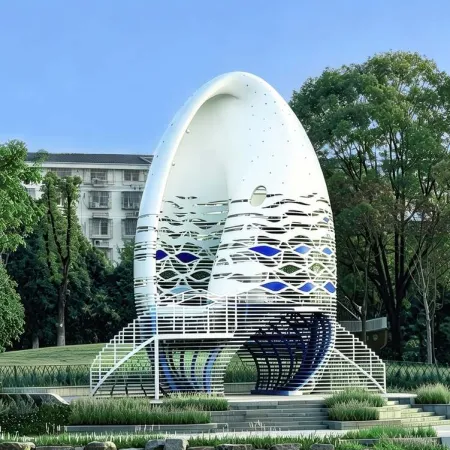
The clearest introduction to a studio is its output. Browse our project archive for the range of delivered work, our services overview for how commissions are structured, and a single case such as the Radiant Galaxy to see one design carried from concept to installation.
The People Inside an Art Installation Design Studio
A functioning studio is a team of specialists who share one vocabulary. Concept designers translate briefs into forms worth building. Structural engineers make those forms stand safely for decades in real wind and real weather. Model makers build the scale studies that catch proportion problems while they cost nothing. Welders and finishers give every surface the craft the public will touch. Project managers hold the schedule that keeps all of it honest.
What makes a studio different from a collection of freelancers is that these disciplines influence each other daily. Our engineers sit in concept reviews; our designers walk the workshop floor. The academic and institutional background of our studio, including collaborations with internationally recognized artists, feeds this internal conversation with outside perspectives that keep the work from turning inward.
Roles You Will Meet as a Client
- Design lead: owns the artistic statement and presents every concept to you personally
- Project engineer: owns the calculations, the interface drawings and the approval package
- Workshop supervisor: owns dimensional control, weld quality and finish approval
- Project manager: owns the master program and is your single point of contact throughout
How a Studio Commission Unfolds
A commission moves through four stages: consultation, concept development, fabrication and installation. The consultation is a genuine conversation — we walk your site, listen to the ambitions behind the project and write the brief down with you. Concept development then returns two or three directions, each tested against the site and each honest about how it would be built.
After the client chooses a direction, the studio's real advantage begins. The approved concept passes directly to engineering and then into our own workshop, where the same team that drew the geometry bends and welds it. Feedback that would take weeks between separate companies takes hours between adjacent rooms — and that speed is precisely what keeps a design's intent intact through production.
- Consultation and brief — site walk, ambitions written down, program dated
- Concept options — developed directions with scale studies and material direction
- Engineering and freeze — calculations issued, design locked, samples approved
- Workshop fabrication — staged reports, dimensional control, finish panels signed
- Installation and handover — supervised rigging, as-built documents, care guide
The Workshop: Where Studio Ideas Survive Contact With Steel
Every studio claims craftsmanship; the workshop is where the claim is tested. Ours carries cutting, forming, welding, finishing and quality control in-house, because each handoff to an outside supplier is a place where quality and schedule leak. Dimensional control is staged — every module measured before assembly — and finish panels in the actual alloy are approved by the client before any full surface program begins.
| Workshop Capability | What It Protects | Client Visibility |
|---|---|---|
| Cutting and forming | Geometry stays true to the digital model | Staged photo reports |
| Welding and assembly | Structural integrity and invisible joints | Inspection records per module |
| Surface finishing | Consistent finish across large surfaces | Approved sample panels |
| Quality control | Errors caught on the bench, not on site | Pre-shipment inspection welcome |
What a Studio Owes Its Clients
Design intent protected from first sketch to final bolt
Honest advice, including when a cheaper route serves the project better
Documentation that outlives the handshake: certificates, as-builts, care guide
Choosing Between a Studio, an Artist and a Fabricator
Each route suits different projects. A solo artist offers a singular voice but limited production capacity. A fabricator executes competently but does not own the design. An art installation design studio offers both a developed creative process and the industrial capability to deliver it — which is why complex public commissions, with their approvals, programs and structural demands, so often land with studios. Works like our Honeycomb Pavilion could not have been delivered by a voice without a workshop, or a workshop without a voice.
When you evaluate studios, ask to meet the team you will actually work with, walk the workshop if you can, and request references from clients whose projects resemble yours. A studio confident in its operation welcomes all three.
Culture is the invisible material of any art installation design studio. Processes can be copied; the habit of arguing honestly about a curve until three disciplines agree cannot. Our studio's culture was shaped by two decades of commissions where the public would judge the result and no revision season would follow, and by an academic environment where artists, critics and engineers have always shared the same building. That mixture produces a particular kind of confidence: the freedom to propose bold forms because the team knows it can prove them safe.
The studio model also changes how risk is distributed. In fragmented project structures, each supplier optimizes for its own slice — the designer maximizes drama, the fabricator minimizes difficulty, the installer avoids liability — and the artwork absorbs every compromise. Inside a studio, the same people carry all three interests, so the trade-offs are made in front of each other and the sculpture is the only beneficiary. Clients feel this as a certain calm in the process: fewer surprises, fewer blame conversations, more decisions made once and made well.
There is a practical way to sample this culture before committing: bring a real problem to each candidate studio and watch how the room responds. A mature art installation design studio does not promise instant answers; it promises a method — who examines the structure, who checks the fabrication path, who tells you if the timeline is wrong. The studios worth hiring are the ones that tell you useful truths before you have paid them anything.
Frequently Asked Questions About Working With a Design Studio
Do you design original work or only fabricate designs?
Both, and often in the same project. We lead original design when clients want a creative partner, and we fabricate and engineer works designed by commissioned artists with the same workshop discipline.
How is the artistic direction decided?
Through the brief and the site. The direction comes from what the place and its audience need; the client chooses between developed options, and the chosen concept is consolidated through structured feedback rounds.
What size of project do you take on?
Our portfolio runs from intimate interior pieces to city-scale landmarks over twenty meters. The common thread is not size but commitment: every commission receives the same engineering and finishing standards.
Can we visit the studio during the project?
You are welcome at defined milestones, from scale model to finishing. Overseas clients get the same visibility through scheduled photo and video reports at each stage, and a pre-shipment inspection before packing.
What makes a studio commission worth the premium?
Continuity. One team carries the artistic intent, the engineering and the fabrication, so nothing is lost between suppliers and no one can point at someone else when a question arises. That accountability is what you are buying.
An art installation design studio is, in the end, a promise that the idea and the object will match. Ours has kept that promise across more than three thousand works in over twenty countries. When your project is ready for that kind of partner, send the brief — the first conversation is where every landmark we have built began.
In our experience the studio teams that read the site first and the brief second are the ones whose works outlive both.
For clients comparing studios across borders, one further asymmetry is worth naming: the studio's relationship to its own workshop is the strongest single predictor of outcome. A studio that fabricates in-house can show you the bench where your sculpture will be built, introduce the supervisor whose name is on the quality records, and promise — verifiably — that the people who drew your curve will bend it. Studios that broker production to third parties cannot make any of those promises, only referrals. We built our practice around owning the full path precisely because clients kept arriving with stories of intent lost between companies that were each doing their own job correctly. That is the quiet promise of an art installation design studio: the idea and the object, finally, matching. None of this is accidental; it is the compounding return of twenty years spent keeping idea and object under one roof.