How Environmental Metal Art Combines Lasting Structure With Organic Form
Environmental metal art carries a paradox that makes it the backbone of public sculpture: it is the most industrial of materials and yet, in the right hands, it can mimic the softest gestures of nature, a leaf, a wave, a wing, with a permanence that organic materials cannot match. I have fabricated public metal sculpture for more than a decade, and clients are consistently surprised by how much expression steel can hold once the craft is mastered. This guide explains what environmental metal art can do, how the materials behave outdoors and how to commission metalwork that stays beautiful for decades.
We will look at the metals used in environmental work, the techniques that turn flat plate into living form, and the engineering and finishing that make metal art endure.
Our services overview explains our metal fabrication capability, the project archive shows metal works in their sites, and the Honeycomb Pavilion shows the sculptural range of engineered metal form.
The Metals Behind Environmental Metal Art
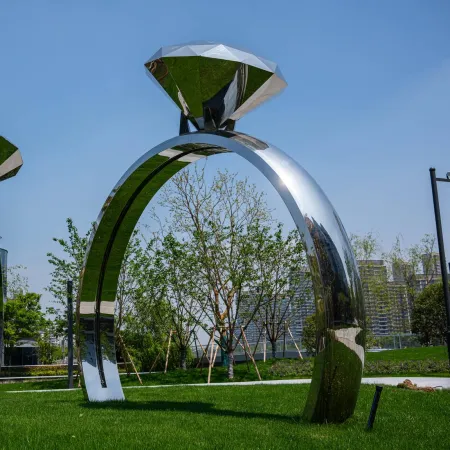
Each metal brings a distinct character to environmental metal art. Stainless steel offers the mirror that reflects the landscape and the corrosion resistance that suits almost any climate, with 304 serving most inland sites and marine-grade alloys for the coast. Weathering steel develops a warm, stable patina that belongs among earth tones and needs no painting, though its runoff must be managed. Painted carbon steel allows the full colour palette and economical large forms when its coating system is specified and maintained properly. Bronze and aluminium add their own voices, bronze warming with age and aluminium offering light weight for large structures.
From Flat Plate to Living Form
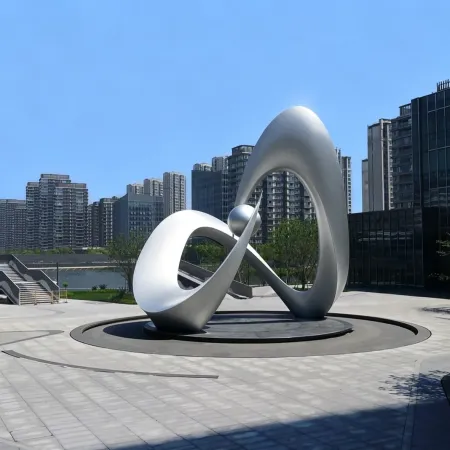
The transformation of flat metal into organic form is where craft lives. Sheets are cut, rolled, pressed and shaped into double-curved surfaces that catch light like a petal; rods and tubes are bent into rhythms that flow like a current; perforated and patterned skins cast moving shadows across the ground. The sequence of cutting, forming, welding and finishing must be planned so that each stage preserves the accuracy of the last, and the workshop's equipment determines what forms are possible. When you evaluate a studio, ask what forming capability it owns, because a workshop without rollers and presses cannot honestly promise ambitious curved metal forms.
| Metal | Character in the Landscape | Best Role |
|---|---|---|
| Stainless steel | Mirror that changes with sky and light | Modern and reflective statements |
| Weathering steel | Warm earth-toned patina that ages | Landscape and heritage settings |
| Painted steel | Full colour, bold identity | Brand and playful commissions |
| Bronze | Warms and gains depth with time | Figurative and intimate works |
Structure Hidden Inside the Form
Every environmental metal art work carries an invisible skeleton that lets the visible form stand. The engineering must resolve how the sculpture bears its own weight, resists wind on large surfaces, connects to its foundation and survives the forces of public use, and it must do all of this without betraying the art. Internal frames, stiffening ribs and hidden connections are designed so the surface stays clean and the silhouette stays true. When engineering is integrated with design from the start, the structure disappears into the form; when it is added afterwards by strangers, the art is forced to compromise.
Weld Quality and the Finished Surface
In environmental metal art, the weld is both structure and surface, and its quality decides everything. Qualified welders working to documented procedures create joints that carry the piece invisibly, while poor welds trap corrosion and leave marks that polishing can never fully erase. After welding, the surface passes through grinding and finishing stages that remove every trace of the join, leading to the final texture, mirror polish, satin brush, paint system or patina, that the public actually sees. Clients should approve finish samples on real material before full production, because the difference between finishes is impossible to judge from photographs and obvious on a sample in the hand.
- Forming capacity: rollers, presses and tooling that match the design's ambition
- Welder qualification: documented procedures and inspected joints
- Finish sequence: grinding and polishing planned so no weld mark survives
- Sample approval: real finishes approved before full production begins
What a Serious Metal Studio Shows You
The workshop and its forming equipment
Welds in progress, not only finished pieces
Material certificates and finish samples
Engineering records behind the forms
Corrosion, Coating and the Climate Question
Metal in the landscape is in a permanent negotiation with its climate, and the specification must be honest about that. Coastal salt, urban pollution, road salt in winter cities and high humidity each attack metal differently, so the alloy, the finish and the maintenance regime must be chosen for the actual site. Drainage is detailed so water never sits in crevices, dissimilar metals are separated to prevent galvanic corrosion, and coating systems are selected for the environment and applied to the correct thickness. The studio should explain how your specific climate shaped the material choices, because generic specifications are how metal art fails early.
Perforated Metal, Pattern and the Play of Light
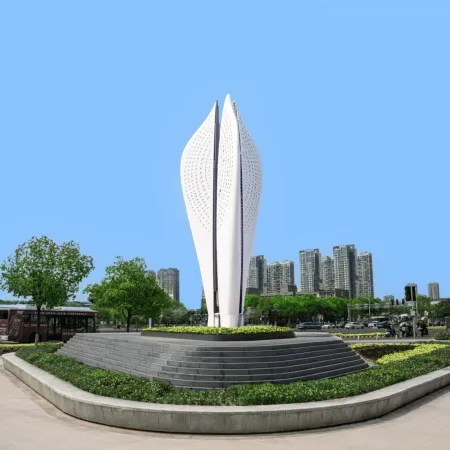
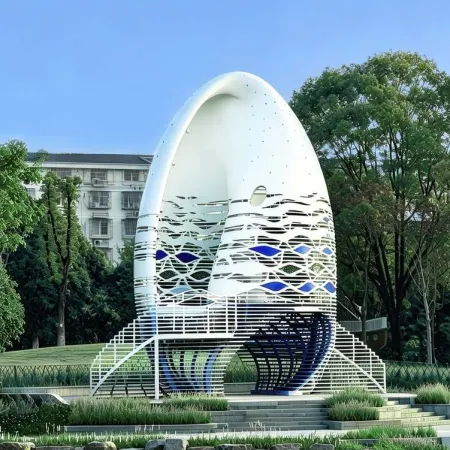
One of the most expressive tools in environmental metal art is the perforated surface, where thousands of holes turn a solid sheet into a screen of light and shadow. Perforation patterns can be designed to any rhythm, echoing leaves, scales, stars or abstract geometries, and the holes do double duty, casting dappled shadows that animate the ground beneath and allowing views and breeze to pass through the form. Large perforated canopies and screens have become landmarks in their own right, because they change with the angle of the sun and the movement of people behind them, giving the work a life that solid sheet metal cannot match. The pattern is specified with care, because hole size, spacing and sheet strength are all related, and the engineering must confirm the perforated skin still carries its loads.
Perforated metal also invites public participation in a way that solid sculpture rarely does, because people can see through it, hear through it and discover how their own movement reshapes the shadows it casts. We use perforation where a design needs transparency, texture or the poetry of moving light, and we test patterns at full scale so the client sees the real effect rather than a rendering. The maintenance story is simple, perforated stainless needs the same care as any outdoor metal, and the pattern hides minor marks better than a mirror. When metal art is given this kind of crafted detail, it rewards daily visitors with discoveries that never quite finish, and that enduring freshness is the mark of a work designed with real imagination.
Modern fabrication lets us design perforation patterns with a precision that earlier generations could only dream of, mapping the rhythm of the holes digitally and testing how the light will fall before any sheet is cut. We use light simulation to preview the shadows at different times of day, adjust the pattern density where the structure demands more strength and confirm that the perforated skin will carry its loads without visible reinforcement. The result is a surface that can be tuned exactly to its site, denser where privacy is needed, more open where views matter, patterned where the shadow play will delight. When clients see these simulations alongside real sample panels, they understand the design far better than any drawing could explain, and they approve a surface that has already been tested against the light of their own site.
Frequently Asked Questions About Environmental Metal Art
How long does metal art last outdoors?
With correct material specification, engineering and maintenance, metal sculpture is built for decades of outdoor life. The lifespan is decided by the alloy, the finish system and the detailing, which is why those decisions matter more than the form itself.
Stainless or weathering steel: which should we choose?
Choose by the visual language and the site. Stainless gives a mirror that reflects the landscape and suits modern settings; weathering steel brings an earth-toned patina that ages with the land. Both endure, but their characters are very different.
Can painted metal art be durable?
Yes, when the coating system is specified for the environment and applied properly. The durability of painted metal depends almost entirely on surface preparation and coating quality, so the workshop's finishing discipline matters more than the paint brand.
What maintenance does metal art need?
The regime depends on the finish: mirror stainless needs periodic cleaning, painted steel needs coating inspection and touch-up, and weathering steel needs mostly none beyond keeping drainage clear. The studio should hand over a maintenance guide with the work.
How do we know a studio can form complex curved metal?
Ask to see the workshop's forming equipment and past works with double-curved surfaces. Complex organic forms require rollers, presses and skilled operators, so the capability must be demonstrated, not assumed from pretty renderings.
Environmental metal art is the meeting of industry and nature, and at its best it makes steel feel as alive as the landscape it stands in. Since 2003 our studio has fabricated environmental metal art delivered across twenty-three countries, with our own workshop, qualified welders and engineering under one roof. That integration is what lets a metal form stay true from the first sketch to the final polish.
Send us your concept or your site, and we will show you what environmental metal art can become in the hands of a studio that makes metal sing.