Choosing a Marine Grade Stainless Steel Sculpture for Salt Air
A marine grade stainless steel sculpture is specified for one reason: chlorides. Salt carried in sea air, salt spray thrown by surf and salt left on surfaces by de-icing all attack the passive film on stainless steel, and the result is pitting, tea staining and eventually structural loss. The higher alloyed grades resist this far better, and on a seafront site the grade decision is the single most important material choice in the project. Getting it wrong is not a cosmetic problem; it is a slow failure that is expensive to reverse.
Yifeng Sculpture Studio has delivered coastal and marine stainless work since 2003 as part of more than 3000 pieces shipped to 23 countries, and we have seen the difference between a grade chosen for the site and a grade chosen for the budget. Marine exposure is not binary either: a sheltered harbour promenade and an exposed breakwater present very different chloride loads, and the specification should reflect that difference rather than applying one rule to every coastal project.
What Makes a Marine Grade Stainless Steel Sculpture Different
The standard grade used outdoors inland contains chromium and nickel, and it performs well where chlorides are low. Marine grades add molybdenum, which stabilises the passive film against chloride attack and raises the threshold at which pitting begins. The most widely used marine grade is 316, and higher alloyed grades are available for very aggressive exposures. The important point for a client is that the upgrade is not marketing; it is a measurable change in the alloy that directly determines how the surface behaves in salt air.
Alloy choice is only part of the answer. A marine grade stainless steel sculpture will still corrode if it is fabricated badly, because heat tint beside a weld is chromium depleted and crevices trap chlorides. Smooth surfaces, open joints, good drainage and thorough passivation matter as much as the grade, and a well detailed 316 work will outperform a poorly detailed higher alloy every time. Material and detailing must be specified together.
| Exposure | Chloride load | Typical specification |
|---|---|---|
| Sheltered harbour plaza | Moderate | 316 with a regular washing routine |
| Open seafront promenade | High, with wind borne spray | 316 or higher, smooth surfaces, frequent cleaning |
| Breakwater or pier | Very high, direct spray | Highest practical grade with the least crevices |
| Marina with boat wash | High and continuous | Marine grades plus protection of splash zones |
| Chlorinated water feature | High and constant | Marine grade with careful water chemistry control |
Detailing and Fabrication in a Salt Environment
Detailing for a marine site follows one principle: keep chlorides moving and never let them concentrate. Upward facing surfaces should be sloped so water runs off, laps should be arranged to shed rather than to trap, and joints should be wide enough to be washed and dried by the wind. Any place where salt water can sit and evaporate will concentrate the chlorides and attack the steel, and those places are always found at crevices, at the base, and behind fixings that were never designed for the environment.
Fabrication discipline matters just as much. Welds must be made to a procedure, the heat tint removed and the surface passivated so that the protective film is restored across the whole work. Carbon steel tooling must be kept away, because embedded iron particles will rust on any grade and produce the staining that owners mistake for a material failure. Where site welding is unavoidable, it should be planned for a sheltered period and the finished joint cleaned and treated immediately.
- Shed the water: slope every horizontal surface and detail the base so water cannot stand against the steel.
- Open the crevices: avoid tight laps and blind gaps where chlorides concentrate as the water evaporates.
- Passivate every weld: remove heat tint and restore the passive film so the seams are not the weak points.
- Keep iron out: dedicated stainless tooling and clean handling throughout fabrication and installation.
- Protect splash zones: give extra attention to the areas where wave action or sprinklers repeatedly wet the surface.
Marine Specification Essentials
Alloy chosen for the measured exposure, not for a general label
Smooth surfaces and open detailing that shed salt water
Welds cleaned and passivated so the film is complete
A washing routine agreed and documented at handover
Maintenance by the Sea
Maintenance in a marine environment is not optional, and it is not complicated. Fresh water rinsing removes the salt film before it can concentrate, and a mild detergent removes the atmospheric dirt that holds moisture against the surface. The interval depends on exposure, and it should be written down rather than left to judgement. On a very exposed site, monthly rinsing during the windy season may be appropriate, while a sheltered location may need only a seasonal clean.
Owners should also know what not to do. Chloride containing cleaners, bleach and hydrochloric acid based products attack the passive film directly, and abrasive pads scratch the surface and trap contamination in the scratches. Both are common mistakes made with good intentions, and both do lasting damage. A marine grade stainless steel sculpture that is cleaned correctly and inspected periodically will hold its appearance for decades, while one that is neglected will show the sea's work within a few years.
- Rinse with fresh water: the single most effective action in any chloride environment, and the cheapest.
- Clean the crevices: direct attention to joints, ledges and the base, where salt gathers and drying is slow.
- Avoid chlorides in cleaners: no bleach, no hydrochloric acid, no aggressive alkaline products.
- Inspect for early pitting: small dark spots caught early can be dressed and passivated before they spread.
- Record the routine: a written schedule and a log so the care of the work survives staff changes.
Testing and Verification for a Marine Grade Stainless Steel Sculpture
A marine grade specification is only as good as the evidence behind it, and the client should ask for proof rather than assurances. Mill certificates identify the alloy and the heat number of the material supplied, and they allow the delivered plate to be traced back to its source. Where the exposure is severe, an independent material test can confirm the composition on site, which is a small cost against the value of a coastal commission.
The finish and the coating system, where one is used, should also be verified. Salt spray and accelerated weathering tests are available for coating systems, and the results show how a surface behaves under chloride attack over a compressed period. For a marine grade stainless steel sculpture these tests are useful evidence, and a supplier who can produce them is demonstrating that the specification was considered rather than assumed.
Fabrication records matter as much as material certificates. Weld procedures, welder qualifications, heat tint removal and passivation should all be documented, because a sound alloy fabricated carelessly will still corrode. The client should be able to review those records at defined milestones, and a manufacturer confident in its process will provide them without being asked repeatedly.
Verification continues after installation. A simple inspection regime that records the condition of the surface, the base and the fixings creates a history that shows how the work is ageing, and it allows small problems to be addressed before they become visible. For a marine grade stainless steel sculpture in a demanding location, that record is the most useful maintenance tool the owner can keep.
Frequently Asked Questions About Marine Grade Stainless Steel Sculpture
Is 316 always marine grade?
Grade 316 is the common marine specification and suits most coastal work, but very aggressive exposures such as direct surf spray may call for a higher alloyed grade with more molybdenum.
How far from the sea does it matter?
There is no single distance, because wind, terrain and shelter decide how much salt actually reaches the surface, which is why we assess the specific site rather than applying a rule of thumb.
Will a coating help on the coast?
It can, provided the coating is specified for marine exposure and maintained, but a damaged coating creates crevices that concentrate attack, so many projects rely on the alloy plus cleaning.
What does early corrosion look like?
It usually appears as small dark pits or as brown tea staining running down from a contaminated area, and both are best treated as soon as they are noticed.
Can a coastal sculpture be repaired on site?
Localised pitting can be cleaned, dressed and passivated on site, and where the cause is contamination from tooling the repair is usually permanent once the source is removed.
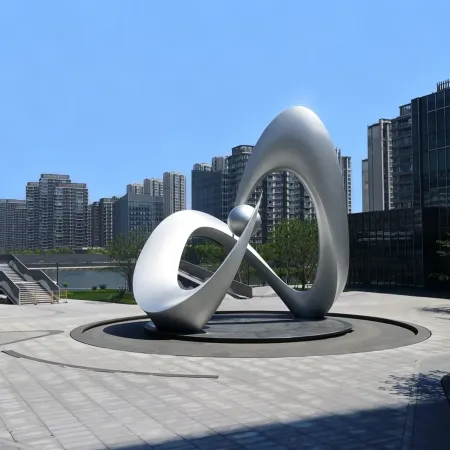
Our alloy selection and workshop practice is described in the services overview, and a stainless work engineered for an exposed setting is Wind Sail. More coastal and outdoor stainless projects appear in the project gallery.
Tell us how close the work will stand to the water and how much spray it will see, and we will specify the grade and the detailing with reasons. Specified and maintained honestly, a marine grade stainless steel sculpture holds its appearance in the most demanding environment a public artwork can face.