What Landmark Sculpture Design Must Solve Before It Becomes a City's Symbol
Landmark sculpture design carries a heavier responsibility than any other branch of public art, because the work is expected to become the symbol of its place. A landmark is not merely seen; it is used for directions, photographed by visitors, drawn by schoolchildren and reproduced in the city's marketing, and meeting that expectation demands a design that is original enough to be remembered and generous enough to be adopted by everyone.
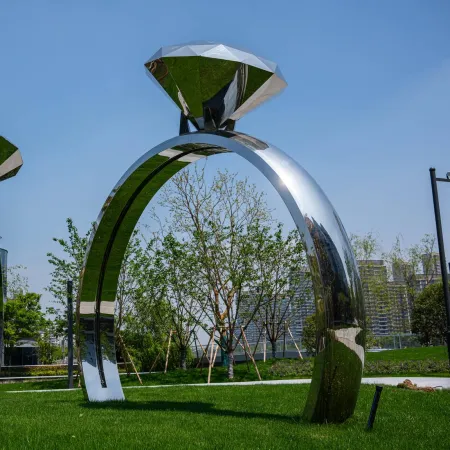
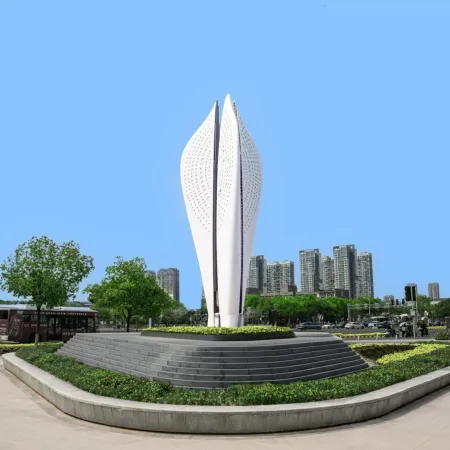
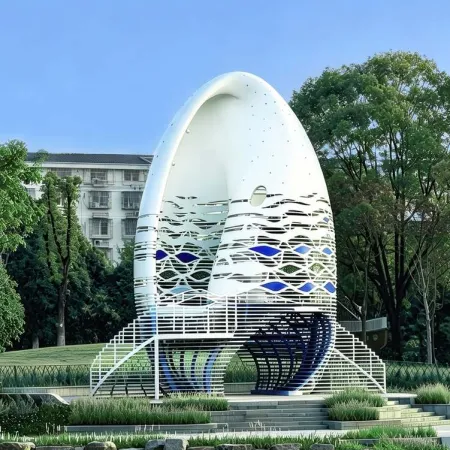
Yifeng Sculpture Studio has delivered landmark sculpture design since 2003, with more than 3000 works across 23 countries. Our landmarks such as Peach Blossom, a 20.8-metre stainless steel petal gateway, and Hello Conch, a 12.8-metre interactive destination, show how landmark ambition is resolved through serious artistic and engineering discipline rather than through size alone.
What Makes a Sculpture a Landmark
A landmark is not made by scale, because many large works are ignored while some modest works become icons. The quality that makes a landmark is memorability, the work must present a form so distinct that it can be recognised in a photograph, described in words and recalled from a single glance, and that distinctness must come from the site's own identity rather than from a borrowed motif. A landmark that could be moved to any city is a decoration; a landmark that could exist nowhere else is a symbol.
Adoption is the second half of landmark status. A work becomes a symbol only when the public takes ownership of it, using it in their directions, their gatherings and their photographs, and that adoption is earned through accessibility. The landmark must be legible from a distance, welcoming up close, photogenic from the angles people actually use and safe to approach at any hour, so the community makes it their own without being told to.
The Landmark Design Process
The table below outlines how a professional landmark sculpture design process develops a site's identity into a buildable icon. Each stage protects the ambition while proving its feasibility.
| Stage | Purpose | Critical question |
|---|---|---|
| Identity study | Discover what makes the place distinct | What story can only this site tell? |
| Concept competition | Generate radically different landmark ideas | Which form deserves to be the symbol? |
| Scale and context | Test the work against real sightlines | Does it dominate without overwhelming? |
| Engineering | Make the icon physically certain | Will it stand for fifty years of weather? |
| Public review | Earn the community's adoption early | Will the people make it theirs? |
Scale, Sightlines and the Skyline
Landmark sculpture design lives or dies by its relationship to distance. The work must be composed for the long view, where it joins the skyline, the approach view, where it announces itself to arrivals, and the close view, where it must reward the visitor who walks right up to it, and each distance demands different decisions about mass, detail and silhouette. A form that is pure and bold at a distance may feel crude up close, while a form rich in detail may vanish entirely from the highway.
The designer must therefore study the actual sightlines of the site, from the roads, the approaches, the neighbouring towers and the gathering spaces, and test the proposed form against each. We build these studies into the landmark process with digital site models and physical scale tests, so the client can see how the work will enter the city's visual life before committing to its construction.
Engineering the Impossible-Looking Form
Landmark ambition usually produces forms that look impossible, and the engineering of landmark sculpture design is the art of making them certain. Long cantilevers need hidden counterweight and tuned stiffness; tall slender forms need foundations and dynamics that resist wind; open structures need connections that carry load without visual clutter; and every element must survive the site's weather for a life measured in decades. The engineering is most successful when it is invisible, letting the pure landmark form appear effortless.
The structural analysis is not a formality but a creative partner, because it reveals what the form can become. Understanding the load paths lets the designer push a canopy further, lighten a petal, thin a column or extend a wing, and the most memorable landmarks are usually the ones whose ambition was refined, not reduced, by engineering. See how that dialogue produced the 20.8-metre gateway of Peach Blossom and the engineered sails of Sailing Competition in our project gallery.
What a Landmark Client Should Demand
- Originality with evidence: the concept should be provably unique to your site and story, not a variation of a famous work seen elsewhere.
- Context studies you can read: the scale and sightline analysis should be presented clearly, so you judge the landmark as the public will see it.
- A proven monumental record: the studio should show large delivered works and explain the engineering challenges they overcame.
- Public adoption thinking: the design should consider how people will photograph, gather at and navigate by the work, because adoption makes the landmark.
- A maintenance and lighting plan: a landmark shines at night and is maintained for decades, so both plans should be designed in from the start.
A client who tests these demands selects a studio capable of landmark thinking, which is a different discipline from making large objects.
What Landmark Sculpture Design Provides
A form only your site could have produced
Memorability that survives a single glance
Public adoption through accessible, photogenic presence
Engineering that makes the impossible form certain
The Responsibilities of Creating a Symbol
Landmark sculpture design carries a civic responsibility that the studio must honour, because the work will represent its place to visitors and to the future. The concept should be tested against the community's values, the approval process should give the public a genuine voice, and the completed work should be documented, lit and maintained so it can fulfil its role for generations. A landmark that is neglected becomes a sad symbol of neglect, while one that is cared for becomes a source of pride that grows with time.
We treat every landmark commission as a trust placed in us by a place and its people. The services we bring to that trust, from identity study through engineering to installation and the care handover, are set out on the services overview, and the outcomes are visible in the landmarks our communities now navigate by and photograph. When landmark design is done with that sense of responsibility, the sculpture stops being an object and becomes part of the place's identity, which is the only true measure of success in this demanding discipline.
The Story a Landmark Tells About Its Time
Every landmark is a record of the moment that made it, and landmark sculpture design should accept that responsibility with honesty. The materials, the form and the technology of a landmark speak of its era, and the work will be read by future generations as evidence of what this community valued and could achieve at this moment in its history. That awareness should temper the design, pushing it toward the timeless qualities of strong proportion and clear meaning rather than toward the merely fashionable, so the work speaks truthfully of its time without being trapped by it.
The story the landmark tells is also the story the community chooses to tell about itself. A gateway can announce that a district is open and ambitious, a memorial can say that a community remembers, and a civic symbol can declare the values a place wants to live by, and each declaration is a choice the design makes visible. We help clients make that choice deliberately, articulating what the landmark should say before we shape how it should look, because a symbol that has not decided its message will speak confusingly for generations. A landmark that knows its story becomes a teacher of that story to everyone who passes.
Frequently Asked Questions About Landmark Sculpture Design
What is landmark sculpture design?
The discipline of designing a public sculpture intended to become a place's symbol, balancing memorability, site identity, scale and engineering certainty.
Does a landmark have to be very large?
No, memorability and public adoption make a landmark, not size alone; many iconic works are modest while some vast works are ignored.
How do you test a landmark against its site?
Through digital site models and physical scale studies that place the form in the real sightlines from every approach and distance.
What engineering is needed for a landmark?
Foundations, wind and dynamic analysis, load-path design and durable connections, all engineered invisibly so the pure form appears effortless.
How do communities come to adopt a landmark?
Through legibility, accessibility and photogenic presence that make the work useful for directions, gatherings and photographs until it becomes theirs.
Landmark sculpture design is the discipline of giving a place a face, a form so distinct and so generous that the community makes it their own. Choose a studio with proven monumental delivery, real site-study discipline and a sense of civic responsibility, and your landmark will be the symbol your place deserves.
If your place is ready for a symbol of its own, tell us its story and show us its site, and we will show you what landmark sculpture design can make of both.