How a Metal Sculpture Company Chooses the Right Metal for Your Work
A metal sculpture company is only as good as its material logic, because metal is not a single material but a family of alloys with different characters, costs and lifetimes, and choosing wrongly condemns a work to a decade of avoidable maintenance. The studio's first duty is therefore to match the metal to the meaning, the site and the budget with complete honesty.
Yifeng Sculpture Studio has worked as a metal sculpture company since 2003, delivering more than 3000 works across 23 countries. Our team brings together sculptors trained in the traditions of the China Academy of Art, the Academy of Arts & Design at Tsinghua University and the Royal Society of Sculptors with engineers who understand the metallurgy, welding and finishing of every alloy we use in our own workshop.
See the range of metal work in our project gallery, review the fabrication services on the services overview, and study a metal commission such as Butterfly Dance, a 10-metre cut-metal and light sculpture that shows how material and engineering carry a concept.
The Metal Family and What Each Alloy Offers
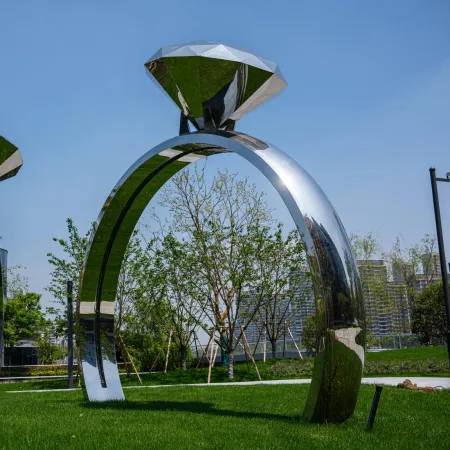
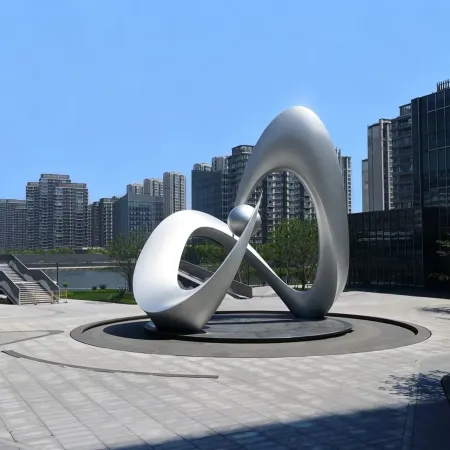
Every serious metal sculpture company is fluent in the full family of sculptural metals. Stainless steel brings mirror reflectivity and corrosion resistance; weathering steel develops a warm, stable rust that roots a work in landscape; mild steel accepts paint and offers economical formability; aluminium gives lightness for large and kinetic forms; bronze and copper carry tradition and rich patinas; and corten and galvanised steel serve specific structural and environmental needs.
The choice is never purely aesthetic, because each metal carries structural, budgetary and maintenance consequences that the client will live with for decades. A mirror stainless landmark demands skilled polishing and careful handling; a weathering steel work must be designed so rust run-off does not stain its surroundings; and a painted mild steel piece needs a finish system matched to its environment. The studio's job is to make these trade-offs visible and choose the alloy that serves the concept best.
Choosing Metal for the Site and the Concept
The table below shows how a metal sculpture company typically matches metal to site conditions and artistic intent, so a client can understand the logic behind the recommendation.
| Metal | Character | Best suited to |
|---|---|---|
| Stainless steel | Mirror or satin, corrosion-resistant, low maintenance | Landmarks, coastal sites, reflective concepts |
| Weathering steel | Warm rust patina, stabilises with age | Landscape, heritage and natural settings |
| Mild steel painted | Full colour range, economical, formable | Playful, branded and architectural colour works |
| Aluminium | Lightweight, corrosion-resistant, versatile | Large, kinetic and suspended works |
| Bronze | Timeless cast weight, rich patina tradition | Memorial and institutional commissions |
Welding and Fabrication as the Core Craft
The character of a metal sculpture company is written in its welds. A weld that is ground invisible on stainless, feathered smoothly on painted steel or left confidently as texture on weathering steel is the signature of a maker who understands both the metal and the design. Welders must control heat to prevent distortion and metallurgical damage, sequence their work to hold the geometry, and know when a joint should be continuous, intermittent or reinforced.
Fabrication quality extends beyond the weld to every operation that shapes the metal. Cutting must be clean and accurate; forming must respect the material's limits; edges must be finished to match the concept; and the whole assembly must be checked against the approved geometry before finishing begins. A workshop that opens its doors to clients shows confidence in this craft, and a metal sculpture company that hides its floor is asking you to trust what it will not show.
Finishing Systems and Long-Term Protection
The finish is the contract between the metal and its environment, and a serious studio specifies it with the same care as the alloy. Painted systems are built in layers, from surface preparation through primer to topcoat and clear protection, because any gap in the chain lets corrosion start beneath the visible surface. Stainless finishes range from brushed to full mirror, each demanding its own polishing discipline; weathering steel is left to develop its protective patina with the design managing where water runs.
The studio should also design the work so its finish can survive real life: drainage details that prevent water pooling, joints that shed moisture, and surfaces that can be cleaned and maintained without special equipment. These quiet decisions determine whether a metal sculpture still looks proud in year fifteen or begins to show rust, fade and staining, and they are the difference between a work that was finished and a work that was merely painted.
Structural Engineering for Metal Forms
Metal sculpture is structure as much as surface, and a metal sculpture company must engineer what it builds. The studio calculates the loads on the actual form, sizes the internal frame or shell thickness accordingly, verifies wind and foundation behaviour and designs connections that will not fatigue. For cantilevered, kinetic or monumental works this engineering is the difference between a confident landmark and a liability.
The hidden structure must serve the visible form without betraying it. Armatures hide inside volumes, ribs stiffen shells invisibly, and foundations transfer loads without disturbing the surrounding paving or planting. When art and engineering are integrated from the first sketch, the client receives a work whose beauty is not compromised by its safety, and whose safety is not an afterthought to its beauty.
How to Choose a Metal Sculpture Company
- Material reasoning: does the studio recommend a metal because it fits your site and concept, or because it is what they usually fabricate?
- Workshop visit: see the welders, the finishing benches and the work in progress; real craft is visible, not promised.
- Finish specification: ask for the full coating or polishing system in writing, not a vague promise of quality.
- Engineering proof: request structural calculations and foundation data for monumental or unusual forms.
- Aged evidence: look at works the studio made years ago to see how its metals, finishes and structures have truly behaved.
A client who chooses a metal sculpture company on these criteria is buying a partner who thinks in decades, which is exactly the time scale metal sculpture deserves.
Metal Sculpture Across Borders and Climates
Metal works travel well when they are designed to travel, and our delivery to 23 countries has refined the discipline. Alloys are chosen for the destination climate, finishes are specified for the real environment, sections are planned to fit shipping envelopes and the client receives installation drawings and care guidance that keep the work protected in its new home. Export packing is handled in-house by specialists who know how to move monumental metal without damage.
The handover includes the knowledge the client needs for the sculpture's whole life: how to clean the finish, which products are safe, what to check each year and how to repair minor damage before it spreads. A metal sculpture company that teaches its clients to care for the work is protecting its own reputation, because a metal sculpture that still shines a decade after delivery is the strongest possible evidence of the studio's craft.
The Studio That Masters Metal
Metals chosen for the site, not for convenience
Welds controlled, inspected and made honest
Finish systems specified in writing and built in layers
Structures engineered to stand for decades
Frequently Asked Questions About a Metal Sculpture Company
What is a metal sculpture company?
A studio that designs, engineers and fabricates sculpture in metal, mastering alloy selection, welding, finishing and structural design across the full family of sculptural metals.
Which metal is best for outdoor sculpture?
There is no single answer; stainless suits reflective coastal works, weathering steel suits natural landscapes and painted mild steel suits colourful concepts, so the best choice depends on the site.
How long does a metal sculpture last?
With the correct alloy, finish system and structural design, a metal sculpture is expected to serve for decades, and the studio's engineering and finishing choices determine that lifetime.
Can metal sculpture be painted any colour?
Painted mild steel accepts the full colour range, while stainless and weathering steel are usually valued for their natural surfaces; the choice depends on the concept.
How do I maintain an outdoor metal sculpture?
With periodic cleaning matched to the finish, following the studio's guidance, plus annual checks for drainage, fasteners and any damage that should be repaired before it spreads.
A metal sculpture company is the partner who turns the family of metals into the right material for your meaning and your site, and who welds, finishes and engineers it to stand for decades. Choose a studio that reasons about alloy, opens its workshop, specifies its finishes in writing and proves its work with aged evidence, and your metal sculpture will repay the choice every year it stands.
If you are imagining a work in metal and want to know which alloy will carry it best, tell us about the site and the concept, and we will show you how a metal sculpture company would choose, build and finish it.