How a China Public Art Projects Company Manages Cross-Border Commissions
A China public art projects company becomes valuable to an overseas client only when it can manage the distance, the language and the quality gap between a studio in Ningbo and a site in another country. Distance is not a problem in itself; unmanaged distance is. The studio that runs disciplined cross-border workflows delivers work that matches the approved design, while the studio that treats export as an afterthought produces surprises that surface on the far side of the ocean.
This guide explains what overseas buyers, designers and developers should expect from a China public art projects company, how to structure a cross-border commission so that quality survives the journey, and which evidence separates a genuine studio from a trading desk. We write from our own experience carrying public commissions across more than twenty countries since 2003.
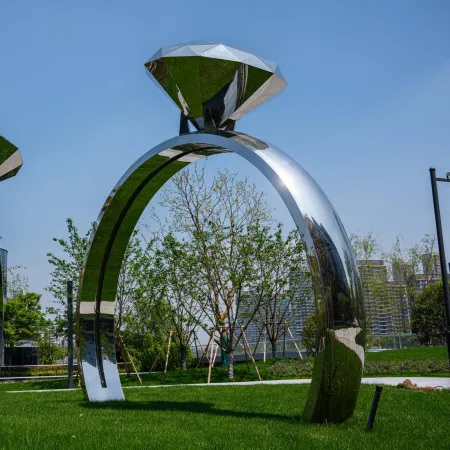
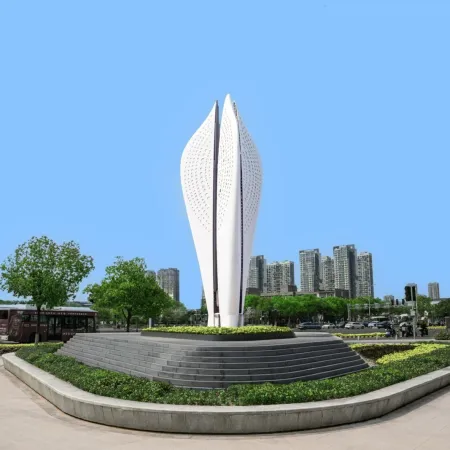
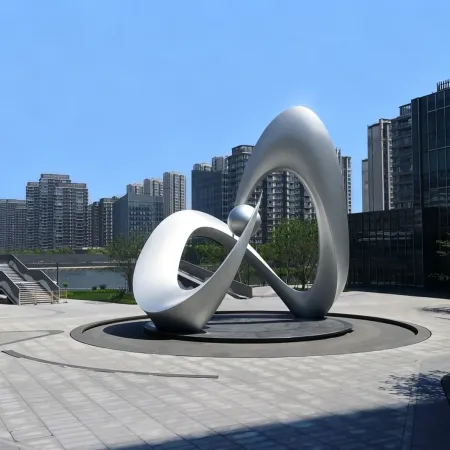
See how cross-border delivery works in practice through our project gallery, the range of services we offer and a landmark installation such as Heart of Changfeng.
What an Overseas Client Is Really Buying
When you commission a China public art projects company from abroad, you are not buying steel, stone or labor rates; you are buying certainty that a complex public work will be conceived, engineered, fabricated and delivered to your specification on a site you may visit only once or twice. The physical object is only the visible fraction of what a cross-border commission contains. Beneath it sits the engineering that keeps the work safe in your wind zone, the finish systems that survive your climate, the packing that protects it across a shipping route of thousands of miles, and the documentation that lets your local engineers, crane crews and inspectors install it without the designer in the room.
This is why the strongest question an overseas client can ask is not about price but about process. How will the studio verify the site when it cannot stand on it? How will it confirm the structural conditions, the wind exposure and the foundation design with engineers in your country? How will it communicate progress in your time zone and your language? How will it handle revisions when the design authority sits thousands of miles away? A China public art projects company that answers these questions with documented procedures is offering you the thing you actually need; a company that answers with slogans is offering you a gamble.
Verifying the Studio Behind the Website
The first task of any overseas buyer is to separate real studios from intermediaries. A genuine China public art projects company owns a workshop, employs its own fabricators and engineers, and can show you its floor, its equipment and its people rather than a catalogue of borrowed photographs. Ask for a live video walkthrough of the workshop; ask for the names of the project managers who would carry your work; ask for references from clients in your region who can confirm that the delivery matched the drawings. A studio that has shipped public works across borders will have a trail of shipping documents, customs records and installation reports, and it will offer them freely.
The ownership question matters more than it appears. When the same company that quotes your work also cuts your steel, welds your seams and packs your crates, the incentives line up: quality problems are caught on its own floor rather than argued about across a supply chain. Intermediaries can assemble a credible-looking quote and then disappear behind a subcontractor when something goes wrong. For public art, where safety documentation and long-term durability are part of the deliverable, that difference is decisive. Verify the workshop, verify the people and verify the paper trail before you commit to any cross-border partner.
| Checkpoint | What to ask | What a real studio shows |
|---|---|---|
| Workshop | Can we see your floor live? | Owned fabrication facility with its own crew |
| Team | Who manages our project? | Named project manager and engineer |
| References | Clients in our region? | Contactable overseas references |
| Paper trail | Proof of past shipments? | Shipping, customs and installation records |
Engineering That Travels Well
Public art must be engineered for the site where it will stand, not for the country where it was made, and this is where cross-border projects most often fail. A China public art projects company with real export experience will not assume that the conditions in Ningbo apply to your site. It will ask for the local wind and seismic data, it will design the structural system to the code that governs your jurisdiction, and it will have its calculations reviewed by engineers who are qualified in your market or who coordinate with your local engineer of record. Ask directly how the studio handles this handover, because the answer reveals whether it has ever delivered a serious public work abroad.
Materials and finishes must also travel well. The stainless steel specified for your coastal city must resist a different salt load than the same grade inland, and the coating system that suits a dry climate may fail in a humid one. The studio should specify grades such as 304 or 316 stainless steel according to the site environment, prepare the surfaces for the shipping route and the installation phase, and document the finish system so that your local team can maintain it over the decades a public work is expected to last. Ask for the material specifications of delivered cross-border projects and check that they were adapted to the destination rather than copied from a domestic template.
The Cross-Border Process We Rely On
A disciplined China public art projects company runs every commission through a fixed sequence that keeps the distance from becoming a risk. The sequence begins with consultation, in which the studio gathers the site conditions, the design intent and the approval context before a single line is drawn. It moves to concept development, where the design is resolved in drawings, renders and material studies that the overseas client can review against the real site. It continues through fabrication, where the studio's own workshop builds the work under the inspection regime agreed at the start, with progress documented in photographs and video that cross the ocean in real time. It ends with installation, where the studio either sends its own team or works remotely with the client's local contractor through detailed installation drawings and live support.
Within that sequence, three practices protect the overseas client most. First, an agreed approval gate after each phase, so that design changes happen on drawings rather than in steel. Second, a written inspection and testing plan that names the checks, the standards and the documentation for each stage of fabrication. Third, a packing and shipping plan designed for the specific route, with the crating, the lifting points and the handling marks specified for the ports and the transport legs your work will pass through. None of these practices is glamorous, and all of them are what separates a cross-border commission that closes cleanly from one that unravels at the dock.
- Agreed approval gates after consultation, concept and fabrication so changes stay on paper.
- Written inspection plans that name the checks and the standards for every stage.
- Route-specific packing with crating and lifting points designed for your shipping legs.
- Live progress evidence in photographs and video during fabrication.
- Installation handover with drawings, support and a documented care plan.
Why Clients Commission Across Borders
A studio with real export experience
Engineering adapted to the destination site
Owned workshop with quality under one roof
A process that closes cleanly at the site
Communication Across Time Zones and Languages
The quality of a cross-border commission often tracks the quality of its communication more closely than the quality of its steel. A China public art projects company that serves overseas clients seriously will assign an English-speaking project manager who owns the relationship from the first inquiry to the final installation report, rather than scattering your project across departments that each hold a fragment of the context. It will agree on a communication rhythm, weekly updates at a minimum during fabrication, with photographs, milestone reports and issues surfaced early rather than discovered late. It will write its documentation in your language and your units, from the concept presentation to the structural notes to the installation manual.
Time zone overlap deserves real thought. If your site is in North America, a studio that can hold working calls in your morning hours without making every meeting a hardship is a studio that has built its process around export rather than treating it as occasional. Ask how meetings will work, how revisions will be tracked and who answers when a question arrives from your engineer at the end of your day. Small answers to these operational questions predict large outcomes at the site, because every miscommunication that is caught early costs a document, and every one that is caught late costs steel.
Delivering and Installing on Foreign Ground
The final test of a China public art projects company is what happens when the work reaches your site. Serious studios prepare installation as carefully as they prepare fabrication: the work is engineered in sections that suit the transport and the site access, the connection details are resolved so that assembly on foreign ground is guided rather than improvised, and the installation drawings show the sequence, the lifting plan and the tolerances that your local crew needs. If the studio sends its own installation team, that team should carry the documentation and the tooling to finish the job. If the work is installed by a local contractor, the studio should support that contractor remotely through every stage until the work is standing and signed off.
After installation, the deliverable should include the care package: the material specifications, the maintenance schedule and the contact for future support, all written for the team that will look after the work for decades. A studio with more than twenty years of export experience understands that a public work is a long relationship, and the documentation it leaves behind is part of the work itself. When the studio treats the handover as the beginning of the work's public life rather than the end of the sale, the overseas client receives not just a sculpture but a partner for the life of the piece.
Frequently Asked Questions About Choosing a China Public Art Projects Company
How do I verify a studio across the distance?
Ask for a live workshop walkthrough, named project staff, contactable overseas references and the shipping and installation records of delivered cross-border projects.
Who engineers the work for my country's code?
A serious studio designs to the conditions of your site and coordinates with engineers qualified in your market or with your local engineer of record.
What protects me during fabrication?
Approval gates after each phase, a written inspection and testing plan, and live progress evidence in photographs and video throughout the build.
How is installation handled abroad?
Either the studio's own team installs the work or a local contractor is guided through detailed drawings and live remote support until sign-off.
What should the final handover include?
Material specifications, a maintenance schedule, installation documentation and a support contact, all written for the team that will care for the work.
A China public art projects company earns its place in an overseas commission through process, not promises: verified workshops, engineering adapted to the destination, disciplined approval gates, clear communication and a handover that prepares the work for decades of public life. The studio that can show evidence of all five has built its operation around export, and that orientation is the single best predictor of a cross-border project that closes cleanly. Ask the questions in this guide before you commit, and choose the partner whose answers are backed by delivered work rather than by assurances.
Start your cross-border commission with a China public art projects company that treats the distance as a design problem to be solved, and your work will arrive as designed, stand as engineered and live as long as your city expects.