What a Public Metal Monument Brings to Modern Commemoration
A public metal monument belongs firmly to the modern age of commemoration: stainless steel, weathering steel, aluminium and painted steel have extended the language of memorial sculpture far beyond the bronze tradition, allowing forms that are larger, lighter, more structural and more brilliant than casting alone could achieve. The material is chosen for what it says as much as for how it lasts, and each metal carries its own voice.
This guide explains the metals available for a public metal monument, the qualities and honest limits of each, the fabrication and finishing standards that decide whether the work stays beautiful, and how to specify a metal monument that will stand in public weather for generations. We have designed and fabricated metal landmarks across 23 countries since 2003, and the material guidance below comes from works that have weathered real coastal, desert and alpine sites.
See metal work in every finish in the project gallery, the fabrication services behind it in our services overview and a kinetic metal landmark such as Butterfly Dance.
Why Metal Has Become the Language of the Modern Monument
The rise of the public metal monument tracks the rise of modern architecture, because metal is the material of the contemporary city and a monument built in it belongs naturally to its context. Steel can span and cantilever in ways that stone and bronze cannot, freeing designers to create open, soaring, seemingly weightless forms that read as pure gesture against the sky; its strength-to-weight ratio allows sections that can be shipped and lifted where a stone monolith of the same presence could not travel; and its surfaces, mirror, satin, rust or paint, give the designer a palette of finishes that catch light, reflect the city and change with the weather.
Metal also suits the way modern communities commemorate. A contemporary memorial often wants to be open, approachable and integrated with daily life rather than raised on a plinth and fenced off, and metal structures can create gathering places, canopies, arches and walkable forms that invite the public in while still carrying the commemorative content. The material's engineering character, its honesty about structure, its industrial memory, also carries meaning for stories of labour, industry, science and progress, giving the designer a symbolic vocabulary that bronze cannot speak.
Choosing Among the Metals for Your Monument
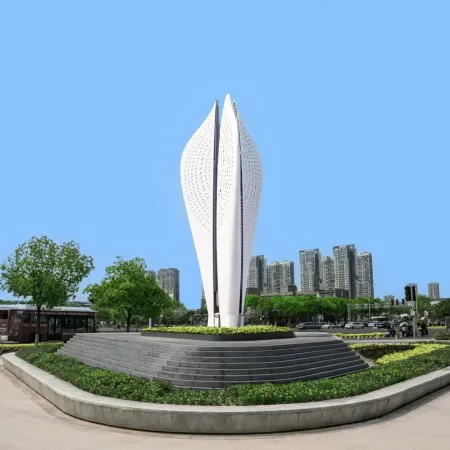
Each metal available for a public metal monument brings a different character and a different maintenance story, and the choice should follow the meaning of the work, the climate of the site and the care the owner can provide. Stainless steel, in grades such as 304 and 316, offers brilliance and the lowest maintenance of all, with 316 preferred for coastal and de-iced environments; weathering steel develops a stable protective rust that needs no painting and speaks of age and endurance, though it stains surrounding surfaces unless detailed; aluminium is light and corrosion-resistant for large or moving structures; and painted or powder-coated carbon steel gives the widest colour palette at the price of periodic recoating.
The studio should present the honest trade-offs rather than a single recommendation, because the right metal is the one the owner can maintain. A mirror stainless work in a coastal city demands a grade that resists pitting and a regime for washing off salt; a weathering steel work over a light-coloured plaza needs drip detailing or it will paint the paving with rust; a painted steel monument in an industrial atmosphere needs a coating system specified for that environment and a recoating schedule. When the client understands the material's full story, the choice is informed; when the client is told only the romance, the maintenance arrives as a surprise.
| Metal | Character | Watch out for |
|---|---|---|
| Stainless steel | Brilliant, low maintenance | Grade and finish must suit the climate |
| Weathering steel | Rust that protects, ages well | Staining of paving and adjacent surfaces |
| Aluminium | Light, corrosion resistant | Dissimilar-metal contact corrosion |
| Painted steel | Full colour palette | Periodic recoating is unavoidable |
| Bronze | Classical warmth and patina | Higher cost, traditional presence |
Fabrication Standards That Decide the Result
The beauty of a public metal monument is made or broken in fabrication, because metal hides its mistakes in ways that only time reveals. Welds must be made by qualified welders using the correct process and gas shielding, then ground and blended until invisible in the finished surface; large plates and sections must be formed and stiffened so they do not distort, oil-can or drum in the wind; and the finish, whether mirror-polished, satin-brushed, blasted or painted, must be applied consistently and protected from fabrication damage to the last bolt. The client should audit the workshop's weld quality, its distortion control and its finishing bay before committing.
The specification should name the grades and the standards rather than leaving them to habit. The stainless grade, 304 for most inland sites and 316 for coastal or de-iced ones, should be written into the contract with the finish standard; the weathering steel should be a certified grade with controlled chemistry; the coating system for painted steel should name the preparation, the primer and the topcoat; and the welding should follow a qualified procedure with records. A public metal monument is a permanent public structure, and it deserves the documentation of one.
Designing the Metal Form for Structure and Light
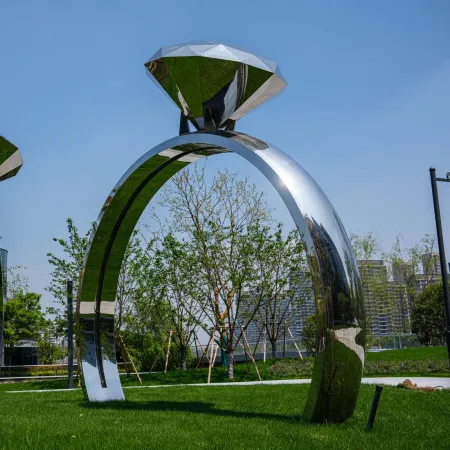
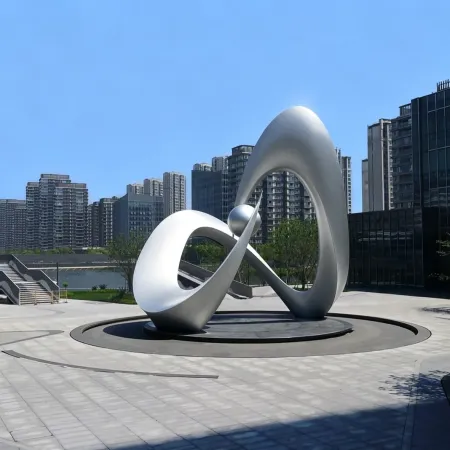
Metal monuments are structural by nature, and the design should celebrate that structure rather than hide it. A stainless arch or canopy can express its own engineering, with the ribs and the bracing composed as part of the visual language; a mirror surface can be designed to reflect the sky, the trees and the passing public, making the work change with the weather and the hour; and a kinetic element, a fin that turns in the wind, a balance that moves when pushed, can bring the monument alive in a way that no static material matches. The light of the site should be studied, because metal catches and throws light in ways that reward orientation and that punish it.
The structural engineering of a metal monument is inseparable from its form. Wind loading on large flat plates and slender towers can be severe, and the engineer must consider not only strength but vibration, because a public will notice and fear a monument that hums or shakes in a breeze even when it is perfectly safe; thermal movement must be accommodated so that large expanses of metal do not buckle or tear their fixings across the seasons; and the connections must be detailed against corrosion, using compatible metals and sealed joints where water can sit. The engineering report is the monument's health record, and the client should keep it.
- Choose the metal for its meaning and the climate together.
- Write the grades into the contract, 304 or 316 and the finish.
- Audit weld quality and distortion control in the live workshop.
- Design for the site's light and the direction of view.
- Plan the maintenance regime that the finish truly needs.
What Metal Commemoration Unlocks
Forms that soar, span and catch the sky
Finishes that mirror, rust or blaze with colour
Structure expressed as part of the art
A material voice that fits the modern city
Caring for a Metal Monument Through Its Life
The care of a public metal monument is defined by its material and should be planned before installation. Stainless steel needs periodic washing, more often in coastal or industrial air, to remove the deposits that can stain or pit even a corrosion-resistant grade; weathering steel needs only inspection, plus attention to the areas where water pools and to the staining of surrounding surfaces; painted steel needs a recoating schedule measured in years and prompt repair of any scratch that exposes bare metal; and all metal monuments need an annual inspection of the structure, the fixings and the drainage points. None of this is exotic, but all of it must be named and owned.
The studio should hand over the care knowledge with the work: a plain-language maintenance schedule, the contact for the finish system, spare material where practical and the structural record. We provide that dossier with every public metal monument we deliver, because the community that understands its monument will maintain it, and the monument that is maintained is the one that still carries its meaning when the fabricators have retired and the original committees have disbanded. A metal monument is a permanent promise, and permanence is a practice, not a property.
Frequently Asked Questions About Public Metal Monuments
Which metal lasts longest outdoors?
Stainless steel in the correct grade, 316 for coastal or de-iced sites, offers the lowest maintenance; weathering steel and painted systems also endure well when specified and maintained for the environment.
Does weathering steel rust through?
No, the surface rust stabilises into a protective layer in suitable climates, but the alloy must be a certified weathering grade and detailing must manage runoff so it does not stain paving.
Can a metal monument include movement or light?
Yes, kinetic fins and programmed light suit metal structures well, provided the moving and electronic parts are engineered for public safety and the owner can maintain them over the long term.
How do I stop a mirror stainless work from staining?
Specify a coastal-grade alloy where relevant, avoid leaving fabrication residue on the surface and wash the work periodically, because deposits, not the metal, cause most staining.
Why does metal cost less than bronze for large works?
Steel and aluminium fabrication is less labour-intensive than bronze casting at monumental scale, and the higher strength-to-weight ratio also reduces transport and foundation costs.
A public metal monument is the modern material answer to an ancient human need, the need to make memory visible in the places where people live, and metal allows that memory to soar, to mirror the city and to carry the forms of our own time. Choose the metal for its meaning and its climate, specify the grades, audit the fabrication and plan the care, and the work will speak for generations.
If you are considering a public metal monument and want honest material guidance for your site and your story, our fabricators and designers will prepare grade, finish and maintenance comparisons before you choose.