How a Modern Landmark Sculpture Speaks for a Contemporary City
A modern landmark sculpture is how a contemporary city shows the world who it is now, using the formal language of our own time rather than the monuments of the past, and it has become the defining feature of ambitious urbanism around the globe. From mirror stainless forms that dissolve into the sky to interactive works that respond to the public, modern landmark sculpture has reinvented what a city icon can be. I have spent more than a decade creating modern landmark sculpture for clients across twenty-three countries, and this guide explains the ideas, the materials and the process behind the icons of our era.
We will look at what makes a work modern, the technologies and materials of contemporary landmarks and how to commission a modern icon that will still speak for its city in fifty years.
Our modern works archive documents contemporary landmarks, the design services cover the commissioning journey, and the Rainbow Windmills installation shows a contemporary work that reinterprets a landscape tradition in modern form.
What Makes a Landmark Modern
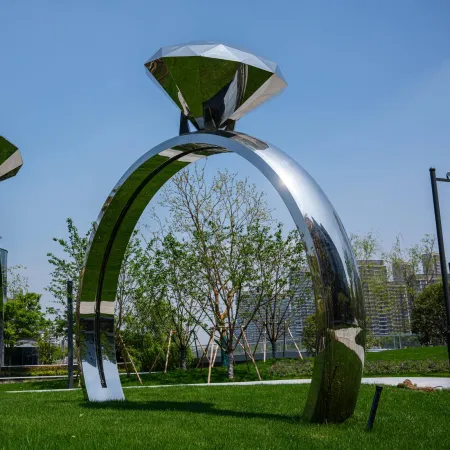
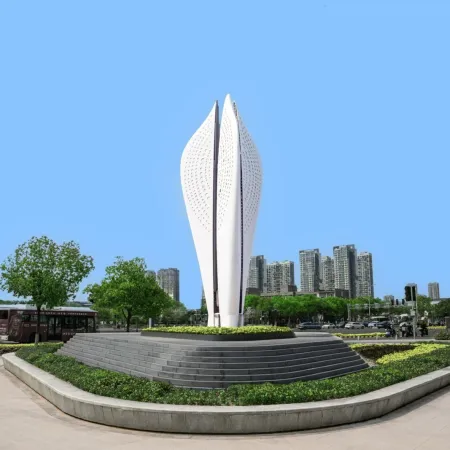
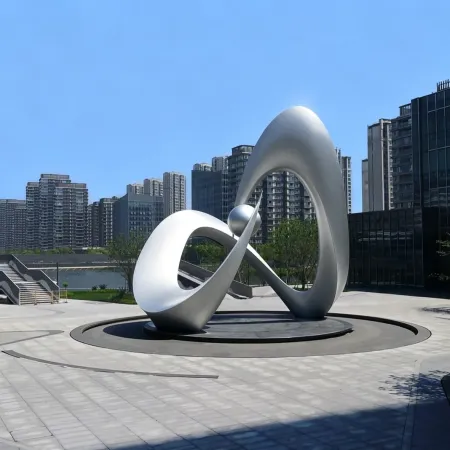
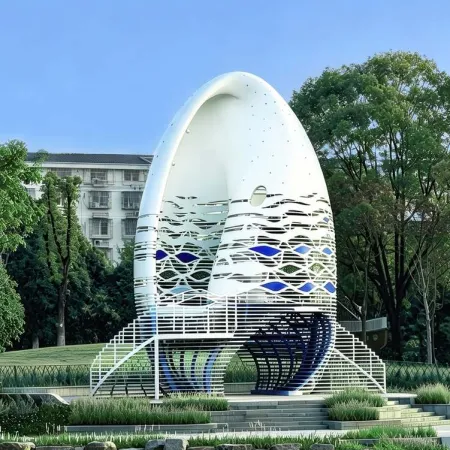
A modern landmark sculpture is modern not because of its date but because of its language. It tends towards abstraction, expressing ideas through form, material and light rather than through literal figures; it is often site-responsive, growing from the character of its place rather than arriving as a portable monument; it embraces contemporary materials and fabrication; and it frequently invites interaction, whether through walking beneath it, touching it, entering it or setting it in motion. Together these qualities create works that feel like products of our own time rather than echoes of the past.
Modernity is also an attitude towards meaning. Where traditional monuments fixed a single story, modern landmarks tend to be open, inviting each viewer to complete them, and that openness suits the plural, changing cities of our era. A modern work can celebrate technology, ecology, community or pure beauty without being reduced to a caption, and its meaning can grow and shift as the city changes around it. This flexibility is one reason contemporary cities have embraced modern sculpture as their signature.
The Materials and Technologies of Contemporary Landmarks
Modern landmark sculpture is built from the materials and technologies of its time. Mirror stainless steel and engineered composites allow forms that would have been impossible a generation ago; digital design and robotic fabrication turn complex geometry into buildable reality; and integrated technology brings light, sound and movement into the work itself. The result is a sculpture that could only exist now, which is precisely what makes it a statement about the present.
| Language | Expression | Technology |
|---|---|---|
| Kinetic | Movement driven by wind or motor | Bearings, drives, wind engineering |
| Interactive | Responds to the public presence | Sensors, control systems |
| Illuminated | Light as part of the form | LED systems, programmable control |
| Parametric | Geometry generated by computation | Digital design, robotic fabrication |
Balancing Innovation With Permanence
The great challenge of modern landmark sculpture is that innovation must not come at the cost of permanence, because a landmark is meant to outlive its moment. Technology must be specified for decades of service, with lighting and interactive systems designed for replacement and repair rather than for a single season; materials must be chosen for the real climate; and the form must be strong enough to remain legible when the technology ages. The modern landmarks that endure are those where the artist and the engineer together distinguished between what is genuinely timeless and what is merely fashionable.
Maintenance is the quiet partner of innovation. An illuminated landmark depends on lighting systems that must be serviced; a kinetic work depends on bearings and drives that must be inspected; an interactive piece depends on sensors and control systems that will eventually need replacement. A responsible studio designs these systems for access and serviceability, delivers a maintenance manual that names every component and advises the client on the lifecycle of the technology. Innovation without a maintenance plan is a sculpture with a built-in expiry date.
- Timeless form: legible beyond the moment of fashion
- Serviceable systems: technology designed for access
- Climate honesty: materials matched to the site
- Lifecycle plan: every component named and dated
Designing a Modern Icon for Its Place
The most successful modern landmark sculpture is both contemporary and local, speaking the visual language of our time while telling the story of its own place. The design process should therefore begin with the site, its history, its community and its ambitions, and the studio should propose concepts that grow from that reading through a modern lens. A work that is merely imported modernity, identical to a hundred other cities, misses the deeper opportunity, while a work that joins contemporary form with local meaning becomes a landmark that no other city could claim.
What a Modern Landmark Should Offer Its City
A form that could only belong to this time
A meaning rooted in its own place
Materials and systems built to endure
An invitation for the public to engage
Commissioning the Icon of Our Era
Commissioning a modern landmark sculpture follows the disciplines of any landmark commission, with attention to the special demands of contemporary work. The client should choose a studio whose modern portfolio shows genuine authorship and technical depth, approve the concept at scale, complete the engineering and the technology specification before fabrication, and plan the maintenance and lifecycle of any innovative systems from the start. The contract should cover the technology as carefully as the steel, because the systems that make a modern landmark extraordinary are also the systems that need the most care.
Since 2003 our studio has designed and delivered modern landmark sculpture across twenty-three countries, from kinetic waterfront works to illuminated civic icons. We embrace the technologies of our time and discipline them with the engineering of permanence, because we believe a modern landmark must speak for its city not only this year but for decades to come.
A modern landmark sculpture is how a city tells the world that it is alive in the present and confident in its future, a work that could only have been created now and that will still speak to the generations that follow. Commissioned with vision and built with permanence, it becomes the contemporary icon that future historians will use to understand our time.
The Dialogue Between Tradition and Innovation
The most successful modern landmark sculpture does not reject tradition but transforms it, taking the timeless concerns of public sculpture, permanence, meaning, scale and the relationship with the public, and expressing them through the languages and technologies of our own time. A contemporary work can reinterpret a local craft, an ancient symbol or a landscape tradition in modern materials, giving the city a landmark that feels both fresh and rooted; it can use technology to create experiences that earlier ages could not imagine while honouring the human need for beauty and meaning that has always driven public art. The studios that navigate this dialogue with sensitivity produce works that are genuinely modern without being merely fashionable, and genuinely local without being nostalgic.
The dialogue also shapes the way the work will be received over time, because a landmark that is only novel will date, while one that joins innovation to enduring values will continue to speak. The test of a modern landmark is not whether it surprises at the unveiling but whether it still rewards the viewer in twenty years, when the technology has aged and the novelty has faded, and that test is passed by works whose form, material and meaning carry values that outlast their moment. A studio that asks the client about the story of the place, the values of the community and the future the city imagines for itself is a studio that understands how to make modernity endure. The best modern landmark sculpture is a bridge between what a city has been and what it hopes to become, and building that bridge is the highest ambition of contemporary public art.
Frequently Asked Questions About Modern Landmark Sculpture
What makes a landmark sculpture modern rather than traditional?
Modern landmarks tend towards abstraction, site-responsiveness, contemporary materials and interaction, expressing ideas through form and light rather than literal figures. They speak the visual language of our own time.
Can a modern landmark include technology and still last?
Yes, when technology is specified for serviceability and replacement, with lighting and interactive systems designed for access and a lifecycle plan delivered with the work. The form must also endure beyond the technology.
Do modern landmarks risk dating quickly?
Works that chase fashion date, while works that join contemporary form with timeless composition and local meaning endure. The discipline of the artist and the honesty of the materials decide whether a modern work lasts.
What materials define modern landmark sculpture?
Mirror stainless steel, engineered composites, weathering steel and aluminium lead the field, often combined with lighting and interactive systems. Digital design and robotic fabrication enable geometry that older methods could not build.
How do we brief a studio for a modern landmark?
Share the site, its story and the character your city wants to project, then let the studio propose contemporary concepts. Strong briefs describe ambitions and feelings rather than prescribing a particular form or style.
A modern landmark sculpture is a statement of confidence, a sign that a city values the present enough to commemorate it in the public realm. Created in the language of our time, rooted in its place and built to endure, it becomes the work through which future generations will remember how we saw ourselves.
Share your site and your ambitions with us, and we will show you the modern landmark sculpture that can speak for your city in our time and the next.