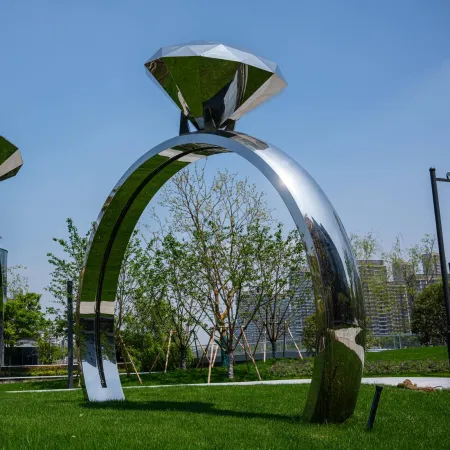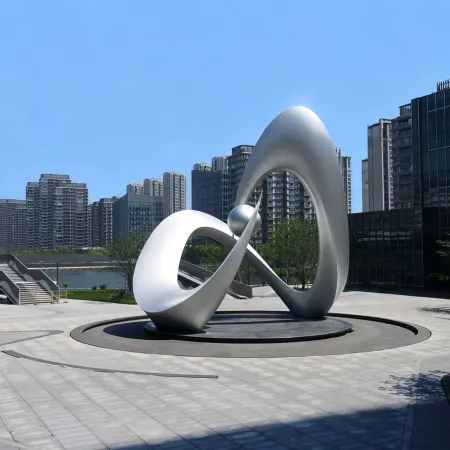
Designing Public Space Outdoor Art That Beats the Weather for Decades
Public space outdoor art must be designed for the harshest day of the next fifty years, not for the mild afternoon when it is unveiled, and every material, finish, joint and foundation choice is a bet against sun, frost, salt, wind and rain. The works that fail outdoors do not usually fail dramatically; they fail slowly, a stain here, a corroded fixing there, a finish that fades until the sculpture looks older than the city around it.
Since 2003 our studio has designed and built public space outdoor art across 23 countries and every kind of climate, from coastal salt air to freezing winters and desert heat. This guide explains how outdoor art is specified to survive, what testing proves durability before installation and how the client plans the care that keeps a public work healthy for its whole life.
See weather-tested work in our project gallery, our outdoor capabilities in the services overview and an outdoor landmark such as Butterfly Dance, a 10-metre outdoor light and metal work.
Reading the Climate Before Choosing the Materials
The first discipline of public space outdoor art is reading the climate of the specific site, because outdoor conditions are local and the differences are decisive. Coastal air carries salt that attacks some metals and finishes; industrial atmospheres bring chemicals that stress coatings; freezing winters bring freeze-thaw cycles that crack and lift; strong sun fades colours and heats dark surfaces; and wind loads shape the structure of anything tall or open. The maker must know the site's actual weather, not a generic outdoor category.
The microclimate of the exact location matters too. A work beside the sea receives salt spray that a work a street away does not; a work in a wind tunnel between towers faces loads the meteorological station never records; a work in a frost pocket freezes harder than the surrounding city; and a work under trees is cleaned by leaf litter and bird life in ways the laboratory never tests. We ask about the site's microclimate before we specify anything, because the difference between surviving and failing is often measured in that local detail.
Specifying for the Fifty-Year Life
The specification of public space outdoor art should be written for a fifty-year public life, which means choosing materials and finishes for the harshest season rather than for the opening brochure. Stainless steel should be specified in the grade that resists the site's atmosphere; coatings should be chosen for UV, salt and abrasion; drainage and ventilation should be designed so moisture never hides inside the form; and fixings should be detailed so that dissimilar metals do not corrode each other and so that every connection can be inspected. Each of these decisions is a small insurance policy against the slow decay that kills public art.
The specification should also be honest about what the site can sustain. A mirror-polished work in a dusty industrial city will demand cleaning that the owner may not provide; a white painted form beside a busy road will show every mark; a weathering steel piece in a humid climate may never develop the even patina it shows in photographs. We advise clients on the maintenance reality of every finish we propose, because a specification that the owner cannot honour is a specification that will quietly fail.
| Climate challenge | What it attacks | Design response |
|---|---|---|
| Coastal salt | Stainless, coatings, fixings | Salt-resistant grades and sealed detailing |
| Freeze-thaw | Joints, stone, foundations, water features | Drainage, flexible joints, frost-safe systems |
| Strong UV | Colours, coatings, plastics | UV-stable pigments and durable coatings |
| Wind | Structure, tall and open forms | Wind analysis and engineered foundations |
Proving Durability Before Installation
The durability of public space outdoor art should be proven before installation rather than discovered after it, and serious studios test their choices against the site's reality. The evidence may include accelerated weathering and salt-spray testing of the specified finish, adhesion tests on the coating system, fatigue analysis of the connections and, for large or unusual forms, wind studies that confirm the design loads. Where a standard applies to a material or a test, the studio should follow it and keep the records.
Prototyping carries the proof further. A sample panel finished in the actual specified system and exposed to the site's conditions for a season tells the truth about colour stability and surface behaviour faster than any brochure, and a full-scale mock-up of a critical joint proves that the geometry can be built and sealed as drawn. Testing adds to the budget and the schedule, and both are worth every unit, because the alternative is a work that begins to fail in year three and costs many times the saving to repair.
Planning the Care That Keeps the Work Alive
Outdoor art is only as good as the care it receives, and the care should be planned in the design rather than discovered by the owner. The specification should include a plain-language care routine, the cleaning intervals, the inspection points, the seasonal checks and the simple repairs that the owner's own team can perform, and the design should make that routine possible, with access, drainage and finishes chosen for the crew that will actually do the work. We document the care of every outdoor work we deliver, because an owner who understands the work will protect it, and an owner who does not will watch it decline.
The studio should also remain part of the work's life. Outdoor conditions eventually demand attention that only the maker can give, a re-sealed joint, a re-touched finish, a repaired fixing, a kinetic element that needs a seasonal adjustment, and the studio that built the work is the one best placed to care for it. Many of the outdoor works we installed years ago still call us when the weather has been hard, and that continuity keeps the works healthy and the relationship alive across the decades.
Commissioning Outdoor Art With Weather in Mind
The commissioning of public space outdoor art should bring the climate into the brief from the first conversation. Tell the studio about the site's weather, its salt, frost, sun and wind; ask how the proposed materials and finishes have performed in climates like yours; require test evidence for the specified systems; and budget for the care routine as part of the project, not as an afterthought. The clients who ask these questions receive works that still look right in year twenty, and the ones who do not receive works that begin apologising in year three.
The studio's climate record is part of its evidence. Ask where its outdoor works have been installed and how they have behaved in those climates; visit or contact the owners of works in conditions like yours; and examine how the studio specifies for the harsh seasons. A studio that has learned the lessons of coastal corrosion, frost damage and UV fade on real works is a studio that will not need to learn them on yours.
Outdoor Art Commissioning Checklist
- Describe the site's real climate and microclimate in the brief.
- Specify for the harshest season, not for the opening brochure.
- Require test evidence for the specified finishes and systems.
- Expose samples to the site's conditions before full production.
- Plan the care routine and budget as part of the project.
What Weather-Proof Design Delivers
A work that still looks right in its twentieth year
Finishes specified for the site's harshest weather
Durability proven by tests and samples, not promises
A care plan the owner can actually honour
Frequently Asked Questions About Public Space Outdoor Art
Why does outdoor public art fail so often?
Because it is specified for the unveiling rather than for the decades, with materials and finishes chosen for appearance without the site's real climate and maintenance reality in mind.
How do I know a finish will survive my climate?
Ask for accelerated weathering and salt-spray test data, exposed samples in the site's conditions and the studio's track record in climates like yours.
How much maintenance does outdoor art need?
With the right specification, routine seasonal care that the owner's own team can manage, which is why the design must make cleaning, inspection and access realistic.
Is stainless steel always the safest outdoor choice?
Not in every grade and every atmosphere, which is why the grade must be matched to the site's salt, pollution and moisture, and why coatings and detailing complete the protection.
Should outdoor works be tested before installation?
Yes, through material tests, finish samples exposed to the site and full-scale mock-ups of critical details, because proof before installation costs a fraction of failure after it.
Public space outdoor art is a long marriage with the weather, and the works that thrive are the ones whose materials, finishes and care were chosen for the harshest days of the next fifty years. Specify for the site's real climate, prove durability before installation and plan the care with the owner, and the work will grow old with the city rather than before it.
If you are planning public space outdoor art, we will discuss your site's climate, share our test evidence and show you how the outdoor works we built years ago have weathered their real winters.