Why a Landmark Stainless Steel Sculpture Mirrors the Sky and Defines a City
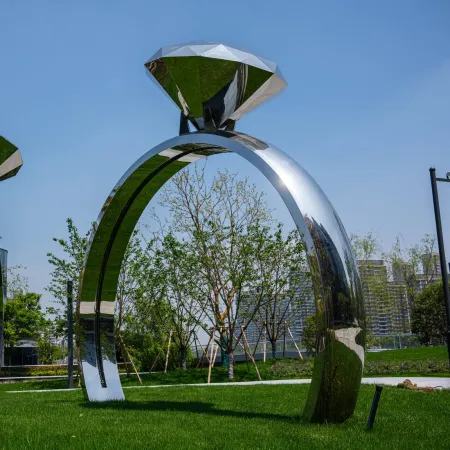
A landmark stainless steel sculpture is the signature material of the modern city icon, because mirror-polished stainless does something no other medium can: it dissolves its own surface into the sky, the clouds and the passing city, so the sculpture changes every hour and is never seen the same way twice. That living mirror, combined with the corrosion resistance that lets it face decades of weather without repainting, makes stainless the first choice for the most ambitious civic commissions of our era. I have spent more than a decade creating landmark stainless steel sculpture for clients across twenty-three countries, and this guide explains the material, the craft and the commissioning of mirror icons.
We will look at why stainless defines contemporary landmarks, how mirror finishes are actually achieved and the specification decisions that decide whether a mirror stays a mirror.
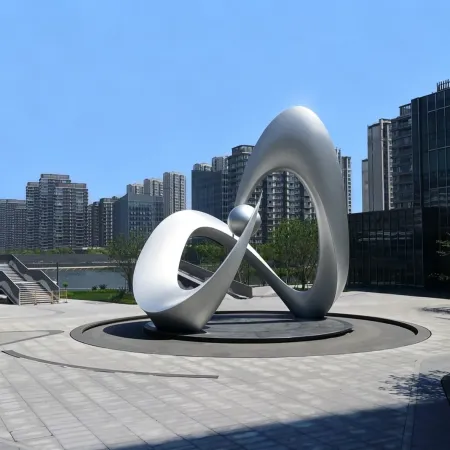
Our stainless fabrication services cover mirror work at landmark scale, the project archive records delivered icons, and the Radiant Galaxy installation shows a mirror stainless form engineered for public space.
The Material That Reflects a City Back to Itself
Stainless steel earns its place at the heart of landmark sculpture through a combination no rival material matches. The mirror surface makes the work a living part of its environment, reflecting the sky at noon, the sunset at evening and the city lights at night, so the sculpture is never static and never boring. The alloy resists corrosion so completely that it faces coastal salt and urban pollution without the repainting that painted steel demands. And its strength allows forms that rise high and span wide, giving sculptors the structural freedom that monumental work requires.
The reflective life of a landmark stainless steel sculpture is its deepest gift to a city. A sphere mirrors the skyline compressed into a single curve; a ribbon of mirror steel carries the clouds along its length; a tall form becomes a vertical mirror of the street life below. People photograph themselves and their city in these surfaces, and those photographs spread the image of the place across the world. No other material makes a sculpture so completely a part of the city that surrounds it.
How a True Mirror Finish Is Achieved
A mirror finish on a landmark stainless steel sculpture is not a coating that can be sprayed on; it is a surface condition ground and polished out of the metal itself, and achieving it at civic scale is one of the most demanding crafts in sculpture. The process begins after welding, when the seams are ground flush with the parent metal, and continues through progressively finer abrasives that erase the scratches of the previous stage. The final passes use polishing compounds that bring the surface to a reflection so clear that the metal seems to disappear.
| Finish Stage | Craft Involved | Result |
|---|---|---|
| Weld grinding | Seams ground flush with the metal | Invisible joints |
| Progressive abrasives | Finer grits erase earlier scratches | Smooth continuous surface |
| Final polishing | Compounds bring up the reflection | True mirror clarity |
The Grades That Decide a Mirror Future
Not all stainless steel is equal, and the grade chosen for a landmark stainless steel sculpture decides whether its mirror survives the climate. The common 304 grade serves many interiors and mild exteriors, but coastal sites, road-salt zones and heavily polluted cities demand the 316 grade, whose added molybdenum resists the pitting and staining that salt and chlorides cause. The specification should also cover the thickness of the sheet, the quality of the polishing stock and the protection of the surface during fabrication, because a mirror can be ruined by a single careless moment in the workshop.
The mirror also needs a care plan, and an honest studio provides one. Rain naturally washes many outdoor mirrors, but sheltered surfaces, low areas and coastal sites may need periodic cleaning to remove salt, pollution and the mineral deposits that drying water leaves behind. The cleaning regime must use the right products, because abrasive cleaners and harsh chemicals will haze a mirror permanently. A landmark stainless steel sculpture delivered with a written care manual is a sculpture whose mirror will still be honest in twenty years.
- Grade: 316 for coastal and polluted sites
- Protection: surface guarded through fabrication
- Cleaning: right products, written regime
- Drainage: water shed to avoid mineral marks
Engineering the Reflective Form
A landmark stainless steel sculpture is engineered like any monumental structure, with wind loads calculated, sections sized and foundations designed, but the mirror adds two particular disciplines. The first is geometry control, because a mirror shows every distortion, every ripple and every deviation from the designed curve, so the fabrication must hold tolerances that would be invisible on a painted surface. The second is surface protection through the whole chain, from the workshop floor to the final installation, because a mirror that is scratched in transport cannot be patched, only repolished.
Signs of a Mirror Landmark Built to Last
Correct grade for the site climate
Seams invisible in the finished surface
Geometry holds under a mirror test
A written cleaning and care regime
Commissioning a Mirror Icon for Your City
Commissioning a landmark stainless steel sculpture begins with the site and the story, as with any landmark, but the mirror adds questions of its own. How will the reflections behave at the site, what will the surface mirror from each approach, how will the low sun and the evening lights play across the form, and will the reflections of surrounding buildings enrich the composition or fight it? These questions should be explored in the design, and the finish specification, the grade selection and the care plan should be agreed in writing before fabrication, because a mirror is a commitment, not an option.
Since 2003 our studio has designed and fabricated landmark stainless steel sculpture across twenty-three countries, polishing mirrors that face oceans, deserts and city squares. We specify the grade for the climate, engineer the form for its site and deliver every mirror with the care regime it needs to stay honest for decades.
A landmark stainless steel sculpture gives a city a mirror in which it can see itself change through every hour and every season, a work that is never the same twice and never grows old. Polished with obsession and specified with honesty, it becomes one of the defining images of the place that raised it.
Polishing, Protection and the Journey to the Site
A mirror finish on a landmark stainless steel sculpture is at its most vulnerable in the final stages of the project, when the polishing is complete and the work must survive transport, installation and the first years of public life. The polished surface must be protected through every step, with careful wrapping, padded cradles and the discipline of crews who understand that a single careless sling can scar a surface that took weeks to polish. The installation sequence must protect the finished areas while the sections are lifted and joined, and the final touch-up after erection must restore the mirror at the seams and the points where the handling has marked the metal. The journey from the polishing bay to the finished landmark is where the quality of the mirror is truly tested.
The protection continues into the public life of the work, because a mirror that is never cleaned will slowly lose the brilliance that made it a landmark. The care regime should be written into the maintenance manual, specifying the cleaning products that are safe for the surface, the frequency appropriate to the site and the methods that avoid hazing the mirror. The studio should also advise on the early life of the work, because the first months after installation, when the surface is pristine and the site may still be dusty from construction, can mark a mirror if the cleaning is neglected. A landmark stainless steel sculpture delivered with a serious care regime is a mirror that will keep reflecting its city for decades, and that regime is part of the craft of the studio that builds it.
Frequently Asked Questions About Landmark Stainless Steel Sculpture
How long does a mirror stainless finish last outdoors?
With the correct grade for the climate and a proper cleaning regime, a mirror finish lasts for decades. Rain cleans many surfaces naturally, while sheltered and coastal areas need periodic washing.
What is the difference between 304 and 316 stainless?
The 316 grade adds molybdenum, giving it far better resistance to salt and chlorides, which makes it the right choice for coastal sites, road-salt zones and heavily polluted urban environments.
Can a mirror sculpture be repaired if scratched?
Localised scratches can be re-polished by craftsmen working through the abrasive stages, though the work is skilled and should be done by specialists. Protection during transport and installation is the best prevention.
Why does stainless suit large landmark forms?
Stainless combines high strength, corrosion resistance and the mirror surface that no other material matches, allowing forms that rise high and reflect their environment while facing decades of weather without repainting.
How should a mirror landmark be cleaned?
With water, mild detergent and soft cloths or mops, avoiding abrasive cleaners that haze the surface. The cleaning regime should be written into the maintenance manual delivered with the sculpture.
A landmark stainless steel sculpture is a mirror held up to a city, reflecting its sky, its people and its changing moods in a form that will outlast the generation that commissioned it. Specify it honestly, polish it obsessively and care for it faithfully, and the mirror will serve the city for as long as the city stands.
Share your site with us, and we will show you what a landmark stainless steel sculpture, engineered and polished to the highest standard, can reflect back to your city.