What Contemporary Sculpture Fabrication Really Demands Behind the Beauty
Contemporary sculpture fabrication is where design becomes reality — and where the difference between a studio and a factory becomes visible. The photographs that win commissions show finished beauty; the workshops that earn them are judged on the invisible craft: the seams that disappear, the finishes that survive decades, the structures that carry public loads without drama and the tolerances that make large works assemble perfectly on site. Fabrication is the discipline where artistic intention meets engineering reality, and it decides whether the work the client approved is the work that arrives. Yifeng Sculpture Studio has operated a contemporary sculpture fabrication practice since 2003, delivering works across more than twenty countries, and this guide explains what real fabrication involves and how to judge a workshop's depth.
We look at the stages of fabrication, the craft that separates sculpture from steelwork, and the quality systems that protect a commission.
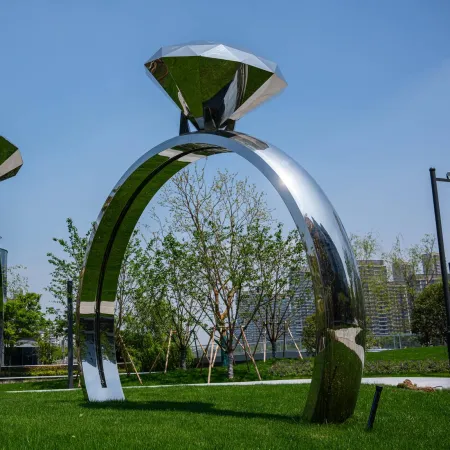
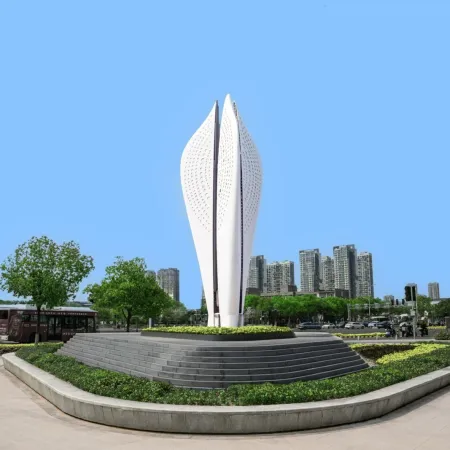
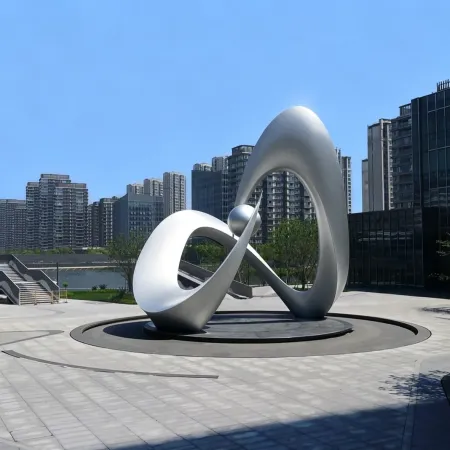
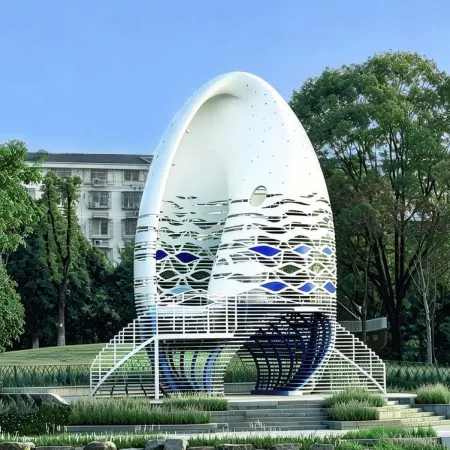
Our project archive shows what our fabrication delivers in place, the services overview explains our production pipeline, and the Eye of the Phoenix demonstrates fabricated metalwork of demanding precision.
From Approved Design to Fabrication Drawings
Fabrication begins before any metal is cut, in the translation of the approved design into the drawings and models the workshop will build from. Sculptural forms are rarely simple enough for standard engineering drawings alone: complex surfaces are developed in 3D models, from which sections, patterns and cutting files are derived with precision. The design is broken into the parts that will be made and the sequence in which they will be assembled, and the critical dimensions — the ones that must hold for the work to look right and fit its foundation — are identified for tight control. Material is specified and ordered with certificates, and the fabrication schedule is set against the engineering approvals that must precede the work. This planning stage is invisible and indispensable: the workshops that produce seamless sculpture are the ones that resolve the geometry on screen and paper, not for the first time in the shop.
Cutting, Forming and the Making of Parts
The physical making begins with cutting and forming the material into the parts of the sculpture. Plate is cut by waterjet, plasma or laser, each chosen for the material and the edge quality the work demands; the precision of modern cutting means that complex profiles arrive ready for assembly rather than requiring hours of hand correction. Forming turns flat plate into three dimensions — rolling a sheet into a cylinder, pressing it into a curve, or fabricating it into a faceted volume — and it is here that the sculpture's character begins to appear. For cast materials, this stage is the foundry: patterns and molds prepared from the models, metal poured and the castings returned for chasing. Throughout, the parts are tracked against the model so that the assembled work matches the approved design within the tolerances that scale demands. Craft at this stage is judgment: knowing how material will spring, distort and settle, and allowing for it before the cut is made.
Fabrication Methods by Material
- Steel plate: laser and waterjet cutting, rolling, pressing and welding
- Stainless: precision fabrication with heat control and surface protection
- Aluminum: forming and welding with controlled distortion
- Bronze: casting, chasing and patination through foundry partners
- Composite: molds, laminates and coating systems for free-form works
Welding: Where Strength and Surface Are Won
Welding is the heart of metal sculpture fabrication, and it serves two masters at once. Structurally, welds carry the loads that keep a public work safe: the connections that resist wind, the joints that transfer weight to the foundation, the attachments that hold every element in place. These welds are engineered, inspected and documented — in critical structures, by certified welders working to approved procedures with inspection records that follow the work. Cosmetically, welds must disappear: the seam is ground and blended into the surrounding surface until the eye cannot find it, a discipline that separates sculpture from steel construction. The two demands meet in the welder's skill and the workshop's sequencing — heat is managed so that distortion is controlled, seams are placed where they can be finished, and the assembly order is planned so that each weld remains accessible until its surface is complete. Great sculpture fabrication is welding raised to an art that is also an engineering science.
| Fabrication Stage | Craft Demand | Quality Control |
|---|---|---|
| Cutting and forming | Precision and material judgment | Dimensional checks against the model |
| Welding | Structural soundness and invisible seams | Inspection records on critical welds |
| Assembly | Sequencing and fit control | Trial fits of critical interfaces |
| Finishing | Surface unity and durability | Approved finish samples and checks |
Finishing: The Surface That Meets the World
The finishing bay is where a sculpture becomes the object the public will see, and it is where a studio's pride is most visible. For painted work, the surface is prepared until it is worthy of the coating — ground, filled and sanded to a standard that the final paint will reveal rather than hide — and then the specified system is applied under controlled conditions: primer, color and clearcoat where the design calls for it, each cured properly before the next. For stainless, finishing is the long handwork of polishing: through progressively finer stages to the specified reflectivity, with the surface kept clean of contamination that would rust it later. For bronze, the patina is applied chemically, layer by layer, by a patina artist working toward the exact color. Every finish decision was made at design stage and approved on samples; the finishing bay's task is to reproduce that approval across the whole work, uniformly, without a single missed seam or shadow.
What Our Studio Delivers in Fabrication
Design-to-fabrication drawings and 3D models developed in-house
Engineered, inspected and documented fabrication
Seamless surfaces and finishes matched to approved samples
Trial assembly and quality records before delivery
Quality Systems That Protect a Commission
Serious contemporary sculpture fabrication runs on quality systems that protect the client even when no one is watching. Materials arrive with certificates and are verified against specification before they enter the shop. Work is inspected at defined gates — dimensional checks against the model, weld inspection on critical connections, finish checks against the approved samples — and the results are recorded. The trial assembly, where the full work or its critical sections are fitted together before delivery, catches the mismatches that would otherwise surface on site, when they are most expensive. And the documentation travels with the work: fabrication records, material certificates, inspection results and installation instructions. These systems are not bureaucracy; they are the difference between a workshop that can prove its quality and one that can only claim it. When clients inspect our workshop or audit our records, they find the evidence behind every work we deliver.
Timing, Cost and the Honest Conversation
Fabrication is the stage where timelines and budgets are truly tested, and honest communication is a fabrication discipline in its own right. Complex bespoke sculpture takes the time it takes: engineering approvals, material procurement, fabrication, finishing and trial assembly each have their own rhythm, and a schedule that ignores them is a promise that will break. A mature studio prices fabrication transparently against the documented scope — materials, labor, finishes, engineering, delivery — and reports progress against the plan on a fixed rhythm, so the client always knows where the work stands. When a problem appears — a material delay, a dimensional discovery, a finish challenge — it is reported the day it appears, with options and costs, never discovered at the next milestone. That reporting culture, more than any certificate, is what clients should look for in a fabrication partner, because every complex project meets at least one problem, and the workshop's behavior at that moment is the real measure of its professionalism.
Frequently Asked Questions About Contemporary Sculpture Fabrication
Can we visit the workshop during fabrication?
Yes — we encourage staged inspection, whether in person or by video for international clients. Inspection rights can be written into the contract, and third-party inspectors are welcome at agreed stages.
How do you ensure the fabricated work matches the design?
Through dimensional control against the 3D model, approved finish samples reproduced across the work, and a trial assembly of critical sections before delivery. The approved design is the contract, and the records prove it was honored.
How long does fabrication take for a typical work?
A medium metal work typically requires several weeks to a few months of fabrication after engineering approval; large or complex works take longer. The schedule is set by the scope, the materials and the finishing system, and it is stated honestly before fabrication begins.
What documents do we receive with the fabricated work?
Material certificates, fabrication and inspection records, finish approvals, dimensional reports, trial assembly evidence and installation instructions — a complete file that documents the work's making and supports its future care.
Do you fabricate works designed by other artists?
Yes — we fabricate for artists, architects and designers who need a workshop with the engineering and finishing depth their concepts demand. The artist's intent is treated as the design authority, and our role is to realize it faithfully and safely.
Contemporary sculpture fabrication is the craft that turns an approved design into a standing reality — seams made invisible, finishes made durable, structures made safe and every stage documented. Our studio has practiced that craft since 2003, delivering contemporary sculpture fabrication across more than twenty countries for artists, architects, cities and developers. If your design is ready to become a physical work, bring us the model and the drawings — the contemporary sculpture fabrication we deliver will honor your intent to the millimeter, stand safely for the public and arrive documented for its whole life.
Send us your design files, and we will return a fabrication assessment — methods, schedule and documentation — showing exactly how the contemporary sculpture fabrication we propose will protect your concept through every stage of the making.