What a Public Art Design Company Should Prove Before You Choose It
A public art design company is only as good as the proof behind its claims, because every studio can show beautiful images and every brochure promises care and quality. The difference between a company that delivers a landmark and one that delivers disappointment is written in the systems, the team and the workshop that stand behind the portfolio, and the client who knows what to verify will choose well.
This guide explains what a public art design company must be able to demonstrate, the questions that reveal real capability and the process that protects a commission from the first conversation to the finished installation.
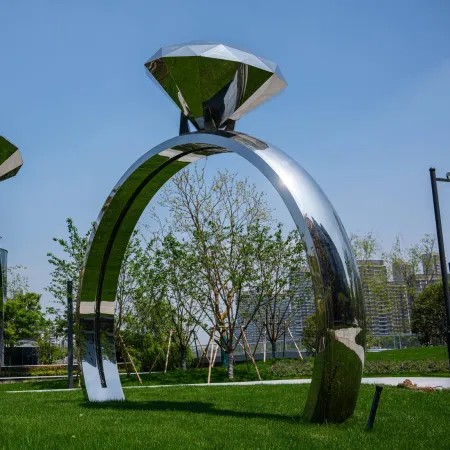
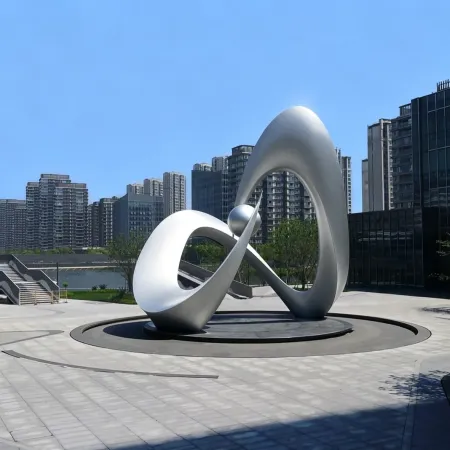
See the range of a full design company in Wisdom Tree, Fishbone Corridor and Honeycomb Pavilion.
The Team Behind the Portfolio
A public art design company is a team before it is a brand, and the client should meet the people who will actually shape the work rather than only the salesperson who closes the deal. The strongest companies can name their designers, sculptors, model makers and project managers, and they match those people to the project, so a figurative memorial is led by a sculptor who models figures and a kinetic plaza piece is led by someone who understands movement and engineering. Ask who will design your work, who will manage it and who will be in the workshop while it is made, and be wary of a company that cannot answer with names.
Depth of team is as important as names, because public art projects are long and people change. A company with several designers and several project managers can absorb holidays, illness and departures without dropping your schedule, while a one-person studio, however gifted, is a single point of failure on a project measured in months. The right scale depends on the project, but the client should understand who carries the risk and what happens if that person is unavailable, because a commission should depend on a system, not on the availability of one heroic individual.
| Capability | Why it matters | How to verify |
|---|---|---|
| Design depth | Original work matched to your brief | Named designers and attributable work |
| Owned workshop | Control of quality, cost and schedule | A visit or independent inspection |
| Engineering | Works that stand safely for decades | Reports shared as part of the service |
| Project management | A schedule that actually happens | Staged plans and named managers |
The Workshop Question
The single most revealing question for any public art design company is whether it owns the workshop that will build your work, because the answer decides who controls the quality, the schedule and the cost. A company with its own fabrication facility can absorb design changes without blame, inspect every stage of the making, protect your schedule and stand behind the finished work; a company that subcontracts fabrication is a design studio with a purchasing department, and every problem that arises in the workshop will arrive at your door as a dispute about who is responsible. Ownership of the making is what turns a portfolio into a promise.
The workshop should be appropriate to the work you are commissioning, and the client should ask what the facility can actually do. Does it cast bronze, fabricate stainless steel, work stone, handle the scale your project demands? Does it have the finishing lines, the crane capacity, the assembly yard and the quality control systems? A company that cannot fabricate your material in-house should say so honestly and name the specialist it will use, because honesty about the making is a better sign than pretending to a capability the workshop does not have.
Engineering and the Long Life of Public Work
Public art stands outdoors, in public and for decades, and a public art design company must treat engineering as part of the design rather than an inconvenient extra. The structure of the work must be calculated for its own weight, the wind of its site and the loads of public life; the foundation must be designed for the ground; and the fixings must carry everything with an honest margin of safety. A company that presents engineering reports with its proposals is a company that understands what it is asking the work to survive, while a company that treats structure as a detail best left to the fabricator is passing a risk to you.
The same seriousness should extend to the whole life of the work, because a sculpture that cannot be maintained will decline no matter how well it was engineered. The company should specify materials and finishes that suit the maintenance capacity of the owner, design drainage and access so the work can be cleaned and inspected, and hand over a maintenance manual with the finished piece. Clients rarely ask about maintenance at the start of a project, but the companies that raise it unprompted are the companies that have watched neglected works age and learned that the manual is part of the art.
Process, Contracts and Communication
A professional public art design company runs on process, and the process should be visible from the first proposal. Expect a staged programme with named phases, concept, development, engineering, fabrication, installation, each with its own approvals and payments; expect a contract that covers copyright, changes, warranty and remedies; and expect a communication rhythm that keeps you informed without requiring you to chase. The strength of a company is often most visible in how it handles the unglamorous middle of a project, the months of fabrication when there is nothing new to photograph and everything still to go wrong.
The client should test the communication before committing, because the way a company responds to questions during the sale is a preview of how it will respond during the project. Does it answer promptly and clearly, or do enquiries disappear for days? Does it explain trade-offs honestly, or promise everything to win the work? Does it welcome your scrutiny of its process, or treat questions as distrust? Public art projects reveal every weakness in communication eventually, and the company that communicates well before the contract is the company that will communicate well through the eighteen months that follow it.
What a Full Company Delivers
Named designers matched to your brief
A workshop it owns and controls
Engineering shared as part of the service
A staged process with honest communication
Reading the Portfolio With Questions
The portfolio of a public art design company is its most persuasive document, and it deserves to be read with questions rather than wonder. For each work that impresses you, ask what the company actually did: did it design the concept or adapt an existing design, did it fabricate in its own workshop, did it engineer and install the work or only supply the art? Ask about the difficult projects, the ones where the site fought back or the schedule slipped, because how a company describes its problems tells you more than how it presents its successes, and ask for the owners of past works as references who can confirm the story.
The references are the final witness, and the client should speak to them properly rather than accepting a list of names. Ask what it was like to work with the company through the whole project, whether the schedule and budget held, whether the documentation arrived, whether problems were solved or argued about, and whether they would commission again. Our studio has worked with clients across more than twenty countries since 2003, and we encourage every prospective client to speak to the owners of our older works, because a company that is proud of its history is a company confident in its present.
Frequently Asked Questions About a Public Art Design Company
What makes a company different from a freelance artist?
A company brings depth: several designers, project managers, engineers and workshop capacity, so the project does not depend on one person and can absorb the long timelines and complex logistics of public work.
Do we need a company that also fabricates?
Not always, but it is a strong advantage. An owned workshop means design changes are absorbed internally, quality is controlled through the making and there is one accountable partner from concept to installation.
How do we know the design is truly original?
Ask who designed the works in the portfolio and whether your project will be led by those people. A company with named designers creating original work will answer without hesitation.
What should the contract protect?
Copyright and reproduction rights, the scope and stages, the change procedure, the schedule, the warranty and the remedies if things go wrong. Clarity in the contract protects both the client and the company.
Why should we visit or inspect during fabrication?
Because inspection catches problems while they are cheap to fix. A staged inspection plan, by you or an independent expert, protects the quality of the work and the honesty of the process.
A public art design company earns trust through what it can prove, and the proof is a team you can meet, a workshop you can visit, engineering you can read and references you can call. Choose on evidence rather than imagery, protect the relationship with a clear contract and inspect the work at the stages that matter, and the company you choose will deliver a work you are proud to see every day. Public art is a long partnership, and the company that welcomes your scrutiny at the start is the company that will still be answering your call in year ten.
Choose a public art design company that proves its team, its workshop and its process, and your commission will be in safe hands.