What a Landmark Sculpture Manufacturer Must Own to Build Icons
A landmark sculpture manufacturer is judged by what it owns, because ownership is the only reliable guarantee that a monumental work will be built to the standard its design demands. A manufacturer that owns its workshops can be audited, inspected and held accountable; one that brokers every stage hands the quality of your landmark to a chain of anonymous subcontractors. I have spent more than a decade leading a landmark sculpture manufacturer that designs, fabricates and installs public icons across twenty-three countries, and this guide explains what a manufacturer must own to be trusted with a landmark brief.
We will look at the capabilities that must be owned, the factory evidence that proves them and the questions to ask before a landmark commission is placed.
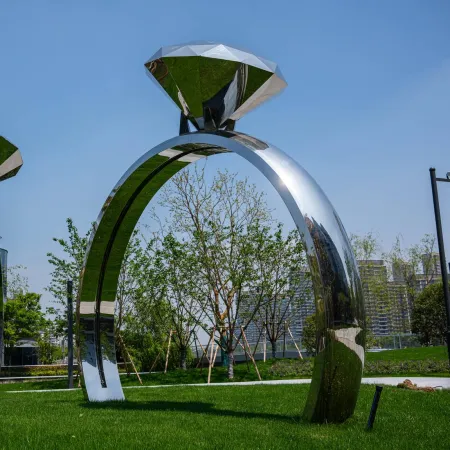
Our fabrication services describe the owned workshops and capabilities, the delivered works archive records the landmarks, and the Diamond Rings installation shows a large fabricated form that demanded precision metalwork.
Why Ownership Is the Guarantee That Matters
Every landmark sculpture manufacturer can show you photographs of impressive works, but the question that separates substance from marketing is simple: where was it built and by whom? A manufacturer that owns its metal shop, its composite workshop, its finishing facility and its installation crews can answer with a factory tour and a named team; one that subcontracts cannot. Ownership matters because it makes inspection meaningful, because it aligns the incentives of the people who quoted with the people who build, and because the artistic intent survives only when the fabricators are part of the same organisation as the designers.
Ownership also protects the schedule and the budget. A manufacturer with owned capacity controls its production queue and can commit to dates honestly; a coordinator depends on the availability and honesty of others, and every dependency is a place where delay and cost overrun enter the project. For a landmark, where the unveiling may be tied to a civic occasion, schedule reliability is not a convenience but a contract with the public, and it is far more likely from a manufacturer that owns its means of production.
The Capabilities a Landmark Manufacturer Must Own
A genuine landmark sculpture manufacturer owns a defined set of capabilities. It owns the design and sculpting studio where concepts become full-size models, because the artistic form is set there. It owns the fabrication shops, metal and composite, where the work is actually built, because quality is controlled there. It owns or directly manages the finishing facility where surfaces receive their final character, because finish is where landmarks are made or unmade. And it owns or directly manages the installation crews that erect the work, because the last mile decides the first impression.
| Capability | Why Ownership Matters | Evidence to Look For |
|---|---|---|
| Design and sculpting | The artistic form is set here | A working studio, not an office |
| Metal and composite shops | Quality is controlled here | Machines large enough for your work |
| Finishing facility | Surface decides the landmark | Controlled finishing environment |
| Installation crews | The last mile decides the icon | Named crews and lift records |
The Factory Evidence That Proves a Manufacturer
The factory itself is the evidence, and a serious buyer audits it before committing. Walk the metal shop and look for the equipment a landmark demands, large-format cutting, heavy welding bays, plate rolling and forming capacity and a clean, organised layout that speaks of disciplined work. Walk the finishing area and look for controlled conditions and craftsmen who understand that a landmark surface tolerates no shortcuts. And ask to see landmark-scale work in progress, because a shop that only fabricates garden ornaments has not earned the right to quote a city icon.
The people are part of the evidence. Ask who will manage your fabrication, who will weld your structure, who will finish your surface and who will supervise the erection, and ask to meet them. A landmark sculpture manufacturer that can name its project manager, its lead welder and its finishing foreman is showing real capacity; one that can name only its sales director is selling capacity it does not have. The meeting with the people who would build your work tells you more than any catalogue.
- Audit the floor: equipment must match the landmark scale
- Meet the team: named welders, finishers and managers
- See work in progress: landmark scale, not ornaments
- Check the records: dated fabrication and inspection files
Engineering and Quality Control Inside the Factory
Inside a real landmark sculpture manufacturer, engineering and quality control are woven into the production line rather than bolted on at the end. The structural design is translated into shop drawings that the welders follow, the materials are verified against certificates on receipt, the welding is inspected at defined stages and the geometry is checked against the drawings as the work progresses. Inspection milestones are recorded with dated photographs, so the client can verify progress without being on site, and the final pre-shipment inspection confirms the work matches the approved design before it leaves the factory.
Factory Signs of a Landmark-Grade Manufacturer
Shop drawings govern the fabrication
Materials verified against certificates
Welds and geometry inspected in stages
Progress recorded with dated photographs
Commissioning a Manufacturer That Can Carry the Whole Weight
Commissioning a landmark sculpture manufacturer is an exercise in matching capacity to ambition. The brief should state the scale, the material, the finish and the site conditions, and the manufacturer should respond with a fabrication plan, an engineering approach and an inspection regime rather than a bare price. The client should visit the factory, meet the team, review the equipment and see landmark work in progress before placing the order, and the contract should tie payments to verified milestones so that every payment tracks demonstrable progress.
Since 2003 our landmark sculpture manufacturer has designed, fabricated and installed public icons across twenty-three countries, building every work in our own workshops. We invite clients to audit our factory floor, meet our fabrication team and watch our current landmark work in progress, because we believe the workshop is the most honest salesroom we have.
A landmark sculpture manufacturer is trusted with the weight of a city ambition, and that trust is earned on the factory floor, where capacity is real, quality is inspected and promises are welded into steel. Choose a manufacturer that owns its workshops, and your landmark will be built by the people you chose.
From Shop Drawings to Finished Landmark
The translation of a landmark design into a built work happens through shop drawings, the detailed documents that tell the workshop exactly what to cut, form, weld and finish, and the quality of this translation decides the quality of the result. The shop drawings break the sculpture into fabricable sections, define the geometry of every piece, specify the welds and the tolerances and sequence the assembly, and they must resolve every detail that the design drawings leave open. A landmark sculpture manufacturer with strong detailing capacity produces shop drawings that the workshop can build without guesswork, and the absence of guesswork is what allows a complex landmark to be fabricated once, correctly, rather than reworked through costly errors.
The journey from shop drawings to finished landmark is governed by inspection at every stage. Materials are verified against their certificates when they arrive; the cutting and forming are checked against the drawings; the welds are inspected as the assembly progresses; and the geometry is verified before the finishing begins. Each inspection is recorded, so the client can follow the progress of the work without being on site, and the final pre-shipment inspection confirms that the finished sculpture matches the approved design in form, surface and detail. For a landmark sculpture manufacturer, the shop drawing and the inspection record are the visible evidence of the invisible discipline that separates a landmark from a large object, and they are the documents a confident manufacturer is glad to share.
Frequently Asked Questions About a Landmark Sculpture Manufacturer
Why does the manufacturer need to own its workshops?
Ownership makes inspection meaningful, aligns the interests of the people who quote with the people who build, protects the schedule and preserves the artistic intent through fabrication. Brokered production adds risk at every handoff.
What should we look for when auditing a sculpture factory?
Equipment that matches landmark scale, an organised and disciplined floor, landmark work in progress, named fabrication and finishing teams, and dated inspection records from completed projects.
How is quality controlled during landmark fabrication?
Through shop drawings, material verification, staged weld and geometry inspection, and dated progress records. A pre-shipment inspection confirms the finished work matches the approved design before it leaves the factory.
Can a manufacturer also install the landmark overseas?
A full manufacturer owns or directly manages installation crews and has export experience, engineering the packing, shipping and erection as part of one contract. Verify the international delivery record before committing.
What payment structure is fair for landmark fabrication?
Payments tied to verified milestones, such as material procurement, fabrication stages, pre-shipment inspection and installation, protect both sides. Progress should be documented before each payment is due.
A landmark sculpture manufacturer must own what it promises, and the workshop floor is where that promise is tested. Audit the factory, meet the makers and see the work in progress, and your landmark will be fabricated by hands you have shaken and standards you have seen.
Walk our floor before you choose us, and let our landmark sculpture manufacturer show you the workshops where city icons are built.