How Modern Memorial Sculpture Redefines the Way We Remember
Modern memorial sculpture has transformed what a memorial can be, moving from the raised figure on a pedestal to works that ask visitors to walk through them, touch them, find their own names reflected in them and carry the act of remembering into their daily lives. The modern memorial is less a monument to be admired from a distance and more an experience to be entered, and that shift has opened commemoration to ideas, materials and forms that the older tradition could not imagine. After more than two decades creating contemporary commemorative works across twenty-three countries, I have watched this new language give communities deeper and more personal ways to remember.
This guide explores the ideas behind modern memorial design and what they offer communities commissioning remembrance today.
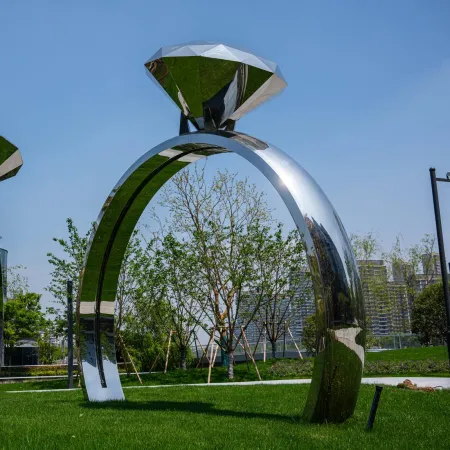
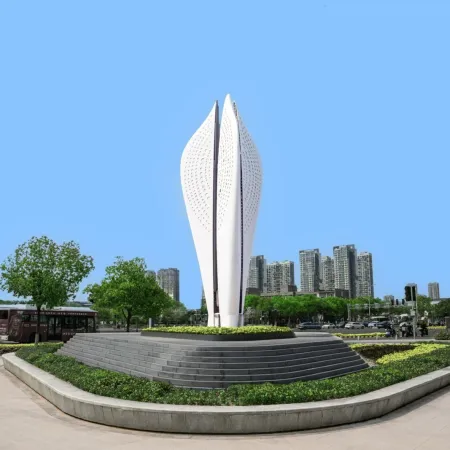
Our contemporary sculpture services design memorials in today's languages of form, the Diamond Rings show the power of pure geometry, and the Artistic Light Columns demonstrate how light and form carry meaning in civic space.
From Pedestal to Participation
The deepest change in modern memorial sculpture is the relationship it creates with the visitor. The traditional monument stood apart, raised on a pedestal, to be admired from below; the modern memorial often does the opposite, inviting the visitor in, to walk between its forms, to pass through its spaces, to touch its surfaces and to become part of the composition. This shift from pedestal to participation reflects a change in how we understand memory itself, no longer a lesson handed down from authority but an experience each person must make their own.
The participatory memorial also serves grief better. A family that can walk through the work, find a name at their own pace and stand in a space shaped for reflection carries away a more personal memory than one that merely looked up at a statue. The modern memorial gives the visitor agency, and agency is what allows each person to find their own meaning in a loss that belongs to everyone.
Abstraction: Memory Beyond Any Single Image
Abstraction has given memorial design a language for losses that no figure can carry. An arch, a ring, a tower, a field of identical forms, a cut in the earth, these gestures can express the scale of a disaster, the anonymity of the unknown dead or the enormity of an event without reducing it to a single image, and they leave room for every visitor to bring their own grief to the work. The abstract memorial does not tell you what to feel; it creates a space in which feeling can happen.
The power of abstraction lies in what it refuses to specify. A figure of a soldier fixes the memory in one person; an abstract field of stones can hold the memory of thousands without naming any, and in that openness the visitor's own imagination completes the work. The modern memorial trusts the visitor, and that trust is itself a form of respect for the complexity of grief.
| Modern Idea | How It Remembers | Example Gesture |
|---|---|---|
| Participation | Visitor enters and completes the work | A passage to walk through |
| Abstraction | Loss too large for one image | A field of identical forms |
| Reflection | The living appear in the surface | A mirror wall among the names |
| Landscape | The ground itself becomes the work | A garden shaped as memory |
Light, Water and Time as Memorial Materials
Modern memorial sculpture has added materials that the old tradition never used: light, water, sound and time itself. Light can lift a memorial after dark, carry names into the night or cast shadows that change through the day; water can bring reflection, sound and a living movement to a place of memory; and time can be designed into the work, through materials that weather, gardens that grow and forms that reveal themselves slowly. These materials make the memorial a presence rather than an object.
The use of these materials demands engineering and maintenance discipline that a traditional monument never needed. Lighting systems must be specified for decades of outdoor service and maintained by the community; water features must be engineered, filtered and winterised; and living elements must be cared for by those who inherit the memorial. We design modern memorials with their full life in view, so that the light still lifts the names and the water still runs in the years when the original community is gone.
Modern Materials, Modern Permanence
The materials of modern memorial sculpture carry its ideas into permanence. Stainless steel brings the mirror and the soaring form, weathering steel brings an elegiac rust that ages with the landscape, glass and cast materials bring light and colour, and stone remains for the forms that need its gravity, while the modern use of these materials is often more experimental than the tradition allowed. Each material must still be specified for the site and cared for over decades, because modernity is not an excuse for impermanence.
The fabrication of modern memorials demands workshops that have mastered the new materials as completely as the old. Mirror stainless must be formed and finished without a flaw, weathering steel detailed so its runoff is controlled, and complex structures engineered to stand safely while appearing effortless. We fabricate modern memorials in our own workshops, because the new languages of commemoration deserve the same craft discipline as the oldest traditions.
Commissioning a Modern Memorial With the Community
Modern memorial sculpture succeeds when it is commissioned in genuine dialogue with the community it will serve, because the new languages can be unfamiliar and the trust of the public must be earned through the process. The community should see the concepts, understand the ideas behind the abstraction or the participation, and have a real voice in the choices, while the studio guides them through what the modern form can offer. A modern memorial that the community has helped to understand is a modern memorial the community will embrace.
Since 2003 our studio has designed and delivered modern memorial sculpture across twenty-three countries, working with communities to find the contemporary form that carries their memory best. We hold design, engineering, fabrication and installation under one roof, and we would be honoured to help your community explore how a modern memorial could give its remembrance a new and lasting voice.
- Move from pedestal to participation: let the visitor enter the memory
- Trust abstraction: some losses are too large for one image
- Add light, water and time: the memorial can live, not only stand
- Commission with the community: new languages need shared understanding
Modern Memorials Make Memory Personal Again
Works the visitor enters and completes alone
Forms that hold loss beyond any single image
Light, water and landscape that keep memory alive
A contemporary voice that will still speak in a century
Memorials That Grow: Gardens, Trees and Time
Some of the most affecting modern memorial sculpture is designed to grow, joining the living world so that the memorial itself changes with the years. A memorial garden planted with a tree for every life lost, a sculpture set among planting that will eventually frame and embrace it, a work whose weathering steel darkens with the seasons, these memorials accept time as a collaborator rather than an enemy, and their growth becomes part of their meaning. The memorial that grows reminds us that memory is not fixed but living, carried forward by each generation that tends it.
The growing memorial demands a commitment that a static monument does not, because the trees and the planting must be cared for by those who inherit the work, and the design must anticipate how the site will look in ten, twenty and fifty years. We design growing memorials with landscape specialists, choosing species for the site and the meaning, planning the maintenance and preparing the community for the long custody the work requires, because a memorial that grows is a memorial that asks its people to grow with it.
Frequently Asked Questions About Modern Memorial Sculpture
What makes a memorial modern rather than traditional?
Modern memorials invite participation rather than distance, use abstraction for losses too large for one image, add light, water and landscape as materials, and trust the visitor to complete the meaning.
Can an abstract memorial still honour specific people?
Yes. Many modern memorials combine abstraction with walls of names, so the gesture carries the scale of the loss while the names keep each person individual, findable and honoured.
Do modern memorials last as long as traditional ones?
When materials are specified for the site and maintained on schedule, yes. Stainless steel, weathering steel and stone carry modern forms with the same permanence as any tradition.
Why do modern memorials often include light or water?
Light keeps a memorial present after dark and can carry names into the night; water brings reflection, sound and living movement. These materials make the memorial a presence rather than an object.
How do communities come to accept a modern memorial?
Through genuine involvement in the design process. When the community sees the concepts, understands the ideas and helps shape the choices, it embraces the modern form as its own.
Modern memorial sculpture has redefined the way we remember by trusting the visitor, expanding the language of loss and adding the living materials of light, water and time, and it has given communities deeper and more personal ways to honour what they cannot forget. Commission with an open mind and a genuine partnership, and the modern form you choose will carry your memory into the next century.
Let our studio help your community discover what a modern memorial sculpture could mean for the memory you carry.