Why Public Space Stainless Steel Art Is the Signature of the Modern City
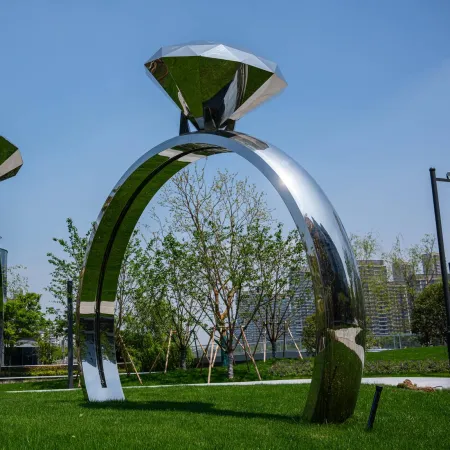
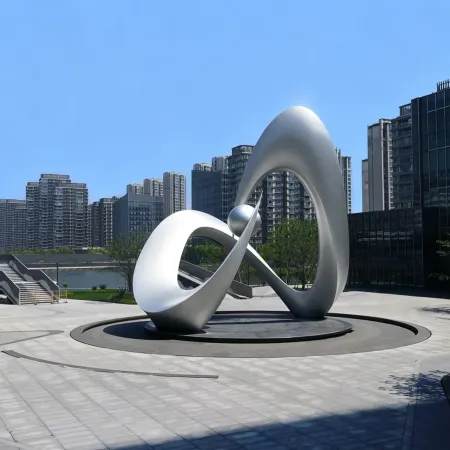
Public space stainless steel art is the signature of the modern city because no other material combines its mirror, its longevity and its ability to reflect the life around it, and the works made in it become the landmarks that define their plazas and skylines. Stainless steel carries the present tense of urban life, changing with every cloud, every passer-by and every season, while standing unchanged against the weather for decades.
Since 2003 our studio has made public space stainless steel art across 23 countries, from mirror-polished landmarks to kinetic devices, and we have learned what the material demands of its makers. This guide explains the grades, the finishes and the craft behind stainless public art, and how to commission a work whose mirror will still be true in fifty years.
See stainless results in our project gallery, our stainless capabilities in the services overview and a stainless landmark such as Peach Blossom, a 20.8-metre stainless gateway.
Why Stainless Steel Suits the Public Realm
Public space stainless steel art succeeds because the material offers three qualities that public art needs more than any others. Its corrosion resistance lets it stand in the open for decades with minimal care; its strength lets it reach scales and cantilevers that other materials cannot manage gracefully; and its reflectivity lets it carry the life of the place, the sky, the buildings and the people, so the work is never the same twice and never grows tired. Those three qualities together make stainless the natural material of the modern public realm.
Stainless also ages with a dignity that few materials match. A mirror-polished work develops a patina of fine scratches and cleaning marks that, managed properly, becomes part of its character rather than a defect; a brushed or bead-blasted surface hides the marks of public life gracefully; and the material itself does not stain, flake or fade the way painted surfaces do. The result is a work that looks much the same in year thirty as it did in year one, which is exactly what a city wants from a permanent landmark.
Choosing the Right Grade for the Site
Not all stainless steel is the same, and the choice of grade for public space stainless steel art should be driven by the site's atmosphere. The common 304 grade serves most urban and rural sites well, but coastal air, road salt and some industrial atmospheres can attack it, and the 316 grade, with added molybdenum, resists chlorides and is the safer choice near the sea or on treated roads. The maker should specify the grade for the actual site and verify it with material certificates when the steel arrives.
The details of the specification matter as much as the grade. The surface finish should be chosen for how the work will be seen and cleaned; the internal structure should avoid crevices where moisture hides and corrosion begins; dissimilar metals should be isolated so they do not corrode each other; and the welding should use the correct filler so the joint keeps the corrosion resistance of the parent metal. A stainless work is only as stainless as its weakest detail, and serious makers design every detail for the site's real conditions.
| Finish | Character | Best public use |
|---|---|---|
| Mirror polish | Full reflection of the life around it | Landmarks and works meant to be photographed |
| Brushed | Soft sheen, hides marks of use | Works near people and constant touch |
| Bead blast | Matte, even, low-reflection surface | Forms where glare and fingerprints matter |
| Coloured / PVD | Gold, bronze and black tones on steel | Signature works that need colour with metal depth |
The Craft of the Mirror and the Invisible Weld
The craft of public space stainless steel art is most visible in its hardest demand: the mirror and the invisible weld. A true mirror is built up through graded abrasives, each finer than the last, until the surface reflects without distortion, and it is achieved on complex curved forms only by hands that have done it hundreds of times. A weld in a mirror surface disappears only when the shielding gas, the filler and the grinding are all right, and the transition between weld and parent metal must be blended until no eye can find it.
The polishing room is where the mirror is won or lost, and it should be isolated from the grinding and welding that would contaminate it. Carbon steel dust landing on a stainless surface becomes rust that pitting begins around, so a serious workshop separates its stainless finishing from its carbon steel work and protects finished surfaces through every later stage. We hold our mirror samples to a standard that reflects a straight line without waver, and we match the finished work to that sample in natural light before it leaves the workshop.
Engineering and Protecting Stainless Landmarks
The engineering of public space stainless steel art must answer the demands of scale and public safety. Large stainless forms need structural analysis for their own weight, wind and any seismic loads; their internal frames must support the skin without showing through the mirror; and their foundations must hold the work true while the ground around it moves with the seasons. The material's strength is an opportunity, allowing slender forms and long cantilevers, but only when the engineering earns that freedom.
Protecting the finished surface is a discipline that runs from the workshop to the site. Stainless surfaces are covered and isolated during transport so no steel dust or handling mark reaches them; the installation sequence protects the mirror from tools and scaffolds; and the final clean removes every fingerprint and smudge before the barriers come down. The public's first view of a stainless landmark should be its truest, and the makers who protect the surface through the journey deliver that first view intact.
Commissioning Stainless Steel Art With Confidence
The commissioning of public space stainless steel art should verify the maker's stainless craft specifically, because not every metal workshop has mastered the material's demands. Ask which stainless projects the studio has delivered, visit or video-walk the polishing area, request mirror samples and ask how welds will be made invisible in your design. The clients who verify stainless craft before signing are the ones whose mirrors stay true for decades, and the ones who assume any metal shop can do it are the ones who learn otherwise in year one.
The specification should be precise about grade, finish and care. Name the grade for your site's atmosphere, define the finish against approved samples, agree the cleaning routine with the owner's team and attach the samples to the contract as the standard of acceptance. Stainless rewards precision at every stage, and the client who specifies it precisely receives a work whose mirror is a promise the maker has already kept.
Stainless Commissioning Checklist
- Specify the grade for your site's atmosphere, 316 near salt and treated roads.
- Approve mirror and finish samples in natural light before production.
- Verify the polishing room is isolated from contaminating work.
- Audit the stainless craft record of the workshop.
- Agree the cleaning routine and protect the surface to the site.
What Masterful Stainless Work Delivers
A mirror that reflects the city's life without distortion
Welds and joints no eye can find
A grade chosen for the site's fifty-year weather
A landmark that still looks new in year thirty
Frequently Asked Questions About Public Space Stainless Steel Art
Which stainless grade should public art use?
304 serves most sites, while 316, with added molybdenum, resists chlorides and is the safer choice for coastal air, road salt and aggressive industrial atmospheres.
Does mirror stainless steel need a lot of maintenance?
It needs regular cleaning to keep its reflection, which is why the finish should be chosen with the owner's cleaning reality in mind and the care routine agreed before installation.
Why do welds sometimes rust on stainless works?
Because the weld or the surrounding surface was contaminated, often by carbon steel dust, or the wrong filler was used, which is why clean workshop separation and correct procedures are essential.
Can stainless steel be coloured for public art?
Yes, through PVD coating, which adds gold, bronze, black and other tones while keeping the metal's durability, and which suits signature works that need colour with depth.
How do I verify a workshop's stainless craft?
Ask for its stainless project record, visit the polishing area, request mirror samples in natural light and inspect how welds have been made invisible on delivered works.
Public space stainless steel art is the mirror the modern city holds up to itself, and the works that endure are the ones whose grade, finish and craft were chosen for the site's real life. Commission it from a workshop that has mastered the material's demands, and the landmark will reflect the city's changing days for generations while standing unchanged against them.
If you are planning public space stainless steel art, we will show you mirror samples, walk you through our stainless finishing area and discuss which grade and finish will serve your site for the next fifty years.