Why Contemporary Stainless Steel Sculpture Defines the Modern Skyline
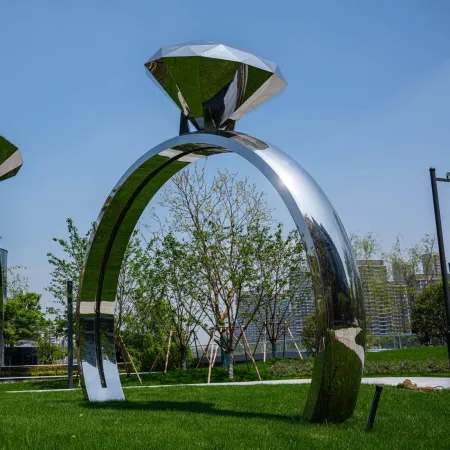
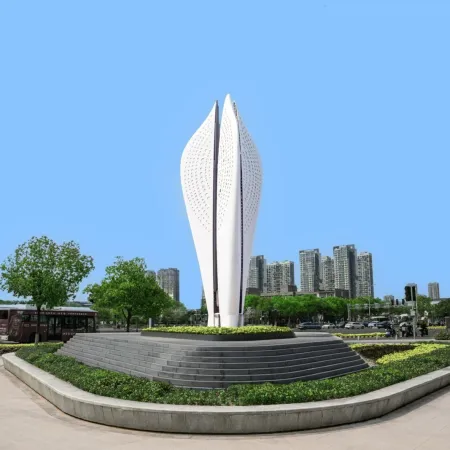
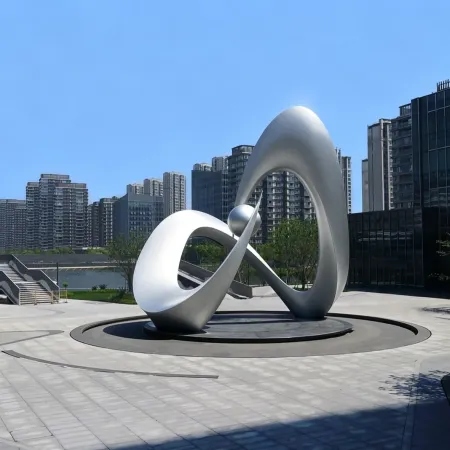
Contemporary stainless steel sculpture has become the signature material of modern public art because it does what no other medium does: it mirrors the world around it while remaining utterly itself. A polished stainless work changes through every hour — silver at noon, amber at dusk, glittering with city lights at night — and it never needs repainting, recoating or restoration of its color, because its color is the metal itself. That combination of brilliance and permanence is why stainless anchors the skylines, plazas and waterfronts of the contemporary city, and why it carries some of the most ambitious sculpture ever built. Yifeng Sculpture Studio has fabricated contemporary stainless steel sculpture since 2003 for clients across more than twenty countries, and this guide explains the material's craft, its finishes and how to commission a work that will shine for generations.
We look at why stainless leads the contemporary skyline, the finishes that give it character, and the engineering that lets mirror-polished forms stand safely outdoors.
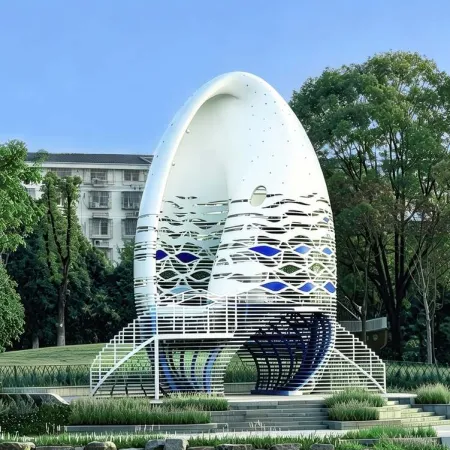
Our project archive is rich with stainless commissions, the services overview explains our fabrication capability, and the Fishbone Corridor shows polished stainless structure creating both sculpture and shelter.
What Stainless Gives Sculpture That Nothing Else Can
Stainless steel offers sculpture a combination that is genuinely unique. Its chromium content forms an invisible protective layer that resists corrosion without any coating, which means a mirror-polished work can stand fully exposed outdoors and never rust, fade or need repainting. Its reflectivity makes the work a living surface — carrying the sky, the buildings, the water and the people around it, changing with every cloud and every hour. Its strength allows slender, ambitious forms that other materials could not hold, from soaring arches to cantilevered ribbons. And its permanence is measured in centuries rather than decades, with a documented life in architecture that makes it the natural choice for works meant to outlast their commissioners. No painted surface, no coated metal and no stone can offer that combination of brilliance, strength and immortality — which is why the contemporary city keeps choosing stainless for its most visible works.
The Finishes That Give Stainless Its Character
Stainless sculpture is not one look but a family of surfaces, and the finish choice shapes the work as much as its form. Mirror polish gives the classic contemporary look — a seamless reflective surface that photographs the world, achieved by hand-polishing through progressively finer stages until the metal behaves like a liquid mirror. Satin brush gives a quieter elegance, its fine directional texture absorbing light softly and suiting architectural settings where mirror would glare. Bead blasting produces a matte, evenly diffused surface that reads as calm grey, often chosen for large forms where mirror would be overwhelming. And tinted or patterned surfaces extend the family further, from subtle PVD color to etched texture. Each finish is specified for the work's setting — what reflects too aggressively beside a glass facade, and what disappears without enough light. The studio develops the finish on physical samples so the client approves the exact surface in real light before production.
Stainless Finishes and Their Voices
- Mirror polish: seamless reflection that photographs the world around it
- Satin brush: quiet texture that absorbs light without glare
- Bead blast: even matte grey for calm architectural presence
- PVD tint: durable color added to the metal surface
- Etched texture: pattern and relief drawn into the finish
The Craft of Making Stainless Disappear
The paradox of mirror-polished stainless sculpture is that its beauty depends on invisibility — every weld, every joint, every seam must be worked until the eye cannot find it, and that is the hardest craft in the material. The making begins with fabrication: plate is cut and formed, and the sections are assembled with welds that must be both structurally sound and cosmetically invisible. The polishing follows — hours of handwork through progressively finer abrasives, erasing the weld and unifying the surface until the whole form reflects as one continuous mirror. The challenge grows with complexity: compound curves and concave surfaces demand different techniques, and a single missed stage shows as a distortion in the reflection. This is why stainless sculpture is the workshop's ultimate test, and why the studios that master it are few. The craft is invisible in the finished work and entirely present in its quality — a mirror surface is honest about every hand that touched it.
| Stage | Craft Demand | What Can Go Wrong |
|---|---|---|
| Fabrication | Precise forming and welding | Distortion that polishing cannot remove |
| Polishing | Hours of progressive handwork | A missed stage distorts the reflection |
| Protection | Surface guarded through handling | Contact marks that need re-polishing |
| Installation | Careful lifting and final touch | Site damage to a finished mirror |
Engineering for Reflection at Scale
Because stainless carries both structure and surface, contemporary stainless steel sculpture can reach extraordinary scale while remaining elegant. The engineering must serve two masters: the structure that keeps a large polished form safe in wind and public life, and the surface quality that must survive fabrication, transport and installation without compromise. Large works are engineered in sections sized for transport, with the joints between sections placed where the mirror can be made seamless after assembly. The grade is chosen for the site — 304 for most settings, 316 where salt air demands the higher corrosion resistance — and the surface is protected from contamination through every stage, because carbon steel dust or grinding debris embedded in stainless will rust and stain it years later. This is why stainless sculpture is engineered as carefully as it is polished: a mirror surface forgives nothing, and the studio that delivers flawless large works has mastered both the science and the craft.
What Our Studio Delivers in Stainless
Concepts designed to use reflection as part of the composition
Finish samples developed until the exact surface is approved
Fabrication and polishing to a seamless mirror standard
Engineering, installation and a care plan for the finish
Caring for a Mirror for Decades
The maintenance story of stainless is one of its great gifts to public clients: no repainting, no recoating, no color to fade. A stainless work outdoors needs periodic washing to remove the grime and airborne deposits that can dull a mirror surface or, in coastal and industrial air, feed surface staining if left too long. The wash is simple — water and a mild detergent, with the rinsing direction and soft cloths specified in the care manual so the finish is never scratched. An annual inspection checks the invisible half: anchors, drainage paths and the surfaces most exposed to contact. Where public touching has marked a mirror, local re-polishing restores it. This modest regime is why stainless works across the world still look new after decades, and why the care manual we deliver is short enough for any municipal crew to follow. A stainless work asks little and gives everything — the mirror stays honest for generations.
Frequently Asked Questions About Contemporary Stainless Steel Sculpture
Will a mirror-polished work stay bright outdoors?
Yes — stainless resists corrosion without coating, and its mirror holds for decades with periodic washing. It will never fade, rust or need repainting; the care manual defines the simple wash and inspection regime that keeps it at its best.
Is stainless suitable for coastal sites?
Yes — with the right grade. For marine and salt-exposed environments we specify 316 stainless, whose higher alloy content resists pitting and staining. The grade selection is part of the design dialogue for every coastal commission.
Can the surface be repaired if it is scratched?
Yes — one of stainless's advantages is that local damage can be re-polished back to the surrounding finish. The care manual explains the technique and when to call the studio, so a scratch need never become a permanent scar.
How do you prevent reflections from causing glare problems?
Through finish and geometry decisions made at design stage. Where a site demands it, satin or bead-blast finishes diffuse reflection instead of focusing it, and curved mirror forms can be composed to avoid concentrating sunlight — the studio models these effects before fabrication.
Why does stainless cost more than painted steel?
The material itself costs more, and the mirror-polishing craft is labor-intensive, often doubling or tripling the finishing effort of painted work. Clients choose stainless for its unique reflectivity, its corrosion-free permanence and its freedom from repainting cycles over decades.
Contemporary stainless steel sculpture defines the modern skyline because it offers what no other material can: living reflection, uncoated permanence and a surface that stays honest for generations. Our studio has mastered the material since 2003, delivering contemporary stainless steel sculpture across more than twenty countries from intimate courtyard works to monumental civic landmarks. If your site deserves a work that will mirror its skies and outlast its memories, bring us the place and the ambition — the contemporary stainless steel sculpture we fabricate together will be polished to perfection, engineered for its decades and standing brilliant when everything around it has aged.
Send us your site and your concept, and we will develop finish samples in real light so you can approve the exact surface of the contemporary stainless steel sculpture we propose before a single sheet is cut.