How Urban Outdoor Sculpture Gives the City a Soul Among the Towers
Urban outdoor sculpture works in the most demanding environment art can face, among towers, traffic, crowds and the constant competition of the city's own architecture, and it must earn its place against a backdrop that dwarfs almost everything humans make. Yet the cities that commission sculpture well know that it repays the challenge, giving the stone and glass a human voice, a memory and a soul.
This guide explains how urban outdoor sculpture is designed for the city's scale and speed, how it survives the urban environment and how it becomes part of a district's identity.
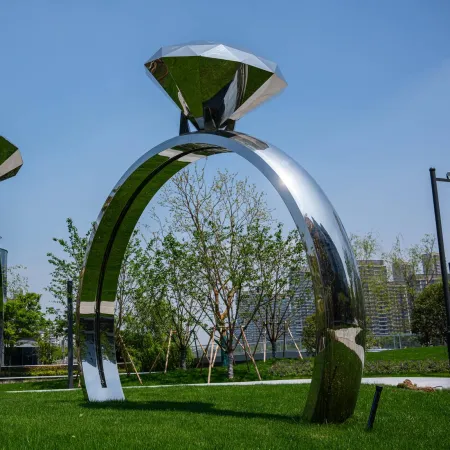
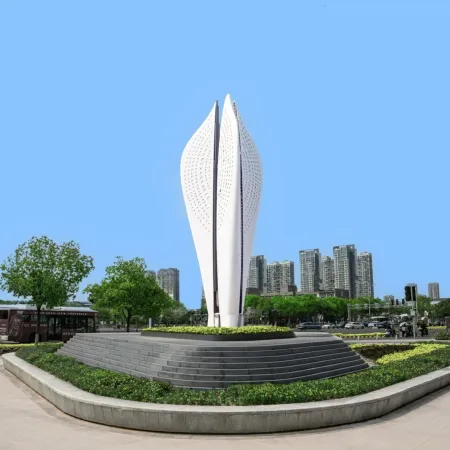
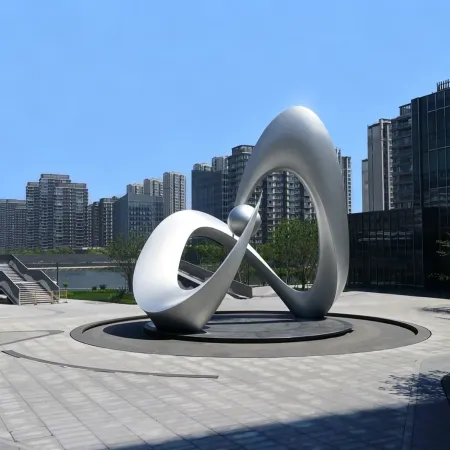
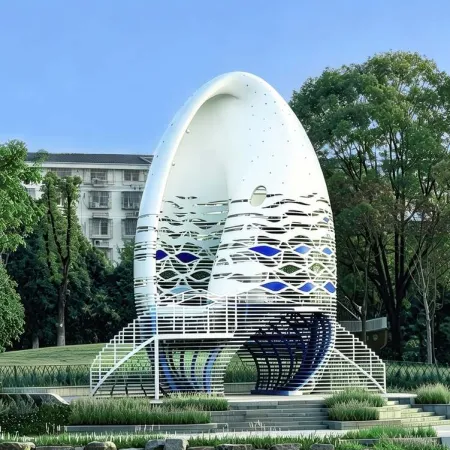
See urban identity in Artistic Light Columns, the city landmark of Heart of Changfeng and the civic poetry of Weaving Shadows of Fishing Waves.
Competing With the City Itself
Urban outdoor sculpture must hold its own against the most powerful visual competition on earth, buildings that rise hundreds of metres, façades of glass and steel, signage, vehicles and the endless motion of the street. A work that would command a park or a campus can vanish in the city, so urban sculpture must be designed with an intensity of presence, a boldness of silhouette, a clarity of form or a brilliance of surface that cuts through the visual noise. The city demands that art state its case quickly and hold it with confidence.
Yet the city is also where art can matter most, because urban life is so dominated by function that a moment of beauty becomes precious. A sculpture that catches the eye of a commuter, gives an office worker a reason to pause or turns a hard junction into a meeting point is performing a service that no building can, and the best urban work does this without shouting, earning its place through presence rather than volume. The city does not need more noise; it needs more meaning, and urban outdoor sculpture at its best supplies exactly that.
Scale, Speed and the Urban Gaze
The urban audience sees sculpture at speed and at distance, from cars, buses, trains and the far side of wide streets, so the first reading of urban outdoor sculpture must be legible in motion. A bold silhouette, a distinctive colour, a brilliant surface or a dynamic form announces the work before detail is possible, and this distant announcement is what draws people closer. The design should therefore be tested against the real sightlines of the city, the approaches by road and foot, and the distances from which the work will first be seen.
Scale in the city is a conversation with buildings. A sculpture beside a tower does not need to match its height but must hold its ground, and the right scale often comes from the human encounter at the base rather than the competition at the top, a work large enough to claim its corner yet intimate enough to greet the people who arrive beneath it. The best urban works operate at two scales at once, announcing themselves across the street and then rewarding the close approach, and composing that double life is the heart of designing for the city.
| Urban setting | Character of the place | Sculpture opportunity |
|---|---|---|
| Street corner | Fast, functional, passing | A moment of surprise and pause |
| Civic square | Gathering, ceremony, events | A centre of public identity |
| Transit hub | Crowds in motion | Legible in seconds at scale |
| Office district | Corporate, daily, routine | Human warmth among glass |
| Waterfront and avenue | Leisure, views, promenade | Dialogue with water and skyline |
Surviving the Urban Environment
Urban outdoor sculpture lives in the harshest atmosphere art can face, polluted air, acid rain, road salt, grime, vibration and the constant possibility of vandalism, and its materials must be chosen for that endurance. Stainless steel, in grades suited to the atmosphere, shrugs off pollution and cleans easily; weathering steel carries its own protective patina where its character suits; bronze ages with dignity; and stone, particularly granite, endures the city almost unchanged. Every surface should tolerate the cleaning the city will give it, and every detail should resist the slow attack of urban life.
The city also demands structural honesty, because urban works stand among crowds, above underground structures and in the path of the city's own maintenance, and they must be engineered for all of it. Wind between towers can be violent and unpredictable; foundations must respect the car parks, tunnels and services below; and the work must survive the city's cleaning, gritting and occasional collisions without failing. A studio with real urban experience will engineer for these realities and coordinate with the city's engineers, delivering a work that is as robust as it is beautiful.
Identity, Memory and the District's Story
The deepest value of urban outdoor sculpture is the identity it gives a district, because in a city of interchangeable towers, a work of art is often the one thing that makes a place recognisable. Districts are remembered by their landmarks, and a sculpture can become the image of a neighbourhood, the backdrop of its photography, the meeting point of its community and the symbol that appears in its marketing. When a district commissions a work that carries its story, its industry, its history or its hopes, it gives itself a face in the city's crowded memory.
That identity grows with time and use. A work commissioned today becomes the place where tomorrow's residents take their visitors, where a generation marks its milestones and where the district's story is told to newcomers, and those accumulated associations make the sculpture irreplaceable. The commissioning process should therefore listen to the district before it designs, gathering the stories and the hopes that the work will carry, and it should choose a form with enough openness for the community to make its own meaning over the years. When urban outdoor sculpture carries a district's identity, it is no longer decoration but inheritance.
Commissioning for the City
Commissioning urban outdoor sculpture is a partnership between the client, the community, the city and the studio, and it succeeds when the process matches the ambition. Define the brief with the district and the city, describing the site, the audience, the meaning and the constraints; select a studio with proven urban work through a transparent process; and manage the project with clear milestones for design, engineering, approvals, fabrication and installation. The team should include the engineers who understand the site below ground and the managers who will maintain the work above it.
Choose a studio that has lived with the city, one whose works have weathered urban life and whose relationships with civic engineers and authorities are proven, and verify that experience in the field, visiting works that have stood among traffic and crowds for years. Agree the materials, the structural design, the maintenance guidance and the lighting in writing, and plan an installation that protects the public from the first barrier to the final clean. When the district's story, the city's engineering and the studio's craft are all honoured, urban outdoor sculpture gives the city a soul among the towers, a work that will still be telling its story when the towers around it have been replaced.
- Compete with presence: the city demands intensity of form
- Design for two scales: announce far, reward close
- Engineer the city's harshness: pollution, salt and vibration
- Carry the district's story: identity outlives the towers
What the City Needs From Art
A presence that cuts through the noise
A form engineered for urban harshness
A story the district recognises as its own
An identity that outlives every tower
Frequently Asked Questions About Urban Outdoor Sculpture
How does urban sculpture stand out among tall buildings?
Through intensity of presence rather than size: a bold silhouette, a distinctive colour, a brilliant surface or a dynamic form that cuts through the city's visual noise and reads at speed and distance.
What materials survive best in the city?
Stainless steel in suitable grades, weathering steel, bronze and granite all endure urban pollution and cleaning well when properly specified. The right choice depends on the design and the district's character.
How do underground structures affect sculpture foundations?
Car parks, tunnels and services beneath the street constrain where and how a foundation can be built, so the design must be coordinated with the engineers of the underground world before the site is fixed.
Can sculpture be placed on busy streets safely?
Yes, when sited and engineered properly: clear of sightlines and traffic, protected from vehicles, stable under wind between towers and robust against the city's maintenance. Civic approvals manage the safety process.
How do we commission sculpture for our district?
Define the brief with the community and the city, select a studio with proven urban work through a transparent process, and manage design, engineering, approvals and installation with clear milestones and written agreements.
Urban outdoor sculpture is how a city keeps its soul among the towers, a work that gives stone and glass a human voice and a district a face it can call its own. When it is designed with presence, engineered for the city's harshness and opened to the community's story, it becomes one of the most enduring gifts a city can give itself.
Plan urban outdoor sculpture for your district with our city-seasoned public art team.