Why Public Art Installation Artworks Are Made to Be Lived With
Public art installation artworks are a distinct family of sculpture, created not for a gallery wall or a collector's plinth but for the daily life of real places. They are designed to be lived with, walked past, returned to and remembered, and that public destiny shapes every decision about their form, their materials and their making.
This guide explains what distinguishes public art installation artworks from other sculpture, how such works are conceived to serve their places, and what clients should understand about commissioning art that belongs to everyone.
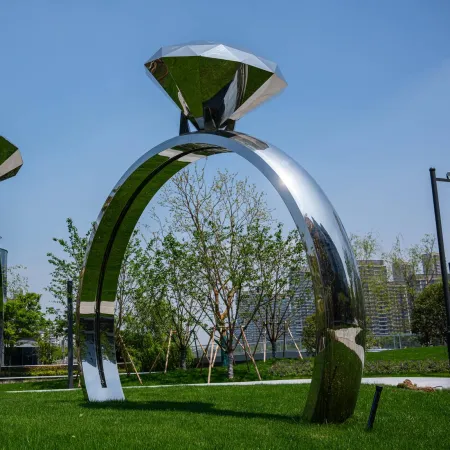
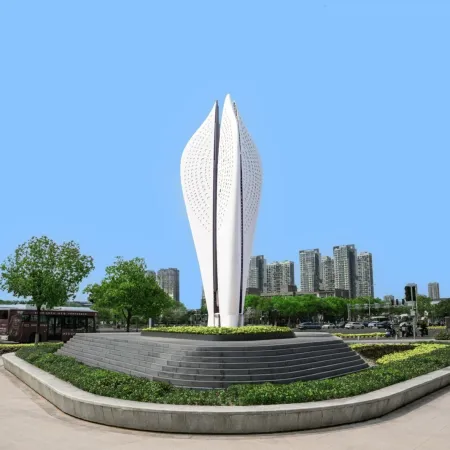
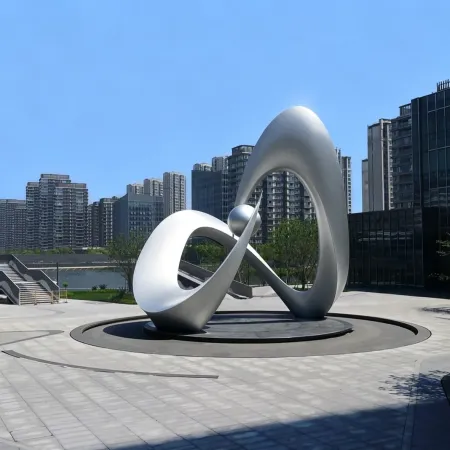
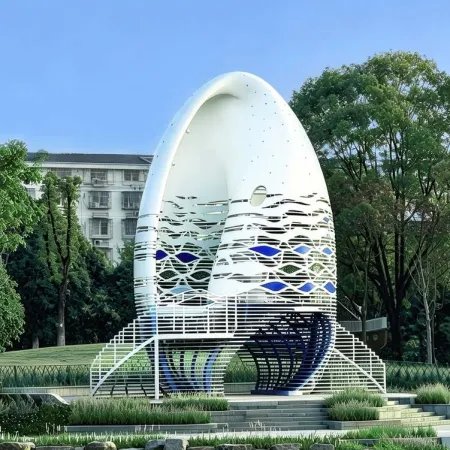
Meet public art installation artworks in Peach Blossom, Fishing Net Canopy and Artistic Light Columns.
What Makes Public Artwork Different
Public art installation artworks differ from gallery or private sculpture in almost every respect, beginning with their audience. A gallery work is seen by people who chose to come and look; a public work is seen by everyone, whether they came for art or not, and it must earn its place in the daily attention of people who are busy living their lives. This changes the terms of the art: a public work must reward both the glance and the study, offering something to the commuter passing for the hundredth time and something more to the visitor who stops to look, and it must do so without demanding the concentrated attention that gallery art assumes.
Public works also differ in their lifespan and their exposure. A gallery work may live a sheltered life under controlled conditions, but public art installation artworks are built for decades of weather, sunlight, pollution and public contact, and they are expected to remain works of art through all of it. This is why the materials and the engineering of public work carry such weight: the form may be as free as any gallery piece, but it must be realised in materials that will hold their quality outdoors and in structures that will stand safely among the public for a generation or more. The discipline of permanence is part of the art itself.
Art That Serves Its Place
The finest public art installation artworks serve their places as well as their own ideas, entering into a relationship with the site that enriches both. A work may mark an entrance, giving a district a threshold and a welcome; it may anchor a plaza, giving the open space a centre around which life gathers; it may accompany a path, turning a walk into a sequence of discoveries; or it may hold a memory, giving a community a place to bring its stories and its grief. The work that serves its place in one of these ways becomes part of the place's functioning, not an ornament on top of it.
Serving the place also means respecting the people who live there. Public art installation artworks should be conceived with an awareness of the community's character, its history and its daily life, without being reduced to whatever the community already knows; the strongest public works are both familiar and surprising, rooted in their place yet opening it to something new. The studio should spend time in the place, watching how it is used and listening to what it means, and the work should grow from that encounter. An artwork that truly serves its place is one that the place could not imagine being without, and that quality is never achieved from a studio alone.
The Materials of Public Permanence
The material choices for public art installation artworks are made under the eye of permanence, because a public work must still be itself after decades of weather and use. The proven palette of public sculpture, stainless steel in its various finishes, bronze with its living patina, weathering steel with its deepening rust, stone with its ancient patience, is proven precisely because it endures, and the studio should choose within it according to the climate, the site and the character the work should carry. The choice of material is the first commitment to the work's future, and it should be made with the future honestly in view.
The details of permanence matter as much as the grand choice of material. The joints must be designed so that water cannot enter and freeze; the fixings must be protected against the corrosion that attacks every junction of different metals; the drainage must be planned so that no surface holds water against its finish; and the access for maintenance must be designed so that the work can be cleaned, inspected and repaired through its life. These are not engineering afterthoughts but the substance of public sculpture, and a studio that has watched its public works age knows that the invisible details decide whether the visible beauty survives.
| Quality of public artwork | What it means for the work | How the public feels it |
|---|---|---|
| Accessibility | Rewards glance and study alike | Daily life is enriched without effort |
| Belonging | Grows from the character of the site | The place seems completed by the work |
| Durability | Materials chosen for the decades | The work keeps its quality over time |
| Safety | Engineered for public contact | Families approach without worry |
Commissioning Art That Belongs to Everyone
Commissioning public art installation artworks is different from buying a sculpture, because the client is acting on behalf of a public that will live with the work. The process should therefore be transparent, with the selection made on published criteria and the community given a genuine role in shaping the outcome, and it should be patient, because a public work that is rushed into place without honest engagement will struggle to earn the adoption that makes it succeed. The client who commissions public art is not buying an object for private pleasure but stewarding a gift to the public realm, and the process should honour that trust.
The studio chosen for a public commission should bring more than artistic talent; it should bring the full discipline of public work, from engineering to installation to the honest maintenance plan that will carry the piece through its life. The client should look at installed public works rather than studio photographs, should speak with the people who maintain them and should satisfy themselves that the studio will still be answerable when the work weathers its first years. Public art installation artworks are a long commitment by everyone involved, and the commissions that succeed are those where the client, the studio and the community all understood that they were entering a relationship with the work and with each other that would last as long as the sculpture itself.
The Making of a Public Work
The journey of public art installation artworks from concept to site is longer and more demanding than the making of a gallery piece, and the client should understand the stages that lie ahead. After the concept is approved, the work must be engineered, with the structure calculated, the materials specified and the foundations designed for the actual site; it must then be fabricated, often in sections that will be assembled at the site, with the finishes applied and the quality checked against the approved standard; and finally it must be transported, lifted and installed, with the work protected at every handover. Each stage carries its own risks, and each is best carried by a team that holds the whole journey.
The client's role through the making is to stay engaged without interfering, approving the milestones that need approval, visiting or reviewing the work at the points where their eyes add value, and keeping the community informed so that the arrival of the work is an event rather than a surprise. The best public commissions are those where the client acts as the work's champion and its guardian, protecting the vision through the long months of making and preparing the public for the moment of arrival. When the work finally stands in its place, the client shares in the pride of everything that was overcome to bring it there, and that pride is one of the deepest rewards of commissioning public art.
Art Made for Public Life
Rewards the daily glance and the long study
Grows from the character of its place
Built from materials that endure outdoors
Commissioned for the public that owns it
The Life of the Work After the Unveiling
The unveiling of public art installation artworks is not the end of the commission but the beginning of the work's public life, and the years after installation decide whether the piece fulfils its promise. A work that is lit at night, kept clean and repaired promptly continues to grow in the affection of its public; a work that is neglected quietly loses the presence that made it worth commissioning, whatever its original quality. The maintenance plan that the studio provides, and the budget and commitment that the owner brings to it, are therefore part of the artwork itself, as essential to its life as the materials from which it was made.
The public life of the work is also shaped by the stories told about it. The interpretation that accompanies a public artwork, whether a plaque, a trail entry or the word of mouth of an adopted community, carries its meaning to those who were not there at its creation, and the client should plan for that interpretation as part of the commission. The works that endure across generations are those whose stories are told and retold, whose maintenance is honoured and whose place in the community's life is continually renewed. Public art installation artworks are made to be lived with, and the living with them, by their owners, their caretakers and their public, is what completes them as art.
Frequently Asked Questions About Public Art Installation Artworks
How does public art differ from gallery art?
Public art is seen by everyone, lives outdoors for decades and must reward both the passing glance and the long study. Permanence and public life are part of the art itself.
What makes a public artwork belong to its place?
A design that grows from the site's character, history and daily life. The studio should spend time in the place and listen to its people before the form is fixed.
What materials should public works use?
The proven palette of public sculpture, chosen for the climate and the site: stainless steel, bronze, weathering steel and stone, with details engineered for decades of outdoor life.
Who owns a commissioned public artwork?
The commissioning client owns the physical work and its design, and the contract should protect against unauthorised reproduction. The public owns the experience of it.
How is a public work cared for after installation?
Through a maintenance plan covering cleaning, inspection and repair, with lighting and interpretation to keep the work alive. The care is part of the artwork's long life.
Public art installation artworks are among the most demanding and most rewarding forms of sculpture, made not for a single owner but for the daily life of a whole place. Commission them with the seriousness they deserve: a studio that understands public permanence, a process that honours the public's stake and a plan that carries the work through the decades of its life. The public works that become part of a city's memory were made to be lived with, and living with them, through weather and time and the changing life of the community, is the truest test and the deepest reward of public art.
Choose public art installation artworks made to be lived with, and your place will carry their presence for generations.