How Public Art Consulting for City Plaza Projects Earns Its Place
Public art consulting for city plaza schemes exists because a plaza is one of the hardest settings in which art can work, a space that must serve commuters, shoppers, residents, protesters and children at once, and a work that ignores those competing lives will be walked past no matter how striking it is. The plaza is not a pedestal; it is a stage on which the daily drama of the city is already being performed.
This guide explains what public art consulting for city plaza development must consider, how art earns its place in a busy public square and how to commission a work the plaza will adopt as its own.
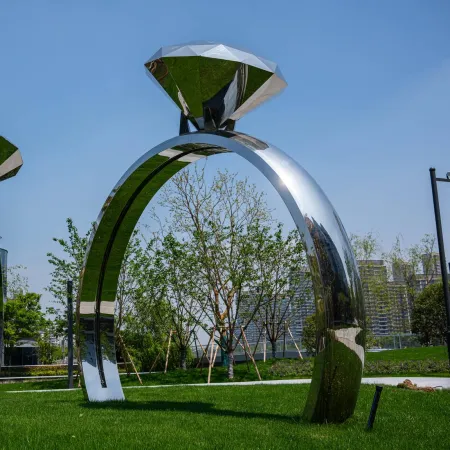
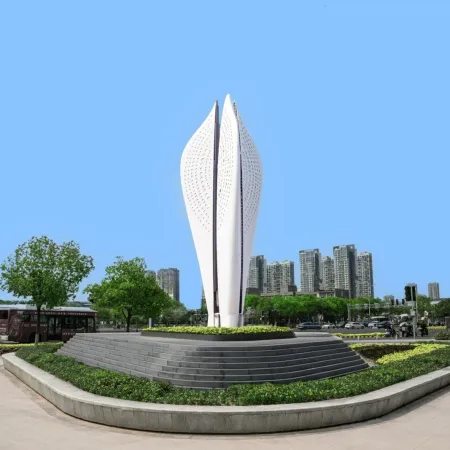
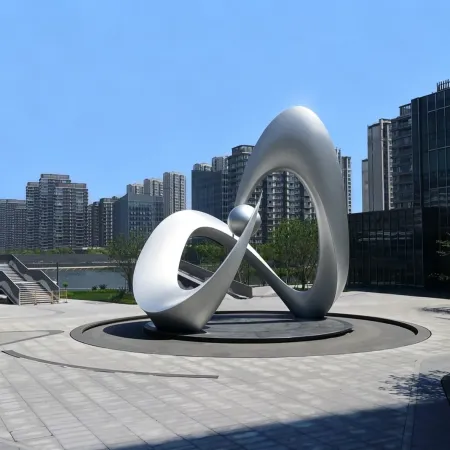
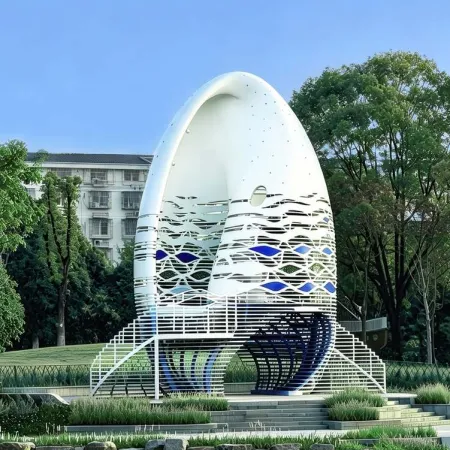
Study plaza-scale placemaking in Eye of the Phoenix, Heart of Changfeng and The Radiant Galaxy.
Understanding the Life of the Plaza
Public art consulting for city plaza projects begins with the life of the square, because a plaza is defined by its rhythms rather than its paving. The consultant studies the flows that cross it, the commuters who cut through at dawn and dusk, the office workers who claim its benches at midday, the families who arrive on weekends, the events that periodically take it over and the quiet hours when it belongs to almost no one. Each of these publics has a different relationship to the space, and a work that serves them all must be readable at a glance yet rewarding at leisure.
The study must also read the plaza's architectural character, the scale of the buildings that frame it, the materials underfoot, the sightlines that carry the eye and the edges where the square meets the street. A plaza that feels vast may need a work that gives it human scale; one that feels crowded may need art that organises rather than adds; one that is featureless may need a landmark that gives it identity. Public art consulting for city plaza improvement is therefore as much about urban design as about sculpture, and the best advice treats the two as one discipline.
Art That Works With Movement, Not Against It
A plaza work must negotiate the movement that defines the space, and public art consulting for city plaza settings gives that negotiation real thought. The work should sit where it can be seen and approached without blocking the flows that keep the plaza alive, should create gathering rather than congestion, and should reward both the hurried glance and the deliberate visit. Scale is judged from the plaza's actual viewing distances, a piece that reads from across the square and from the benches beneath it, and form is chosen so the work frames the space rather than merely filling it.
Movement through time matters as much as movement through space. A plaza changes with the day, the week and the seasons, and a work that earns its place must hold its own in every phase: the brilliance of midday, the long shadows of evening, the emptiness of winter, the crowds of a festival. Lighting extends the work into the night, when many plazas are at their most atmospheric, and seating or steps designed with the art can turn a space people merely cross into a space where people choose to stay. The consultant designs for the full cycle of plaza life.
| Consideration | The question to ask | Why it matters |
|---|---|---|
| Movement | Will it block or guide the flows? | Congestion turns the public against art |
| Scale | Does it hold the plaza's distances? | Scale is read from the real viewpoints |
| Gathering | Will people choose to stay near it? | Staying is the measure of adoption |
| Night | Does it live after dark? | Lighting extends the plaza's evening |
| Weather | How does it stand the seasons? | A plaza is lived in all weathers |
Adoption by the People Who Use the Plaza
Public art consulting for city plaza commissions must treat public adoption as a design goal, because a plaza work that the community does not adopt will be tolerated at best and vandalised at worst. Adoption begins with engagement, inviting the people who use the square to shape the brief and respond to the concept while it is still fluid, and it deepens when the work carries something they recognise, their history, their culture, their daily life raised to the level of art. A plaza is the community's living room, and the art should feel like something they chose, not something imposed upon them.
Adoption is also physical. A work that people can touch, sit on, walk through or photograph becomes part of their rituals rather than an obstacle to them, and the most loved plaza works are often the most approachable, their surfaces worn smooth by the affection of countless hands. The consultant balances this invitation with the durability the plaza demands, choosing materials and details that tolerate embrace without losing their finish, and planning the maintenance that keeps the work worthy of the love it receives. When a plaza adopts its art, the art becomes the plaza's signature.
Identity, Events and the Life of the Square
A plaza work often carries the identity of the district around it, and public art consulting for city plaza projects should design for that role deliberately. The work can give a name to a place that had none, a meeting point to a square that was merely a crossing, a photograph to a district that was never photographed, and the consultant should ask what identity the plaza needs to project and how the art can carry it without becoming a logo. The strongest plaza works are specific enough to belong to their city and generous enough to be loved beyond it.
The consultant must also plan for the plaza's events, the markets, concerts, festivals and gatherings that periodically transform the square, because a permanent work that obstructs those events will be resented by the very institutions that keep the plaza alive. The design should leave the flexible ground clear, should survive the crowds and the temporary structures that arrive with them, and should perhaps even frame the events, providing a backdrop that gives the festival a sense of place. Public art consulting for city plaza development that thinks in events as well as in daily life gives the square art that serves its whole calendar.
- Read the rhythms: every public of the plaza matters
- Work with movement: art should guide, never block
- Design for adoption: the community must recognise itself
- Serve the events: the plaza lives on its calendar
Art the Plaza Will Adopt
A work matched to the square's real rhythms
Scale and form judged from actual use
A community that sees itself in the art
A work that serves the plaza's full calendar
Temporary Programmes Before the Permanent Work
Public art consulting for city plaza development often advises a temporary programme before the permanent commission, because a plaza can test its future before it commits to it. A temporary installation or a series of events lets the community experience art in the square, reveals how people respond to different forms and placements, and builds the appetite and the trust that a permanent work needs, and it does all of this at a fraction of the risk and the cost. Many of the most successful plaza commissions grew from temporary works that proved their place first.
The temporary phase also educates every partner in the project. The client learns what the plaza can carry and what its public loves; the design team learns how the space behaves under the pressure of real use; the authorities learn what the approval process will demand; and the community learns that its voice shapes the outcome. When the permanent commission finally proceeds, it proceeds with evidence rather than hope, and the plaza receives a work that has already been rehearsed in the life it will join. Public art consulting for city plaza development that uses this sequence gives the square its best chance of a work it will keep forever.
Frequently Asked Questions About Public Art Consulting for City Plazas
Why do so many plaza artworks fail?
Because they are designed for the render rather than the square. Successful plaza work is scaled to real viewing distances, works with the flows and earns adoption from the people who use the space daily.
Should plaza art be interactive?
Not necessarily, but it should be approachable. Works that invite touch, seating or gathering are adopted faster, while purely visual works must earn their place through presence and identity.
How do we keep plaza events working with art?
Plan the work around the plaza's event calendar, keep flexible ground clear and design the art to survive crowds and temporary structures. The best works even frame the events that visit them.
What scale suits a city plaza?
Scale is dictated by the plaza's dimensions and viewing distances, not by fashion. The consultant studies where people stand and pass, then sizes the work to hold those viewpoints without overwhelming them.
How should the community be involved?
From the start. Engage the plaza's users while the brief is fluid, let their stories shape the concept and test the design with them honestly. Adoption begins in the engagement, not after installation.
Public art consulting for city plaza schemes turns a square into a destination, because a work that understands the plaza's rhythms, scales itself to its life and earns the adoption of its people gives the city a place it will seek out rather than merely pass through. When the art belongs to the square, the square belongs to the city.
Let public art consulting for city plaza projects give your square a signature worth crossing the city to see.