What Contemporary Landscape Sculpture Adds to the Ground Plan
Contemporary landscape sculpture is the art form that completes a landscape design the way a signature completes a painting — the element that turns a well-planted site into a place with identity, memory and a reason to stop. Where landscape architecture shapes the ground with planting, paths and water, sculpture adds the human voice: a focal point that gathers a view, a threshold that marks an arrival, a form that gives the garden its name in conversation. The best contemporary landscape sculpture is designed with the landscape, not dropped into it — its materials answer the planting, its scale respects the sightlines, and its placement follows the way people actually move. Yifeng Sculpture Studio has created contemporary landscape sculpture since 2003 for parks, waterfronts and gardens across more than twenty countries, and this guide explains how sculpture and landscape become one composition.
We look at the roles sculpture plays in landscape, the materials that weather beautifully outdoors, and how to commission a work that belongs to its site.
Our project archive is rich with landscape commissions, the services overview covers our design-to-installation process, and the Heart of Changfeng shows how a sculptural form becomes the center of a landscape composition.
The Roles Sculpture Plays in a Landscape
A landscape can be beautiful and still feel unfinished, and the missing element is usually a point of focus — something that gives the eye a destination and the space a center. Contemporary landscape sculpture supplies that focus in several distinct roles. As a focal point it terminates a vista, gathering the view at the end of an axis or across a lawn. As a threshold it marks entries and transitions, telling visitors they have arrived somewhere special. As a gathering place it gives people a reason to stop — a form to sit near, meet at or photograph with. As a narrative element it carries the site's story, whether that story is ecological, historical or simply the client's imagination. A single well-placed work can play several of these roles at once, which is why the best landscape commissions begin with the question of what the place needs, not what the sculpture should look like.
Designing With the Landscape, Not Against It
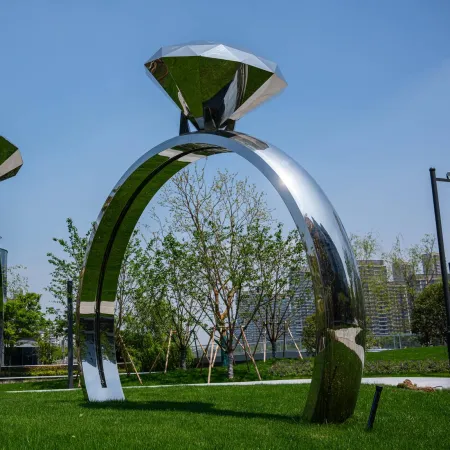
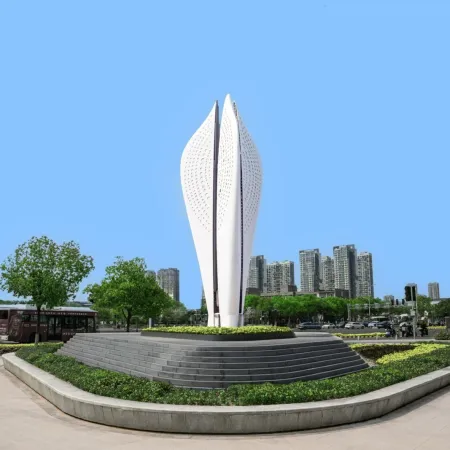
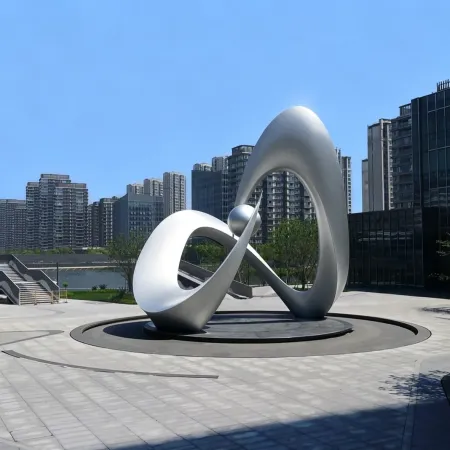
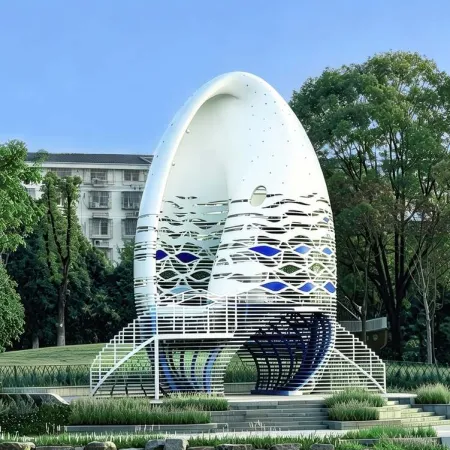
The discipline that separates great landscape sculpture from merely large objects is dialogue with the site. The studio begins by reading the landscape as a designer would: the paths and how people use them, the planting and how it will mature, the views in every season, the light at different hours. The sculpture is then composed to answer that reading — its axis aligned with the arrival, its scale set against the trees it will stand among, its material chosen to complement the stone, timber or water already present. A stainless form may echo a river's curve; a corten sculpture may answer the trunks around it; a white work may hold its own against deep green. Because landscapes change through the year, the design is tested across seasons: how the work reads in winter when the trees are bare, in summer when it is half hidden by foliage, at dusk when the lighting takes over.
Materials That Belong Outdoors
- Corten steel: earthy oxide tones that harmonize with trunks and soil
- Stainless steel: reflective surfaces that carry sky, water and movement
- Bronze: warmth and permanence for garden and memorial settings
- Painted steel: confident color that punctuates green and seasonal change
- Stone and composite: natural gravity or free form for site-specific needs
Placement: The Decision That Makes or Breaks the Work
In landscape, placement is half the art. A sculpture of modest size placed where life gathers will be seen, used and loved every day; a grand work placed where nobody walks becomes a rumor. The professional approach studies the site's real patterns — where the light falls in the morning, where visitors pause, which paths carry the most feet — and places the work where it will multiply existing life rather than compete with emptiness. Placement also considers the views from outside the site: a sculpture near an entry should be visible from the road; one deep in a garden should reward the walk with a reveal. The scale is set against the landscape's own scale, and the base is designed as part of the composition — a sculpture rises from a plinth, a low mound or directly from the turf, and that decision changes how the work is read. These choices, made together, are why some sculptures look inevitable in their landscape.
| Placement Logic | Question It Answers | Result When Right |
|---|---|---|
| Vista termination | Where does the eye need to land? | The view gains a destination and depth |
| Path junction | Where do people already pause? | The work is lived with daily |
| Water edge | Can water double the form? | Reflection adds a second composition |
| Entry threshold | Where does arrival happen? | Arrival becomes an event |
Sculpture, Planting and the Fourth Dimension
Landscape is the only gallery that changes, and contemporary landscape sculpture must be designed for that change. Planting grows: a work that stands proud at unveiling may be half embraced by a mature canopy five years later, which can be a gift or a mistake depending on whether the design intended it. Seasons alter the context: the same sculpture reads differently against spring green, autumn gold and winter grey, and a strong work is composed to hold its own in all of them. Water moves, light shifts, and the sculpture — being permanent — becomes the fixed point around which the landscape's changes are measured. The design conversation therefore includes the landscape architect and the horticulturist as well as the client: how the planting will mature, where the sightlines must stay open, how the sculpture will be lit after dark. Designed this way, the work and the garden age together into a single, richer composition.
Commissioning a Landscape Work
The most successful landscape commissions happen early, when the sculpture can influence the landscape rather than merely occupy it. If the studio joins the project while paths are still being drawn, the placement can be engineered into the plan — a widening here for a gathering space, a clearing there for a vista — and the result is a composition where sculpture and landscape were always meant for each other. Even when the landscape is built, however, a strong work can transform it. The process follows the studio's standard stages: site reading, concept directions placed into the actual landscape photography, scale studies on the ground, material and finish samples, and a full-scale mock-up of a critical element where proportion demands it. For public landscapes the approval process is built into the schedule, with presentations shaped for the committees and communities who will live with the work.
What Our Studio Delivers in Landscape
Site reading and placement study before any concept is drawn
Concepts placed in real landscape photography across seasons
Materials chosen to weather and harmonize with the planting
Coordination with landscape architects and lighting designers
Frequently Asked Questions About Contemporary Landscape Sculpture
When should sculpture be involved in a landscape project?
As early as possible — ideally while the paths and planting are still being planned, so placement and scale are engineered into the design. That said, a strong work can transform an already-built landscape, and we do that regularly.
Which materials survive a garden environment best?
Corten, stainless steel and bronze all thrive outdoors with modest care. The right choice depends on the visual dialogue you want with the planting — we advise after seeing the site and the landscape plan.
Can sculpture include water, lighting or planting itself?
Yes — contemporary landscape sculpture often integrates water features, integrated lighting or living planting. These require additional engineering and maintenance planning, which the studio coordinates with the specialist teams.
How do we know the scale will work in the open landscape?
Through scale studies placed in site photography and, for major works, a full-size mock-up of a critical element. Landscape scale is deceptive — what looks large in a rendering can vanish in a field — so we verify it in reality.
Do you work with our landscape architect?
Always — the sculpture and the planting must be designed together. We coordinate placement, sightlines and maturity plans with your landscape architect so the work and the garden become a single composition.
Contemporary landscape sculpture is the element that gives a designed landscape its voice — a fixed, aging, beloved presence that the changing garden grows around. Our studio has composed that dialogue since 2003, delivering works across more than twenty countries that stand in parks, waterfronts, courtyards and campuses. If your landscape is waiting for its signature, bring us the site and the planting plan — the contemporary landscape sculpture we develop together will be placed with intention, built to weather and designed to be loved through every season.
Share your landscape drawings and the feeling you want the place to carry, and we will return a placement study and a family of contemporary landscape sculpture concepts for your site.