How a Landmark Public Art Installation Becomes a Place's Signature
A landmark public art installation does more than decorate a city; it gives the city a face, a meeting point and a symbol that people carry in their memory. The greatest landmarks are so completely themselves that they become inseparable from the places they stand in, and commissioning one is one of the most powerful acts a city or developer can perform.
This guide explains what turns a public installation into a landmark, how such works are conceived, engineered and delivered, and what clients should understand before undertaking a commission of landmark ambition.
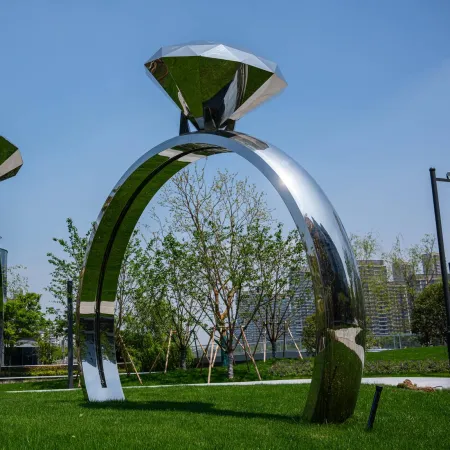
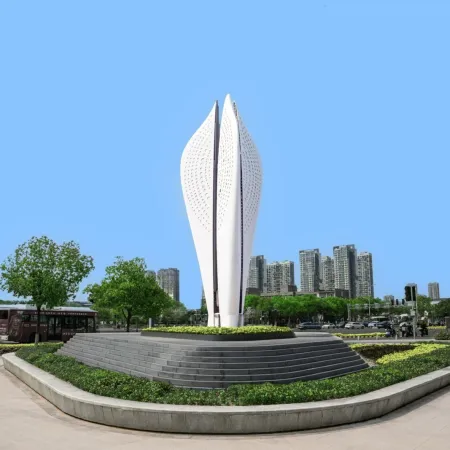
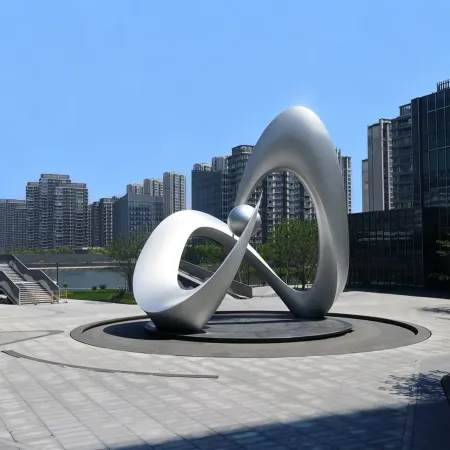
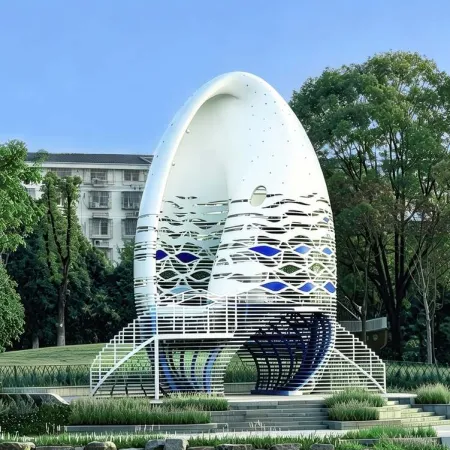
Study landmark works at Eye of the Phoenix, Honeycomb Pavilion and Heart of Changfeng.
What Makes an Installation a Landmark
Not every large or expensive public work becomes a landmark, and the difference is not size or budget but meaning. A landmark public art installation earns its status by becoming the image that people use to name the place: it appears in photographs, in films, in the instructions people give to visitors and in the memories of everyone who has stood before it. It achieves this by combining a form that is instantly readable from a distance, a character that belongs to its place rather than to a catalogue, and a quality that rewards closer attention, so that the same work works as a symbol from afar and as an experience up close.
Landmarks also share a kind of inevitability: once they exist, it is hard to imagine the place without them. This feeling is not an accident of fame but a quality of design, because the strongest landmark works grow so directly from the character of their site that they seem to have been waiting for it. The studio that seeks to create a landmark begins by understanding the place in depth, its history, its people, its light and its ambitions, and the form emerges from that understanding. A work that could be anywhere will never be the signature of anywhere, and the discipline of place is the first secret of landmark art.
Scale, Silhouette and the Read From Distance
A landmark public art installation must read from the distances at which people first meet it, and that requirement shapes the design from the very beginning. The silhouette is the first language of a landmark: a form that composes clearly against the sky, the buildings or the landscape, so that a glance from a passing car or a distant street corner is enough to recognise it. The scale must relate to the space it commands, large enough to hold its ground against the architecture around it yet composed so that it does not simply dwarf the people who approach, and the studio must test the design against the real sightlines of the site.
The approach sequence deserves the same attention as the form itself. A landmark is experienced first as a distant mark, then as a presence that grows as one approaches, then as a full encounter, and finally as a memory carried away, and each of these stages should be designed. The work should reward the distant view with a clear identity, draw the visitor through the space toward it, offer something new at close range, whether detail, texture, movement or shade, and leave an image strong enough to travel. Landmarks that fail are often those that look magnificent in a photograph but give nothing to the person standing beneath them, and the greatest works serve both the camera and the body.
The Engineering of an Icon
Behind every landmark public art installation stands engineering of a very high order, because the works that become icons are usually large, exposed and structurally ambitious. The studio must calculate how the form will stand under its own weight, resist the wind loads of its exposed position, survive the seismic conditions of its region and rest securely on foundations built for the actual ground, and these calculations must be carried out or verified by qualified engineers whose reports protect the client, the public and the insurers. The engineering of a landmark is not a constraint on the art; it is the invisible structure that allows the art to be daring.
The delivery of a landmark is an engineering project in its own right. The work may need to be fabricated in sections, transported through city streets, lifted into position by cranes and assembled at height, and each of these operations must be planned with the same rigour as the structure itself. The studio should provide lifting plans, installation sequences and method statements, and should coordinate with the site's engineers, the transport authorities and the contractors who prepare the foundations. Clients sometimes underestimate this phase, but the installation of a large landmark is where the months of fabrication are won or lost, and a studio that has delivered such works knows how to plan it down to the hour.
| Quality of a landmark | What it means in practice | How the client recognises it |
|---|---|---|
| Identity | Readable from the first glance | A silhouette you can describe in words |
| Belonging | Grows from the character of the place | It could not belong anywhere else |
| Depth | Rewards the close encounter | Detail, texture, shade or movement |
| Endurance | Engineered for decades of public life | Materials and finishes chosen for age |
Materials for the Generations
A landmark public art installation is made for the long life of a city, and its materials must be chosen with generations in mind. The palette of landmark materials is well proven: stainless steel for its brilliance and corrosion resistance, bronze for its warmth and its noble aging, weathering steel for its dialogue with the landscape, stone for its permanence, and the choice between them must be made for the climate, the context and the character the work should carry. The studio should explain how each material will age over decades, because a landmark is judged not on its opening day but on its fiftieth year.
The finish of a landmark deserves the same long view. A mirror-polished surface that will be cleaned by city crews needs a specification that tolerates that cleaning; a patina that will weather in a marine atmosphere needs to be chosen for that fate; and the joints, fixings and drainage details, invisible in photographs, will decide whether the work stays sound as water, frost and time do their work. The client should ask what the work will look like in ten years and in fifty, and should choose a studio that has watched its own works age and learned from them, because that experience is written into every detail of a landmark that endures.
The Public Adoption That Makes a Landmark
A landmark public art installation becomes a true landmark only when the public adopts it, and adoption is something a commission can encourage but never command. The process should give the community a genuine role, through consultation that listens rather than informs, through stories that connect the work to the place's own history, and through the patience to let the work be discovered rather than explained to death. The works that become most loved are often those the public first resisted, because they ask something of the viewer, and the controversy of the first months gives way to the pride of possession.
The life of a landmark after installation is also part of its making. A work that is lit at night, kept clean, repaired promptly and interpreted for new generations grows in meaning with every year, while a work that is neglected quietly loses its status, however fine its original form. The client should plan the stewardship of the landmark from the start: the maintenance regime, the lighting, the story that will be told about it and the budget that keeps all of it alive. A landmark is a permanent commitment by a city to itself, and the cities that understand this are the ones whose landmarks still speak to their grandchildren.
The Anatomy of a Landmark
A form that reads from every distance
A character born from its own place
Engineering invisible but absolute
Materials chosen for the generations
Commissioning Landmark Ambition Responsibly
Commissioning a landmark public art installation is an act of ambition, and ambition must be matched by process. The client should choose a studio with delivered landmarks whose work has stood the test of public life, and should look beyond the portfolio photographs to the engineering, the installation records and the current condition of the works. The brief should name the meaning the place needs to carry rather than prescribing a form, because a landmark that is designed by committee as a shape will lack the soul that only a studio given freedom can provide, and the budget and schedule should be set with the honesty that large ambitions demand.
The relationship between client and studio matters as much as the design, because a landmark project will test both over many months. The client should expect rigorous honesty: a studio that says when a concept will not work, warns when a schedule is at risk and stands behind its engineering, and the studio should expect a client who decides clearly, approves promptly and carries the public with the project. Our studio has delivered landmark public art installation across more than twenty countries, and the landmarks that serve their cities best are those where ambition, craft and stewardship were held together from the first sketch to the generations that followed.
Frequently Asked Questions About Landmark Public Art Installation
What turns a large sculpture into a landmark?
Public adoption. A landmark is a work the community names its place by, and that status comes from a readable identity, a deep connection to the site and stewardship over time.
How large must a landmark be?
Landmarks are not defined by size alone but by command of their setting. A modest work in the right place can become iconic, while a vast work in the wrong place can remain anonymous.
What engineering does a landmark need?
Structural analysis for dead and wind load, seismic checks where relevant, foundation design for the actual ground and installation planning for transport and lifting, all documented by qualified engineers.
How should the community be involved?
Through genuine consultation that listens, through stories that connect the work to the place and through stewardship that keeps the work alive. Adoption can be encouraged but never forced.
What makes a landmark last for generations?
Materials and finishes chosen for decades, engineering that anticipates storms and time, and a stewardship plan covering maintenance, lighting and interpretation from the day it opens.
A landmark public art installation is one of the most powerful gifts a city or developer can make to a place, and it deserves a commission worthy of its ambition. Choose a studio that has delivered landmarks and watched them age, give that studio the freedom to grow the work from the place's own character, hold the engineering and the materials to the standard of the generations, and plan the stewardship that will carry the work into the future. The landmarks that define great cities were not purchased; they were conceived, made and cared for by people who believed the place deserved a signature, and that belief is what your place is waiting for.
Choose a landmark public art installation conceived for your place, and your city will be named by its art for generations.