Inside Architectural Sculpture Fabrication: Welding, Finishing and Quality Control
Architectural sculpture fabrication is the craft of turning an approved design into a physical artwork, and it is where the quality promised in the render is either delivered or betrayed. Fabrication covers cutting, forming, welding, assembly and finishing, and at architectural scale it also means engineering the sections, managing tolerances and planning for transport and erection. In this guide we open the workshop door and explain how serious sculpture fabrication actually works.
Clients often underestimate how much of a sculpture's final quality is decided on the workshop floor. Two studios can start from the same drawing and produce very different works, because fabrication is not a mechanical reproduction of a design; it is a craft of judgment. The welder decides how to sequence the heat to avoid distortion. The finisher decides how far to blend a seam before the surface is compromised. The workshop decides how to divide a large form into sections that will assemble invisibly on site. These judgments are the hidden content of every great sculpture.
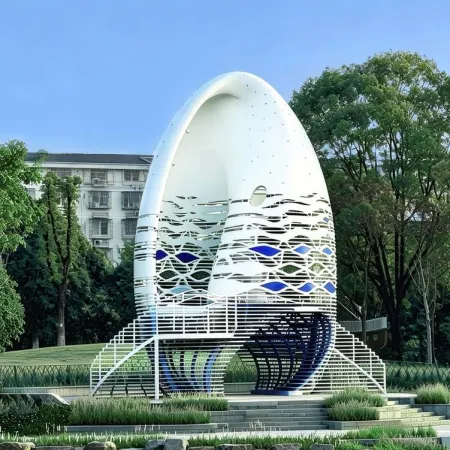
At Yifeng Sculpture Studio, fabrication is one stage of the same route that begins with consultation and concept development, as shown on our services overview, and the results of that route are documented in our project archive. Works of the complexity of Hello Conch, a 12.8 m interactive landmark, are only possible when the fabrication team can deliver precision at architectural scale.
Planning Fabrication Before the First Cut
Serious fabrication begins with planning, not with cutting metal. The design is broken into manufacturable sections, each with its own drawing, tolerance and finish requirement. The sequence of work is decided so that sub-assemblies can be built in parallel and joined in the right order. Lifting points, transport cradles and site assembly joints are designed into the sections rather than improvised later. This planning phase is invisible in the finished work but absolutely visible in its quality and its schedule.
Tolerance is the language of fabrication. A sculpture made of large metal panels must hold its geometry across sections that may be fabricated weeks apart and assembled on a different continent. We control our cutting, forming and welding to tolerances that allow the sections to meet cleanly on site, and we check the growing assembly against the 3D model throughout production. The goal is that the seams disappear and the form reads as one continuous gesture.
Welding: The Structural Heart of Metal Sculpture
Welding is where a metal sculpture gains its strength and, done well, its invisible seams. For architectural work we weld to structural standards, because the joints carry real loads in real weather. Stainless steel requires controlled heat input to avoid distortion and sensitization, and the welds are finished and passivated so the material behaves as one continuous corrosion-resistant surface. The visible quality of a sculpture, the smoothness of its surfaces and the disappearance of its joints, begins with the discipline of the welder.
Different metals demand different welding disciplines. Weathering steel needs procedures that preserve its patina character; aluminum requires clean, controlled welding to avoid porosity; bronze needs compatible filler and careful heat management. Our workshop is equipped and experienced across these materials, and we qualify procedures for the critical joints of each commission. When the sculpture is structural, the welds are documented so an engineer can verify the work.
Finishing: Where the Sculpture Gains Its Personality
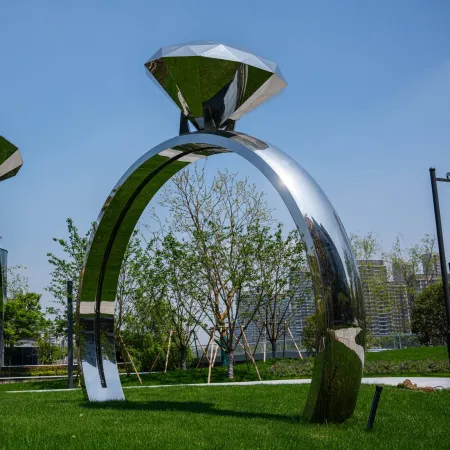
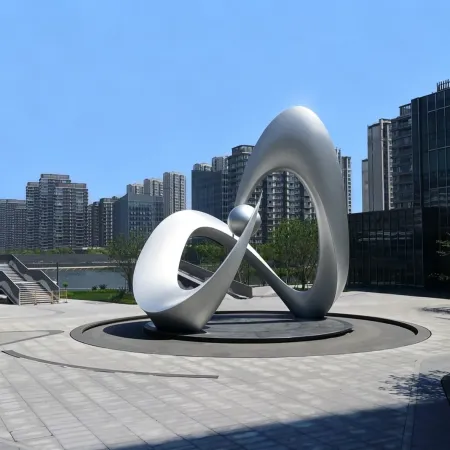
Finishing is the last craft and often the most visible. A mirror-polished stainless surface must be blended through successive grits until it reflects without distortion. A brushed finish must run in one continuous direction across every panel. A colored surface must be applied to a controlled thickness and cured under the right conditions. And a painted or coated surface is only as good as the preparation beneath it, which is why we prepare and finish in our own workshop rather than trusting the weather on site.
Finish samples are made before production and approved by the client under realistic light, because the finish is the part of the artwork people judge every day. The approved sample becomes the standard against which every production module is checked, and the finish specification is recorded so that future repairs can match the original. This sample discipline is what keeps a large sectional sculpture looking like a single object rather than a patchwork of attempts.
The Fabrication Variables That Separate Good from Average
- Welding sequence: poorly planned welds distort large forms permanently, and no finishing pass can hide it
- Distortion control: heat management during welding keeps the geometry true to the digital model
- Surface preparation: the quality of everything applied later depends entirely on this stage
- Dimensional templates: measured at every module, so errors are caught in hours rather than on site
Quality Control at Every Stage
Quality control in sculpture fabrication is a process, not a final inspection. Incoming material is verified against the specification. Dimensional checks are made as sections are built, not only when the work is complete. Welds are inspected at the critical joints, and surfaces are examined under controlled light before finishing. We document the checks so the client and the project engineers can see that the work was verified, not merely hoped over.
For architectural and public work, we also prepare the documentation that the wider project needs: material certificates, structural as-built details, installation instructions and a maintenance schedule. This paperwork is part of fabrication, not an afterthought, because a sculpture without documentation is a liability for the engineers who must approve it and the owner who must maintain it.
Fabricating for Transport and Site Assembly
A large sculpture is fabricated in modules because it must travel, and the module plan is part of the fabrication design. Each section is sized for the shipping envelope, protected with cradles that hold it without distortion, and marked for assembly in the correct order. The site joints are designed so they can be closed and finished by the installation crew, and the lifting points are engineered and documented for the crane plan.
Because our studio ships to projects around the world, we fabricate with the journey in mind. Modules are planned to survive ocean transport, weather exposure at the port and handling by local crews who will follow our drawings rather than our intuition. The result is that the quality created in the workshop survives the journey and appears intact in the finished installation, which is the only quality that ultimately matters.
Quality Assurance Across Architectural Sculpture Fabrication
Quality assurance in architectural sculpture fabrication is a chain of small verifications rather than a single dramatic inspection. It begins with the material certificate for every sheet and billet, confirming the grade is what the specification demands. It continues through the workshop with dimensional checks at each assembly stage, weld inspections at the critical joints and surface examinations under controlled light before finishing. Each check is recorded, so the client and the project engineers can see the evidence that the work was verified at every step rather than merely hoped over.
The chain ends with the client's own approval, because no quality system can replace the eyes of the person who will live with the work. We schedule approvals at the moments that matter: the material direction, the finish samples and the trial sections. When the client signs off with full information, the risk of a disappointing surprise disappears, and the workshop can proceed with confidence. This partnership between our quality system and the client's judgment is how a commission moves from good intentions to a finished work that everyone is proud to claim.
For clients who can visit, we encourage a workshop tour during fabrication, because there is no substitute for seeing the work take shape at full scale. The proportions that look right in a model can be judged honestly only when the sections stand before you, and a tour also lets the client meet the welders and finishers whose hands will shape the work. For clients who cannot visit, we provide detailed production photography and video at agreed milestones, so the workshop remains open to them in the way that matters. This openness is part of how we build the trust that every serious commission needs.
Quality Gates in Our Fabrication Workflow
- Material certificates verified at goods-in
- Dimensional control on every module before assembly
- Finish approval on sample panels before surface program
- Final inspection, photo documentation and crating
Common Questions About Our Fabrication Capability
Do you fabricate all materials or specialize in one?
We fabricate stainless steel, weathering steel, aluminum, copper alloys and composite systems, and we advise on the best material for each project rather than pushing a single process.
Can we visit or see the fabrication progress?
Yes. We provide progress reporting with photographs and video, and clients are welcome to inspect the work in our workshop before it ships.
What happens if a module is damaged in transport?
Modules are engineered with protective cradles and we carry repair capability in our installation crews, so damage is handled quickly and to the original standard.
What quality checks happen during fabrication?
Weld integrity, dimensional accuracy against the digital model and surface quality are checked at defined stages, not only at the end. Each module is measured before assembly, so a deviation is corrected in the workshop where it costs hours, not on site where it costs weeks.
Can we approve the finish before full production?
Yes. Sample panels in the actual alloy and finish are prepared for client approval before the full surface program begins, which removes the most common source of disagreement in metalwork projects before it can occur.
Fabrication is where a sculpture earns its right to be called architectural. The design gives the work its soul, but fabrication gives it its body, and a body built without craft will fail regardless of the beauty of the idea. Planning the sections, welding to structural standards, finishing with discipline and controlling quality at every stage: these are the practices that turn a drawing into a landmark that lasts for decades.
If you have a design ready for production, or a concept that needs a fabrication partner's advice, send us your drawings and specifications. We will review the buildability, advise on materials and finishing, and show you how our workshop would bring your architectural sculpture fabrication to life.