Inside the Lost Wax Process of Cast Bronze Sculpture Fabrication
Cast bronze sculpture fabrication is the oldest high-craft method in the metal arts, and it survives because nothing else reproduces fine detail so faithfully. The lost wax process captures a fingerprint, a leaf vein or a fold of cloth in metal that will hold that record for centuries. When a commission depends on surface detail, casting is not a choice among equals, it is the only serious option.
Yifeng Sculpture Studio has run its own casting programme since 2003, producing cast bronze sculpture fabrication for clients in 23 countries and adding to a delivered total of more than 3000 works. Our foundry partners and our own chasing team work to the same specification, so the detail that leaves the mould is the detail the client finally receives.
The Lost Wax Process, Step by Step
The process begins with an original, modelled in clay or wax at the size the client will receive. A flexible mould is taken from that original, and from the mould a hollow wax replica is produced. The wax is then gated with runners and vents, dipped repeatedly in a ceramic slurry until a shell forms around it, and fired so that the wax melts out and leaves a cavity in the shape of the sculpture. Molten bronze is poured into that cavity, and when the metal has cooled the shell is broken away to reveal the cast.
What follows is the part clients underestimate. The raw casting carries the gates and vents that must be cut away, the surface must be chased back to the artist's intention, and separate sections must be welded and blended so that no seam remains visible. In cast bronze sculpture fabrication the pour is only the midpoint; the finish is where the craft is really judged, and it can take as long as everything that came before it.
| Step | What is produced | What can go wrong |
|---|---|---|
| Original and flexible mould | A faithful negative of the approved form | Loss of undercut detail if the mould is cut carelessly |
| Wax replica and gating | A hollow wax ready for investment | Warping if the wax is stored or handled badly |
| Ceramic shell and burnout | A fired shell with an empty cavity | Shell cracks that let the metal escape |
| Pour, breakout and chasing | A finished casting with no visible seams | Porosity and cold shuts that weaken the metal |
Why Casting Beats Fabrication for Fine Detail
A fabricated metal sculpture is assembled from plates and sections, and every joint is a place where detail must stop. Cast bronze sculpture fabrication has no such limit, because the detail is formed in one continuous skin of metal. A relief that must read at arm's length, a portrait with the texture of hair and fabric, a natural form with the grain of bark, all of these are reproduced by casting with a fidelity that welding and grinding cannot approach.
Casting also lets the maker reproduce a work more than once, which matters for editions, for multiples in a landscape scheme and for replacement sections if a piece is ever damaged. A mould can be kept for years, and a new casting can be taken from it when the client needs a twin or a repair. That archival quality is one more reason public art programmes choose cast bronze sculpture fabrication when the work is expected to remain in service for generations.
Wall Thickness, Weight and Structure
Bronze is heavy, and a cast work must be designed with its weight in mind from the first sketch. A wall that is thick enough to cast cleanly may still be too heavy for a slender form, and the answer is usually an internal steel armature that carries the load while the bronze provides the skin. We design that armature together with the form, so the anchor points are cast into the work rather than drilled into it later, and the sculpture arrives at site ready to be fixed rather than ready to be argued about.
Weight also shapes transport and installation. A large cast bronze is moved in sections, assembled on site and welded and chased by a team that travels with the work, because a seam closed in the workshop will be opened again by the journey. Planning those joints early is part of cast bronze sculpture fabrication, and a workshop that has installed its own castings abroad knows exactly where the sections must divide. Clients who receive a well-planned bronze are usually unaware that the planning happened at all.
What Lost Wax Casting Protects
Fine detail that fabrication cannot reproduce
A single continuous skin of metal with no visible joints
A mould that can serve future editions and repairs
Weight engineered into the design from the first sketch
Inspecting a Casting Before You Accept It
Clients should ask to inspect a casting before it is finished, because a raw casting tells the truth about a workshop. Look for porosity on the surface, which appears as small pits that will open up under polishing; look for cold shuts where two flows of metal met without fusing; and look at the wall thickness at an edge, which should be even rather than thin in one place and heavy in another. A workshop that welcomes that inspection is a workshop with nothing to hide.
The second inspection happens at the finished stage, when the seams, the chasing and the patina are complete. Stand close and look along the surface at a low angle, because that is where a badly blended weld reveals itself as a ripple in the reflection. Ask for the patina sample and compare it with the delivered work, and ask for the inspection records. In cast bronze sculpture fabrication the records are not bureaucracy, they are the evidence that the metal is sound and the finish is repeatable.
When Casting Is the Wrong Answer
Casting is the wrong answer when the work is very large, very tall or very thin. A monumental figure can be cast in sections, but the weight and the cost of doing so often make a fabricated steel armature with a cast skin a wiser path. A slender column or a delicate cantilever is better fabricated, because casting would demand thickness the form cannot afford. We tell clients when casting is not the right route even though it is the most prestigious one, because the sculpture is judged by how it stands and not by how it was made.
Casting is also a poor fit when the schedule is immovable. The lost wax process cannot be compressed beyond its physical limits, and a client who needs a work in three months should choose a fabricated method rather than ask a foundry to hurry. We will always give an honest casting timeline, and if it does not suit the project we will say so and propose an alternative. That kind of advice costs us a casting now and earns us the client's trust for the next decade of commissions.
Common Casting Faults and How We Avoid Them
Every foundry has seen the same faults, and knowing them in advance is most of the defence. Porosity appears as small pits where gas was trapped in the metal, and it is controlled by the way the mould is vented, by the pouring temperature and by the speed of the pour. Cold shuts occur where two flows of metal meet without fusing, leaving a weak line that may not show until the work is stressed. Shrinkage appears where a thick section cools more slowly than a thin one, and it is managed by keeping the wall thickness as even as the form allows.
We inspect for all three before any finishing begins, because a fault hidden by chasing and patina will find its way to the surface years later when a repair is far more expensive. Wall thickness is measured, the surface is examined under good light and every weld is tested by a craftsman who knows what a sound joint looks and sounds like. Where a fault is found, the section is repaired properly or remade, and the decision is recorded so the client can see what was done. That transparency is one of the reasons a cast work from our workshop arrives without surprises.
Frequently Asked Questions About Cast Bronze Sculpture Fabrication
What is the lost wax process in simple terms?
A wax copy of the sculpture is encased in ceramic, the wax is melted out and bronze is poured into the empty space, so the metal takes the exact shape the wax held.
How much detail can casting reproduce?
Casting holds surface detail finer than fabrication, down to texture and small relief, which is why portraits, reliefs and natural forms are usually cast.
Why is a hollow casting better than a solid one?
Because it keeps the weight and the cost down while still giving a sound metal skin, and the load can be carried by an internal armature designed for the site.
Can a cast bronze be repaired on site?
Small repairs can be made on site and larger ones in the workshop, and a documented patina recipe keeps any repair visually consistent with the original.
Is casting suitable for large outdoor monuments?
Often yes, in sections over a steel armature, though for very tall or very slender forms a fabricated approach is usually safer and lighter.
The lost wax process is slow, demanding and unforgiving, and it is still the finest way to hold detail in metal. A client who understands the sequence will make better decisions at every gate, from the clay approval to the patina sample, and will end up with a casting that reads as a work of art rather than as a manufactured object.
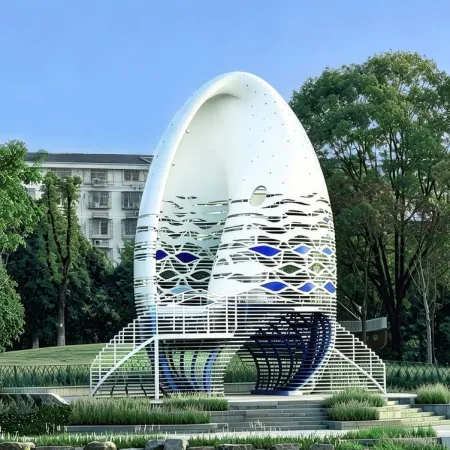
If your project needs surface detail that will survive a century, cast bronze sculpture fabrication is worth the patience it demands. Study the detail we have delivered in our project gallery, review the whole production chain on the services overview, and look closely at Homing Nesting, where the texture of the surface carries the meaning of the work.
Casting is the oldest way to hold detail in metal, and it is still the best. When a client wants a surface that will carry meaning for a century, cast bronze sculpture fabrication is the craft we trust with it.