How Environmental Art for Plazas Turns Traffic Into Gathering
Environmental art for plazas has one job above all others: to turn a space people merely cross into a place people choose to stay, and the difference is decided by scale, seating logic, shade and the quiet pull of a form worth pausing beside. After more than a decade of plaza commissions, I have watched the same transformation repeat, a grey expanse of paving becomes a destination the moment art gives it a reason, and the reverse happens when art is added without thinking about how people actually use the space. This guide explains how to commission environmental art for plazas that genuinely works.
We will look at the relationship between art and public life, scale and placement, materials under urban stress and the coordination that keeps a plaza project on schedule.
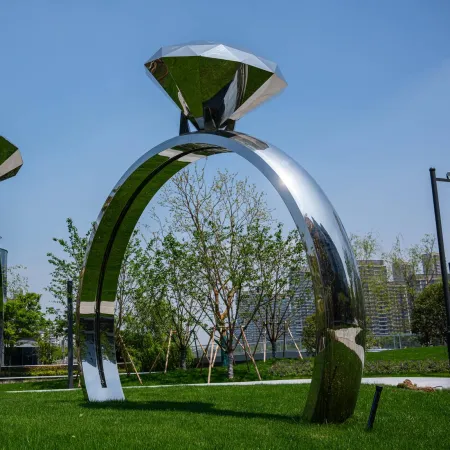
Our services overview covers plaza-scale commissions, the project gallery shows completed urban works, and the Diamond Rings installation shows how a sculptural landmark can define an urban gathering space.
Read the Plaza Before You Place the Art
Every plaza has a hidden pattern of movement, the desire lines people actually walk, the corners where they pause, the edges where they shelter from sun and wind, the hours when the space fills and empties. Environmental art for plazas should begin by mapping that pattern, because a sculpture placed on the busiest desire line becomes an obstacle while the same sculpture placed fifteen metres away becomes a destination that pulls people off the line. The studio should study the plaza at different times of day, talk to the people who manage it and design the work's position, scale and relationship to seating and planting as carefully as its form.
Art and Public Life: The Gathering Effect
People gather where something gives them permission to stay, and well-designed plaza art provides that permission in several ways. A landmark gives the space an identity and a meeting point, a phrase like "meet me by the sculpture" that every plaza needs; an interactive element gives children and families a reason to linger; a work that provides shade or seating edges becomes furniture as well as art; and a piece that changes with light or movement gives regular visitors a reason to keep returning. The strongest plaza commissions combine several of these roles, so the art works for the office worker at noon, the family on Saturday and the evening visitor alike.
| Plaza Role | What the Art Provides | Design Response |
|---|---|---|
| Identity | A landmark and a meeting point | Strong silhouette, memorable form |
| Comfort | Shade, shelter and seating edges | Canopy forms, integrated benches |
| Engagement | Reasons for families to linger | Interactive or movable elements |
| Renewal | A reason for daily visitors to return | Light, movement or seasonal change |
Scale, Placement and the Urban Silhouette
Plaza art competes with buildings, trees and street furniture, so scale and placement must be studied against the real urban context. A work that would dominate a lawn disappears against a twenty-storey facade, while a work sized for the buildings may overwhelm the people at its base. The design should be tested from the plaza level, from the surrounding streets and from the upper floors that overlook the space, because each audience reads the sculpture differently. Placement must also respect the practical life of the plaza, keeping clear sightlines for events, access for maintenance vehicles and room for the crowds that festivals and markets will bring.
Materials Under Urban Stress
A plaza is an intense environment: exhaust and urban pollution, salt in winter cities, crowds touching and leaning, cleaning machines and occasional vehicles. Environmental art for plazas must be specified for that life, with stainless steel grades chosen for the local atmosphere, coatings that resist graffiti and clean easily, and surfaces that tolerate contact without showing every handprint. The studio should advise on the maintenance reality of each proposed finish, because a mirror surface that looks stunning in renderings may demand more care than a civic client can provide, while a textured or satin finish may serve the space better over decades.
- Pollution resistance: grades and coatings matched to the urban atmosphere
- Easy cleaning: surfaces that tolerate the plaza maintenance regime
- Event flexibility: placement that keeps the plaza usable for gatherings
- Lighting integration: night presence planned with the urban lighting team
What Makes a Plaza Artwork Earn Its Place
It pulls people off the walking line
It gives the space a name and a meeting point
It works at noon and after dark
It survives crowds, weather and cleaning
Coordinating With Services, Events and the Urban Team
A plaza hides a city beneath its paving, and the art foundation must avoid it. Before any design is fixed, the studio should review the underground services, drainage, lighting and event infrastructure with the plaza's owners, because relocating a foundation after it clashes with a service duct is expensive and embarrassing. The work should also coordinate with the plaza's event calendar, keeping flexible space for markets and performances, and with the urban lighting strategy so the sculpture reads at night without fighting the surrounding lights. A studio that asks for these drawings and these conversations is protecting your plaza, not just its sculpture.
Temporary Programmes Before Permanent Commitment
Many of the most successful plazas test their art before they commit to it, using temporary installations to learn how a space responds before a permanent work is commissioned. A temporary piece can test scale, position and public response at a fraction of the cost of a permanent landmark, and it can build the enthusiasm and evidence that justify the larger investment. Festivals, artist residencies and seasonal installations give a plaza a reason to be visited while the community develops a taste for art in that space, and the lessons they produce, where people gather, what scale works, which interactions delight, become the brief for the permanent work that follows.
Temporary work also serves clients who are not yet ready for a permanent commission, whether because funding is staged, approvals are uncertain or the plaza itself is still evolving. We design temporary installations that are engineered for safe public life but efficient to install, remove and store, and we document their performance so the learning survives the removal. When the plaza later moves toward a permanent work, the temporary experiment has already answered the questions that usually cause expensive mistakes. This staged approach turns public art from a gamble into a strategy, letting the plaza earn its landmark through evidence rather than hope, and the landmark that finally arrives is one the public has already shown it wants.
The path from temporary to permanent is most reliable when the client structures it as a small programme rather than a single event, with a defined budget, a review point and a clear decision framework for what happens next. Some clients run a seasonal series for a year or two, documenting attendance, dwell time and public response before they commission the permanent work; others use a single bold temporary piece as the catalyst for a wider fundraising and approval campaign. Whichever route fits, the discipline is the same: decide in advance how success will be measured, capture the evidence honestly and let the results guide the scale and character of the permanent commission. A plaza that follows this path rarely regrets the temporary phase, because the permanent work it finally installs is the one its own public has already chosen.
Frequently Asked Questions About Environmental Art for Plazas
Should plaza art be functional as well as sculptural?
The most successful plaza works often double as shade structures, seating edges or interactive elements, because function gives people more reasons to stay. The balance depends on the plaza's purpose and the client's vision.
How do we choose the right location within the plaza?
Map the real movement patterns, the gathering corners and the practical needs of events and maintenance, then position the work to pull people without blocking the flow. Testing scale at the site with a mock-up is the most reliable way to confirm placement.
What materials resist urban pollution best?
Stainless steel with the right grade for the local atmosphere, weathering steel where its patina suits the design, and coated finishes chosen for easy cleaning. Your studio should specify with the actual city environment in mind.
How should lighting be handled?
Lighting should be designed with the sculpture and the urban lighting team together, so the piece gains a night presence without glare or light pollution. Integrated lighting also extends the plaza's usable hours into the evening.
Can plaza art handle large public events?
Yes, when placement and protection are planned for events. The work should be positioned clear of main event zones or designed to tolerate crowds, and the client should plan simple protection measures for the busiest occasions.
Environmental art for plazas succeeds when it is designed with the plaza's real life, the movement, the events, the maintenance and the hours after dark, rather than imposed upon it. Since 2003 our studio has designed and installed urban public art across twenty-three countries, and the plaza works we are proudest of are the ones where people now say meet me by the sculpture. That is the test every plaza commission should aim to pass.
Send us your plaza plans and your ambitions, and we will show you what environmental art for plazas looks like when it is built around real public life.