What Metal Sculpture Design Really Demands of a Studio
Metal sculpture design looks like a material choice and is actually a way of thinking, because metal brings its own structural logic, its own expressive range and its own unforgiving standards. A studio that designs in metal without living inside metal, without welding, forming and finishing daily, will produce forms that look right in the render and betray themselves in the workshop.
Yifeng Sculpture Studio has practised metal sculpture design since 2003, delivering more than 3000 works across 23 countries. Because we fabricate our metal designs in our own workshop, the design language and the making language are the same language, and every curve we draw is a curve we know how to cut, form, weld and finish.
The Metals and Their Voices
Metal sculpture design begins with the character of each metal, because the material is not a neutral carrier of form but an active voice in the work. Stainless steel brings brilliance and the modern; weathering steel brings earth and time; aluminium brings lightness and the aerospace feel; bronze brings tradition and warmth; and painted steel brings colour and accessibility. The designer who chooses metal without hearing these voices is choosing a material the way a writer chooses a font rather than a language.
The choice is also a structural decision. Stainless steel's strength allows slender, daring forms; weathering steel's section is driven by corrosion allowance as much as by load; aluminium needs different jointing and galvanic protection; and each metal demands its own welding discipline. In serious metal sculpture design, the aesthetic voice and the engineering behaviour are chosen together, because separating them produces works that look beautiful and fail early, or stand soundly and say nothing.
Matching Metal to Meaning and Site
The table below maps the main metals to their expressive character and their natural settings, a starting point for the material conversation in every metal sculpture design commission.
| Metal | Character | Natural settings |
|---|---|---|
| Stainless steel | Brilliance, reflection, the contemporary | Plazas, gateways, waterfronts, modern districts |
| Weathering steel | Earth, rust, time, rootedness | Parks, memorials, industrial heritage sites |
| Aluminium | Lightness, precision, the engineered | Canopies, large spans, interior statement pieces |
| Bronze | Tradition, warmth, permanence | Memorials, civic figures, historic districts |
| Painted steel | Colour, play, accessibility | Playgrounds, schools, community streetscapes |
The Craft Chain That Makes Metal Honest
Metal sculpture design is only as good as the craft chain that realises it, because metal is unforgiving of weak execution. The digital model must be developed into accurate cutting files; the plate must be cut and formed without distorting the geometry; the welding must be sound and executed by qualified hands; and the finish, whether mirror polish, satin, bead-blast or painted, must be applied with a discipline that the material will expose forever. A single careless weld or a single flawed seam can interrupt a surface that was designed to be perfect.
Clients should therefore evaluate the workshop as seriously as the portfolio. Ask who will weld the work, what qualifications they hold, how the welds are inspected, how the geometry is verified against the model and how the finish is protected through transport and installation. A studio that answers these questions with specific systems is offering metal sculpture design grounded in craft; one that answers with generalities is asking the client to trust what cannot be seen until it is too late.
Corrosion, Climate and the Fifty-Year Finish
- Marine exposure: coastal salt attacks metal aggressively, so grades and finishes must be specified for the real chloride load of the site.
- Galvanic risk: dissimilar metals in contact can corrode each other, so connections must be designed with isolation where needed.
- Water traps: geometry that holds water is geometry that corrodes, so surfaces and joints must drain and breathe.
- Maintenance reality: every metal has a care rhythm, and the design should match the care the owner can actually provide.
A metal work that is designed for its real climate will still be standing and beautiful in fifty years; one that ignores climate will be a repair story in five, and the difference is decided in the design room.
Forming, Finishing and the Light on Metal
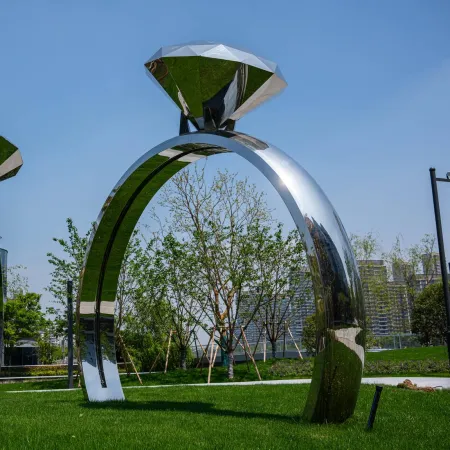
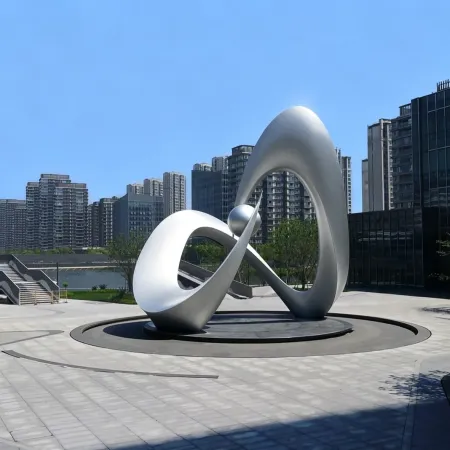
The finish is where metal sculpture design becomes magic, because the surface determines how the work lives in light. A mirror-polished stainless form reflects the city and the sky, changing with every cloud and every passer-by; a satin finish softens the reflections into a quiet glow; a bead-blasted surface scatters the light for an even, architectural calm; and a painted finish introduces colour that can be tuned to the exact identity of the place. The designer chooses the finish as part of the meaning, not as a final cosmetic.
See how metal finishes carry meaning across our delivered works in our project gallery, explore the full services behind a metal commission on the services overview, and study Butterfly Dance, a 10-metre cut-metal and light work whose perforated steel surface was designed to glow from within after dark.
What Metal Sculpture Design Requires
A material voice chosen for meaning and site together
A craft chain that can weld and finish without betrayal
Corrosion design for the real climate of the site
Surface thinking that makes the metal live in light
Evaluating a Metal Design Studio Honestly
The right studio for a metal commission is found by looking at delivered metal, not at renderings. Visit or study completed works, ask how old they are and how they have weathered, ask what the studio learned from the difficult ones and ask whether the artists who designed the work also understand its welding. In metal sculpture design, the separation between designer and maker is the most common source of disappointment, so the strongest signal is a studio where the two are one team.
We are that team: our artists design in the same building where our welders and polishers work, and the dialogue between them is continuous rather than contractual. That unity is why our metal works arrive as the designs promised, with geometry intact, surfaces true and structure sound. When you commission a studio with that unity, the metal is not a translation of the art; it is the art itself, spoken in a material that will carry it for decades.
The Welding Standard That Metal Design Depends On
The quality of metal sculpture design is delivered through welding, and the welding standard is therefore a design decision as much as a workshop one. The designer must specify the weld types, the positions and the finish that the visible form demands, and the workshop must execute them with welders qualified for the materials and the methods involved. A structural weld that will be hidden inside the form has one set of requirements, while a weld that must disappear into a mirror surface has another, and both must be planned before the torch is lit.
The inspection of welds is part of protecting the client's investment. Visual inspection catches surface quality, dimensional checks confirm the geometry has not distorted and the specified non-destructive testing verifies the soundness of the critical structural welds, and every record should be filed for the life of the work. We document our welding and its inspection on every metal commission, so a question asked in year one or year ten can be answered from the record rather than from memory. A metal sculpture that is welded to a planned standard and inspected against it is a sculpture whose structure the public can trust without ever seeing it.
Frequently Asked Questions About Metal Sculpture Design
What is metal sculpture design?
The discipline of designing sculpture in metal, matching each metal's expressive voice and structural behaviour to the meaning, site and craft reality.
Which metal is best for outdoor sculpture?
Stainless steel and weathering steel are the most common outdoor choices, with the specific grade and finish matched to the site's climate and the design intent.
Why do some metal sculptures rust or stain?
Usually because grade, finish or water management were not matched to the real environment; proper corrosion design prevents most such failures before they start.
How do mirror finishes stay beautiful outdoors?
With the right grade, a cleanable geometry and a realistic cleaning rhythm; the studio should match the finish to the maintenance the owner can provide.
Should the designer also fabricate the metal work?
Ideally yes, because metal is unforgiving of the gap between drawing and making; integrated studios protect the design through the entire craft chain.
Metal sculpture design is the art of thinking in a material that is brilliant, demanding and permanent, and it rewards studios where design and making live under one roof. Choose a team that can weld what it draws and finish what it welds, and your metal commission will speak in its material voice for decades.
If you have a form in mind that metal should carry, tell us about the place and the feeling, and we will show you what metal sculpture design can make of them both.