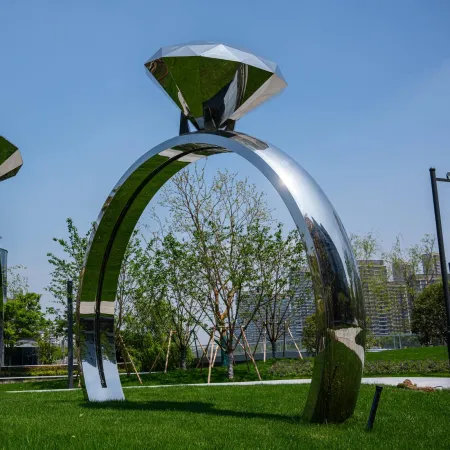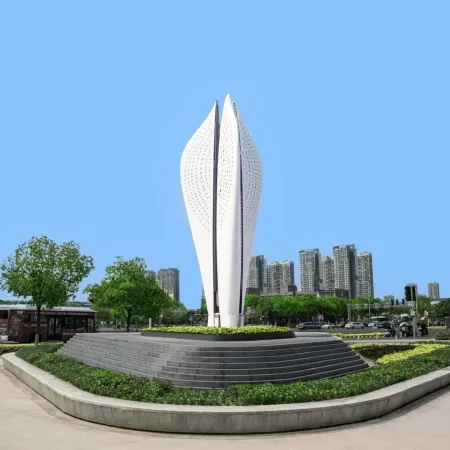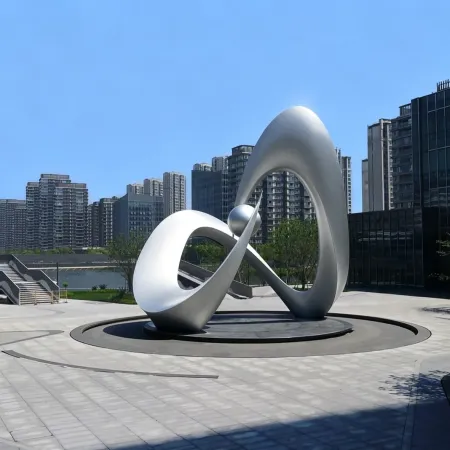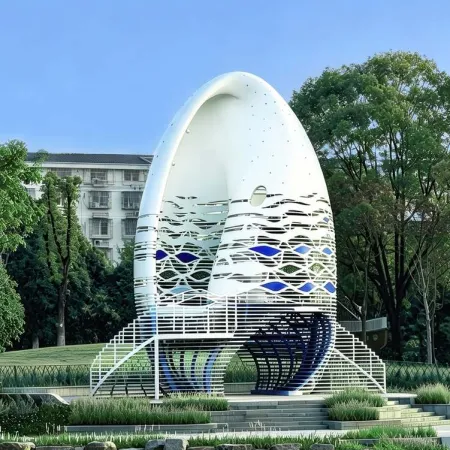
Why a Landmark Fiberglass Sculpture Delivers Scale on a Working Budget
A landmark fiberglass sculpture is the material answer to a question every city and developer faces: how to create a form large enough to command a public space without a budget large enough to cast it in bronze or weld it in stainless steel. Fiberglass, a glass-reinforced composite built by hand over a sculpted mould, can rise to extraordinary scale, accept almost any colour and surface, and stand outdoors for decades when it is engineered and finished honestly. I have spent more than a decade creating landmark fiberglass sculpture for clients across twenty-three countries, and this guide separates the composite work that lasts from the work that fails.
We will look at how fiberglass landmarks are built, why some age badly and how to avoid that, and the specification questions that decide whether your landmark still looks proud in year twenty.
Our composite fabrication services build large-scale fiberglass work in-house, the project archive shows delivered pieces in public settings, and the Rainbow Windmills installation demonstrates the sculptural freedom that composite materials allow.
What Fiberglass Actually Is and Why It Scales
Fiberglass is a composite of glass fibres and a polymer resin, laminated by hand or by spray over a mould to build up a rigid shell. Its virtues for landmark work are almost tailor-made: the material is light relative to its strength, so a towering form does not demand the massive foundations of bronze or stone; it can be moulded into double-curved, undercut and organic shapes that are impractical in sheet metal; and its surface can carry automotive-grade paint in any colour the designer imagines. That combination of scale, freedom and cost is why so many of the world most playful and colourful public landmarks are composite sculptures.
The craft is closer to boatbuilding than to metalwork. The form is first sculpted, typically in clay or foam over a steel armature, and from that master a mould is taken; the mould is then laminated in layers of resin and glass mat or cloth, cured, and released as a rigid shell, which is reinforced with internal framing, flanges and bonded steel connections. Because each layer is placed by hand, the quality of a fiberglass sculpture depends entirely on the discipline of the laminators, the resin system chosen and the climate control of the shop, which is why the reputation of the studio matters more than the price of the material.
Why Some Fiberglass Landmarks Age Badly
The failures of landmark fiberglass sculpture are rarely the fault of the material and almost always the fault of shortcuts, and understanding them protects your commission. The most common killer is poor surface preparation, when paint is applied without the correct primer system and begins to chalk, peel or fade within a few seasons under ultraviolet light. The second killer is water, which finds its way through unsealed edges, fixings and cracks, then freezes, delaminates the laminate and stains the surface from within. The third is structural, when a shell designed for a workshop is asked to survive wind load on an exposed plaza without adequate internal framing.
| Failure Mode | Cause | Prevention |
|---|---|---|
| Fading and chalking | Paint without UV-stable systems | Automotive or polyurethane paint |
| Water damage | Unsealed edges and fixings | Seal, drain and detail openings |
| Structural failure | Inadequate internal framing | Engineered steel substructure |
Engineering a Composite Landmark for Wind and Time
A landmark fiberglass sculpture is a shell, and a shell is only as strong as the structure that carries it. Serious studios design an internal steel armature engineered for the wind load of the specific site, then bond the fiberglass shell to that armature through flanges and bolted connections that spread stress rather than concentrating it. The foundation, the base plate and the anchor bolts are designed as part of the same system, so the sculpture does not simply sit on a plaza but is tied into the ground against overturning and vibration.
Durability is engineered into the laminate itself. The correct resin system for the climate, gel-coat or paint systems with proven ultraviolet resistance, sealed and drained interior cavities, and stainless or galvanised steel for every connection all decide whether the work needs repainting in five years or twenty. The specification should be written down and guaranteed, because verbal promises about marine-grade materials have a way of dissolving when the invoice arrives.
- Resin system: specified for climate and ultraviolet exposure
- Surface paint: automotive or polyurethane, not house paint
- Internal steel: engineered for wind and bonded to the shell
- Drainage: cavities sealed, drained and ventilated
The Design Freedom That Makes Composite Landmarks Memorable
The most exciting reason to choose a landmark fiberglass sculpture is creative, not economic, because composite moulding removes the formal prisons of other materials. Curves that would require dozens of welded steel panels, undercuts that would defeat a casting, cartoon-like proportions that would be impossibly heavy in metal, and colour that wraps seamlessly around complex forms are all natural territory for fiberglass. This is why mascots, fantasy characters, giant fruit, storybook creatures and many of the most joyful public artworks are composite sculptures.
Where Fiberglass Landmarks Excel
Playful mascot and character forms
Large organic double-curved shapes
Bright colour across complex surfaces
Structures that must stay lightweight
Commissioning a Composite Landmark That Lasts
The commissioning rules for landmark fiberglass sculpture mirror those of any serious public art, with a few composite-specific additions. Choose a studio with delivered large-scale composite work you can verify, demand the engineering calculation and the material specification in writing, approve a colour and surface sample under real daylight, and inspect the mould and the laminate quality during production. Because the work is built by hand, seeing the shop culture tells you more than any portfolio, and a studio that lets you watch its laminators work is a studio confident in its craft.
Since 2003 our studio has designed and built landmark fiberglass sculpture across twenty-three countries, from city-centre mascots to park destinations. We fabricate in our own composite workshop, engineer every shell for its site and finish every surface to a specification that survives real weather, because a landmark must still be worth photographing in twenty years, not just on opening day.
A landmark fiberglass sculpture is proof that civic ambition does not require a royal budget, only a studio that understands how to make composite material behave itself outdoors. Built honestly and finished properly, it brings colour, joy and identity to a place for decades.
Composite Moulding and the Master Model
Every landmark fiberglass sculpture begins with a master model, and the quality of that model sets the ceiling for everything that follows, because the mould can only reproduce what the model contains. The master is typically sculpted at full or near-full scale in clay, foam or a combination over a steel armature, and it must resolve every surface, every undercut and every detail that the finished work will show. From the master, a mould is taken in sections that can be released cleanly, and from that mould the production shell is laminated. Clients should understand that the master model stage is where the artistic quality is truly decided, and they should expect to review the model before the mould is cut, because changes are inexpensive at this point and almost impossible after.
The lamination of the production shell is where the engineering and the craft meet. Each layer of resin and glass must be applied with consistent thickness, free of air bubbles and fully cured before the next layer, and the internal steel reinforcement must be bonded in at the right moment so that the shell and the structure become one body rather than two parts. The quality of lamination is invisible in the finished surface but decisive in the lifespan, because a shell with dry spots, air pockets or thin areas will fail years before a sound one. This is why the reputation of the workshop matters so much in composite work, and why clients should ask to see lamination in progress and to meet the craftsmen who will build their landmark fiberglass sculpture.
Frequently Asked Questions About Landmark Fiberglass Sculpture
How long does a fiberglass landmark last outdoors?
With correct resin selection, UV-stable paint, sealed drainage and periodic maintenance, a composite sculpture can look strong for twenty years or more. The specification and workmanship decide the lifespan.
Is fiberglass strong enough for a tall public landmark?
Yes, when the shell is bonded to an engineered internal steel armature designed for the site wind load. The composite provides the form and surface while the steel provides the structural strength.
Can fiberglass landmarks be painted in bright colours?
Yes, and this is one of its great strengths. Automotive-grade and polyurethane paint systems deliver bright, durable colour that wraps seamlessly around complex curved forms without the seams of sheet metal.
How does fiberglass compare with metal for a landmark?
Fiberglass is lighter, cheaper at large scale and freer in organic form and colour, while metal offers higher structural stiffness and prestige finishes like mirror stainless. The choice follows the concept and budget.
Can a fiberglass sculpture be repaired if damaged?
Yes. Composite damage is repaired by grinding back to sound laminate, rebuilding the layers and repainting the area, and a studio with its own composite shop can match the original surface well.
A landmark fiberglass sculpture is a marriage of sculptural freedom and engineering discipline, and it succeeds when neither partner is neglected. Choose a studio that loves the material enough to specify it honestly, and your landmark will colour the memory of your place for a generation.
Bring us the boldest idea your budget will allow, and we will show you what landmark fiberglass sculpture can deliver for your place.