Choosing a Large Public Art Installation Supplier for Serious Projects
A large public art installation supplier carries projects that are measured in tonnes and storeys, and the choice of supplier decides whether those projects arrive whole, on time and to standard. Large installations magnify every weakness of a supplier, and they reward every strength, which is why the selection deserves the rigour of any major construction procurement.
This guide explains what a large public art installation supplier must be able to prove, how to assess the workshop, the engineering and the logistics behind big works, and which questions protect a client commissioning at serious scale.
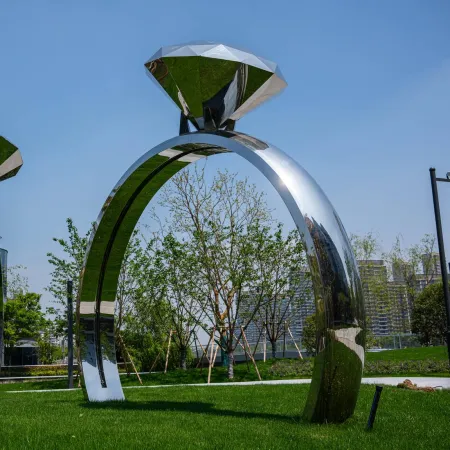
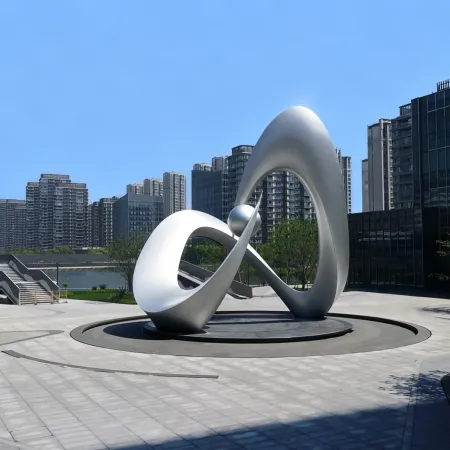
See large-scale projects delivered by Eye of the Phoenix, The Radiant Galaxy and Heart of Changfeng.
Why Scale Changes the Supplier Equation
A large public art installation supplier operates in a different world from a maker of garden ornaments, because scale changes everything about the work. A sculpture of several storeys demands industrial fabrication capacity, cranes and heavy transport; its structure must be engineered to a standard that protects the public; and its installation becomes a logistics operation coordinated with city authorities, site engineers and lifting contractors. The supplier that can deliver such a project is not merely a sculptor's workshop but an industrial partner, and the client should assess it against industrial standards rather than craft standards alone.
The risks of scale are equally different. A small work that arrives slightly wrong can be corrected or remade at modest cost, but a large work that arrives wrong is a catastrophe of time, money and reputation; a foundation that fails under a multi-tonne sculpture is a public danger; and a transport plan that misjudges a bridge clearance or a turning radius can stop a project for weeks. The client is not buying an object but an engineered delivery, and the supplier's track record, systems and engineering depth are the evidence that the delivery will succeed. Scale is where the difference between a genuine large-project supplier and an ambitious small workshop becomes brutally visible.
Assessing the Workshop's Real Capacity
The workshop of a large public art installation supplier must be judged by its capacity for your actual project. Does the floor have the clear height to assemble your work, the craneage to lift its sections, the bed size to fabricate its largest components and the space to stage several sections at once? Can the supplier weld the thicknesses and grades your structure demands, with welders qualified to the relevant standards? These are not questions of taste but of physics, and the client should verify them against the project's real dimensions rather than accepting a general assurance of capability.
The client should also look at how the supplier manages multiple large projects, because capacity is not only physical but organisational. How many large works are currently in the workshop, and how does the supplier protect your schedule when another client's project runs late? Who manages the programme, and what system tracks the thousands of details that a large installation involves, from material deliveries to weld inspections to finish approvals? A supplier that has delivered large works will answer with structures and examples; one that is overreaching will answer with promises, and the difference is usually audible in the first meeting.
Engineering Depth and the Public Standard
A large public art installation supplier must carry engineering depth, because the structures behind large works are real engineering projects. The supplier should either employ or work closely with qualified structural engineers who can calculate the behaviour of the work under its own weight, under wind loads and under the seismic conditions of the site, and who can design the connections, the foundations and the installation sequence with the rigour that public safety demands. The engineering reports should be shared openly with the client, the site's engineers and the insurers, and they should be signed by people whose qualifications can be verified.
The client should probe this engineering depth with specific questions. Ask how the supplier models wind around complex forms, where codes do not give simple answers; ask how the foundations will be designed for the actual ground conditions of the site, which may only be known after ground investigation; and ask how the installation sequence is engineered so that the structure is stable at every stage, including the moments when it is partially erected and most vulnerable. A supplier that treats these questions as the heart of the project is a supplier that has learned, often from hard experience, that large art lives or dies by its engineering.
| Capability to verify | The evidence to seek | Warning sign |
|---|---|---|
| Physical capacity | Height, craneage and bed size | Vague answers on floor capacity |
| Engineering | Named engineers and shared reports | No engineering documentation |
| Logistics | Transport and lifting case studies | No large-installation deliveries |
| Programme | Named manager and milestone control | No single accountable contact |
| Quality system | Inspection points and sign-offs | No documentation culture |
Logistics: The Hidden Half of Large Work
For a large public art installation supplier, logistics is not an afterthought but half the discipline, because getting a multi-tonne work from the workshop to its site is an engineering project in its own right. The supplier should plan the route, checking bridge clearances, road widths, turning radii and weight limits; it should design the transport so that the work travels safely, whether as complete sections on low-loaders or as sub-assemblies crated for the journey; and it should plan the lifting at the site, matching the cranes to the weights, the reach and the access. A supplier that has delivered large works will present this planning as a matter of course.
The client should ask who carries the risk at each stage of the journey. Where does responsibility pass from the supplier to the transport contractor, who insures the work in transit and during the lift, and what happens if the site is not ready when the convoy arrives? The contract should name the delivery terms precisely, and the schedule should build in the contingencies that large logistics always meet, from weather windows to permit delays. The suppliers who make large installations look easy are the ones whose logistics are planned to the hour and rehearsed in advance, and that invisible discipline is worth more than any promise made in a sales meeting.
Site Preparation and Foundations
A large public art installation depends on the ground it stands on, and the foundation is a shared responsibility between the supplier, the client and the site's engineers. The supplier should specify what the foundation must carry, providing the loads, the fixing details and the tolerance requirements, and should coordinate with the engineers who design and build it for the actual ground conditions. The client should ensure that ground investigation happens early, because a foundation designed for assumptions can fail when the ground tells a different story, and should understand that the foundation cost and programme are part of the project, not an afterthought.
The interface between the sculpture and its foundation is where large works often suffer, and the supplier should design it with care. Holding-down bolts must be set to tolerances that the fabricated structure can actually meet; the connection must allow for the alignment of the sections as they are assembled; and the detail must protect against the corrosion and moisture that attack the joint between steel and concrete. The supplier should also plan the sequence so that the foundation is cured and ready when the work arrives, and so that the site works are coordinated with the installation date. Large installations are won in the coordination of these details, and the supplier that owns the whole interface protects the client from the disputes that fragment lesser projects.
What a Large-Scale Supplier Must Prove
Industrial capacity matched to your project
Engineering depth signed by qualified people
Logistics planned to the hour
Foundations coordinated, not assumed
Contracts, Milestones and the Large-Project Cadence
A large public art installation supplier should welcome a contract of construction-grade rigour, because the scale of the work demands it. The agreement should define the scope, the design ownership, the materials, the engineering deliverables, the fabrication milestones, the delivery terms, the installation responsibilities and the payment schedule with the precision that a multi-month, multi-party project requires. It should also name what happens on variation, delay and default, because a project of this scale will meet at least one of each, and the contract is the map that keeps the relationship fair when it does.
The cadence of a large project should be built around visible milestones and formal approvals. The client should expect design gates where the concept, the engineering and the fabrication drawings are reviewed and signed; fabrication gates where the structure, the finish samples and the pre-shipment condition are inspected; and site gates where the foundation, the delivery and the installation are checked against the plan. Each gate should be a moment of genuine decision, documented in writing, because a large project cannot be steered by memory or goodwill. The supplier that runs this cadence professionally is protecting the client's investment, and the client who engages with it seriously is protecting their own.
Frequently Asked Questions About a Large Public Art Installation Supplier
What makes a supplier able to handle large work?
Physical capacity matched to the project, engineering depth, a proven logistics record and an organisational system that manages multi-month programmes. All four must be verified, not assumed.
How do I check a supplier's large-project record?
Ask for delivered works of comparable scale, contact their clients and visit or video-call the installed pieces. Large works leave a physical trail that is difficult to fake.
Who is responsible for the foundation?
The supplier specifies the loads and fixings and coordinates with the site engineers; the client ensures ground investigation and foundation delivery. The contract should name who does what precisely.
What engineering reports should I receive?
Structural calculations for dead and wind load, seismic checks where relevant, foundation loads and installation method statements, signed by qualified engineers and shared with the insurers.
How should payments be structured on large projects?
Milestone payments tied to visible gates: design approval, material, fabrication stages, pre-shipment inspection and installation. Never pay fully before the work is verified.
A large public art installation supplier is an industrial partner, and the client who commissions at serious scale should apply serious standards. Verify the physical capacity, probe the engineering depth, examine the logistics record, coordinate the foundations and run the project on documented milestones, and choose the supplier that behaves like the industrial partner your project demands. The large works that define our cities were delivered by suppliers who treated every tonne, every weld and every lifting plan with the same respect, and that discipline is what turns a large commission into a landmark that stands for generations.
Choose a large public art installation supplier with the capacity and the discipline your project deserves, and your work will stand the test of scale and time.