How a Modern Public Monument Speaks to Today's City and Tomorrow's Memory
A modern public monument must hold two conversations at once: it has to feel contemporary enough to belong to the city being built today, and it has to carry memory seriously enough to still matter when today becomes history. The monuments that fail choose only one audience, either repeating a classical language that no longer connects with the people passing by, or chasing a fashionable form that has nothing to say about the story it supposedly honours.
This guide explains how contemporary studios design a modern public monument that succeeds on both fronts, the design languages and materials that define the genre, and the questions a commissioning body should ask before it commits public money to a work that will be judged for generations. We have designed and delivered public monuments and landmarks since 2003, and the strongest of them share the principles set out below.
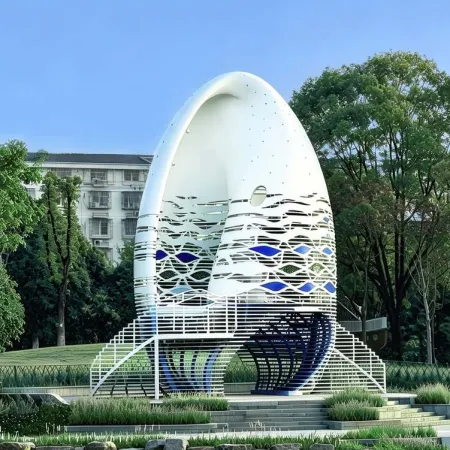
See the contemporary language of our delivered works in the project gallery, the design-to-installation capability behind them in our services overview and a contemporary landmark such as Eye of the Phoenix.
What Makes a Monument Feel Modern
A modern public monument earns the word modern through its form, its material honesty and its relationship with the viewer, rather than through a date on the plinth. Modern form tends toward abstraction, openness and movement, favouring gesture over literal description and allowing each viewer to complete the meaning; modern material honesty means the structure does not pretend to be something it is not, so steel reads as steel and light reads as light; and the modern relationship with the viewer is participatory, inviting approach, touch, reflection and photography rather than demanding distant reverence.
None of this requires abandoning seriousness. Some of the most powerful modern monuments are spare, even severe, using a single gesture, a wall of names, a beam of light, an opening in the ground, to create a space where memory can be felt rather than merely read. The modern contribution is to trust the public's imagination, to say less and allow more, and to let the site and the visitor complete the work. That trust is why modern monuments often move people more deeply than their ornate predecessors, because the visitor is a participant in the meaning rather than a spectator of it.
| Quality | Traditional monument | Modern public monument |
|---|---|---|
| Form | Literal and heroic | Abstract, gestural, open |
| Viewer role | Distant observer | Participant and interpreter |
| Material | Bronze and stone tradition | Honest steel, light, landscape |
| Meaning | Declared and singular | Layered and personal |
| Presence | Demands reverence | Invites daily life and reflection |
Design Languages of the Contemporary Monument
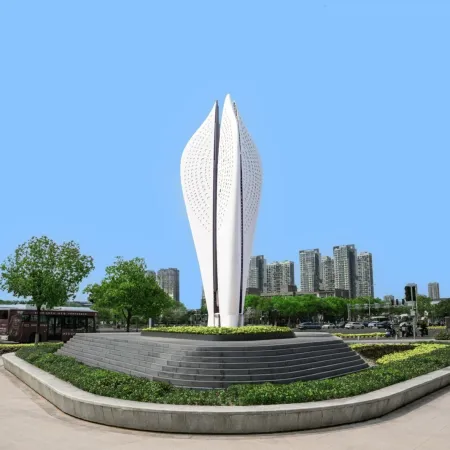
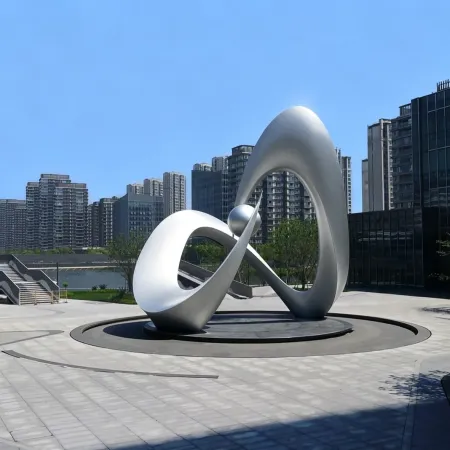
The contemporary monument speaks through several design languages, and the best commissions choose the language that fits the story. Abstraction condenses a memory into essential form, a spiral for a journey, a void for a loss, a flame for a life; the landscape itself can be the monument, with earth, water, planting and paths composing a place of reflection rather than a single object; and light, both daylight through a structure and programmed illumination at night, can carry meaning that changes with the hour and the season. Interactive elements, sound and even digital content extend the vocabulary further, though they must be chosen with care for their long-term maintenance.
The studio's skill is in matching language to memory. A community's founding story may ask for an abstract form that carries its symbols; a war memorial may ask for a contemplative landscape with a wall of names; a civic figure may ask for a contemporary interpretation that reveals character without literal portraiture. We have produced works across this whole range, and the discipline that unites them is restraint: the language serves the story, and when the language begins to compete with the memory, the designer cuts the language back until the meaning leads again.
Materials and Making for the Modern Form
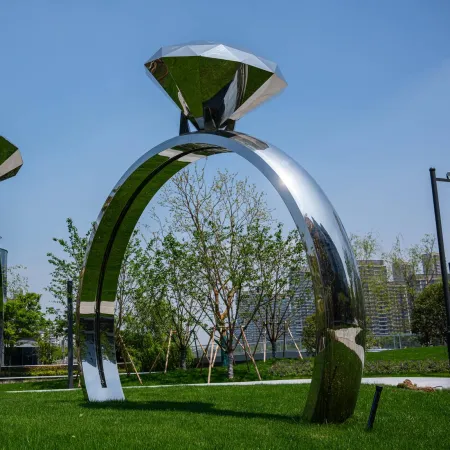
The materials of a modern public monument are chosen for what they honestly are and how they age. Stainless steel, in mirror, satin or brushed finish, gives contemporary sculpture its signature brilliance and needs little care, though its finish must be protected from fabrication damage and its structure engineered for wind; weathering steel develops a stable rust that speaks of time and industry; bronze, used in modern as well as classical work, offers warmth and a living patina; and glass, light and water bring the immaterial into the composition, at the cost of more demanding maintenance regimes.
Modern forms are often the hardest to build well, because their apparent simplicity hides demanding geometry. A pure curve in stainless steel must be formed without distortion and stiffened invisibly; a cantilever must be balanced so it appears effortless; a mirror finish must be seamless across the joints of large sections. The client should therefore choose a fabricator with a record of exactly this challenge and should insist on seeing how previous modern monuments were engineered, because a modern work that is badly made exposes its failures far more cruelly than a classical one does.
- Let the story choose the language, not the trend of the season.
- Trust abstraction to say more by saying less.
- Specify honest materials that age with dignity.
- Demand engineering invisibility behind the simple form.
- Plan light and maintenance from the first concept.
What Modern Monument Design Delivers
A form the public approaches rather than avoids
A story carried by gesture, not by caption
Materials that age into the city's fabric
A landmark that belongs to today and tomorrow
Commissioning a Modern Public Monument Well
The commissioning process for a modern public monument should protect the concept from the forces that dilute it: committees that edit by majority vote, stakeholders who fear abstraction and a design that is progressively ornamented until it pleases everyone and moves no one. The remedy is a clear process that names the artistic lead, limits revisions to defined rounds and lets the studio defend the concept with evidence, including models, precedents and site studies, rather than with opinion alone.
Public engagement belongs in that process, but it should be designed well. Asking the public to judge an abstract form in a rendering often produces resistance that melts away when the same people experience the work in its place, so the best programmes engage the public on the story and the intended feeling before the form is fixed, then present the resolved concept with confidence. A modern public monument that has been explained, not merely revealed, arrives in its community with interpreters already in place, and interpretation is what turns a striking object into an adopted landmark.
Why Context Matters for a Modern Public Monument
A modern public monument does not stand in a vacuum; it stands in a specific context of architecture, history, culture and daily life, and the works that endure are the ones that read that context with respect. The designer should study the surrounding buildings, the materials and the rhythms of the neighbourhood, and should compose a form that enters that conversation with confidence, neither mimicking the context nor ignoring it. A modern monument that ignores its surroundings becomes an interruption, while one that answers them becomes part of the place, and that belonging is what allows a contemporary work to be accepted by a public that did not ask for it.
Context also means the people who will live with the work, because a modern public monument is adopted through use and understanding rather than through decree. The form should invite the daily encounters that build affection, the pause, the photograph, the conversation, and the story behind the work should be available to anyone who asks, through a plaque, a digital record or the simple presence of a form that raises curiosity. When a monument explains itself through its own presence and its own context, it stops being an object that was placed and becomes a place that belongs, and that transformation is the quiet success of the best modern public monuments in cities around the world.
Frequently Asked Questions About Modern Public MonumentsDoes a modern monument have to be abstract?
No, but abstraction is the dominant modern language because it lets each viewer complete the meaning; contemporary figurative and landscape approaches also succeed when they serve the story.
Will a contemporary design still be respected in fifty years?
Works rooted in honest material, clear meaning and durable form grow in stature; works chasing fashion date quickly, which is why the studio should resist trends and serve the memory.
How do I help the public accept an abstract monument?
Engage the community on the story before the form is fixed, then explain the resolved concept through models, interpreters and the artist's own account of the meaning.
What materials suit a contemporary monument?
Stainless steel, weathering steel, bronze, glass, light and landscape, each chosen for honesty, climate fit and the maintenance the owner can actually provide over decades.
Why do simple modern forms cost so much to build?
Their apparent simplicity hides demanding geometry, seamless joins, invisible stiffening and controlled distortion, and engineering quality is exactly what makes the simplicity look effortless.
The measure of a modern public monument is not its reception on opening day but its authority on the thousandth day, when the scaffolding is gone, the novelty has faded and the work must carry its memory alone. Choose a language the story deserves, materials that will age with the city and a studio disciplined enough to say less so the meaning can say more.
If you are exploring a modern public monument for a site you know and a story you carry, our designers will show you how the contemporary language can serve both, with models and material samples before you commit.