How a China Metal Sculpture Factory Proves Its Real Capability
Choosing a China metal sculpture factory is one of the highest-stakes decisions in a public art project, because the factory you never visit will determine whether your sculpture arrives on time, on spec and built to last. China is home to some of the most capable sculpture fabrication facilities in the world, and it is also home to trading offices that pose as factories, which is why the verification habits you bring to the search matter more than the promises you receive. After more than two decades fabricating metal sculpture in our own workshops and exporting to clients across twenty-three countries, I know exactly what separates a genuine factory from a storefront.
This guide shows you what to inspect, what to ask and what to document when evaluating a China metal sculpture factory for a serious commission.
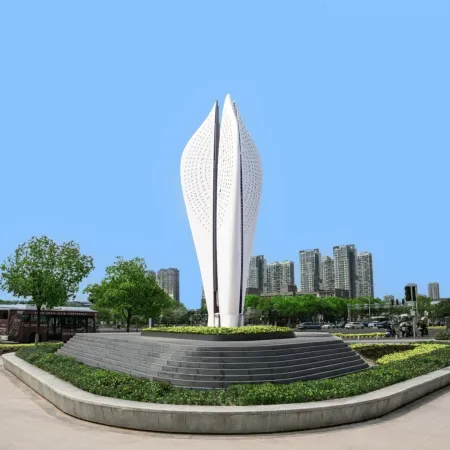
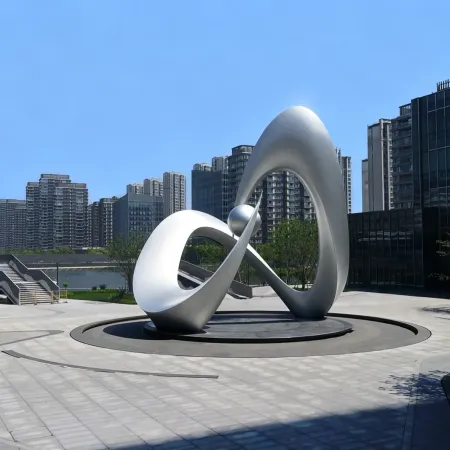
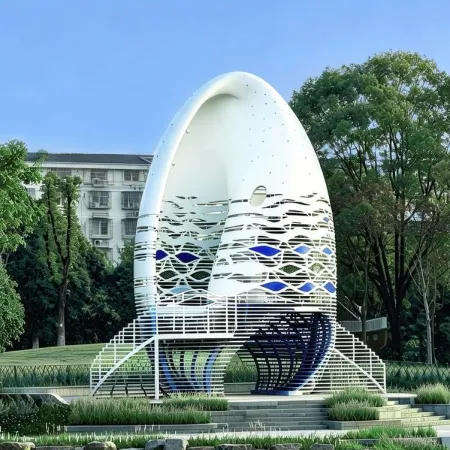
Study how the Heart of Changfeng was realised as a civic metal landmark, see the engineering of Wind Sail as a structural metal piece, and review Zhong Gong Water Control as a large-scale factory-built narrative work.
What a Serious China Metal Sculpture Factory Should Show You
A genuine China metal sculpture factory will be eager to show you its physical plant, because the plant is its evidence. Look for covered fabrication bays large enough to hold your piece at full scale, plate rolling and bending equipment for curved forms, CNC cutting tables, a welding workforce that can be counted, grinding and polishing stations and a finishing room where coatings are applied in controlled conditions. A factory that builds sculpture daily owns this machinery; a trading office rents other people's photographs.
The depth of the workforce tells its own story. Ask how many fabricators, welders and finishers work directly for the factory, how many projects are running at the moment and whether your project would be built in-house or sent to another shop. In a real factory the answers are specific and consistent across different staff members; in a trading operation the answers shift depending on who you ask. These conversations, held on a live video walkthrough of the workshop, reveal more than any brochure.
| Capability | What to look for | Why it matters |
|---|---|---|
| Fabrication bays | Covered space at full scale | Proves large work is built on site |
| Forming equipment | Rollers, presses, CNC cutting | Curves and precision are produced in-house |
| Welding workforce | Countable, certified welders | Seams determine structure and finish |
| Finishing room | Controlled coating and polishing | The surface is the sculpture's voice |
Verifying Quality Before You Commit
Verification should follow a sequence that builds evidence at every step. Begin with a live video walkthrough of the workshops, then request photographs of comparable completed work taken in the factory itself, then ask for references from international clients and actually contact them. If the project is large enough to justify it, commission a third-party inspection before shipping, and agree from the start that payment milestones will be tied to documented progress, approvals and inspections rather than to promises.
The documentation a serious factory provides is itself a signal of seriousness. Engineering calculations for the structure, material certificates for the steel, a fabrication schedule with milestones, quality checkpoints at welding and finishing, and packing specifications for export, these documents are produced by factories that do this work properly. A factory that cannot produce engineering documentation for a large metal sculpture is not equipped to build one, whatever its showroom suggests.
- Video walkthrough first: see the bays, machines and workforce live
- Ask for factory photos: completed work shot inside the shop
- Contact international clients: their experience is your best evidence
- Tie payment to milestones: inspections gate every stage of work
Export Experience and International Delivery
Fabricating a sculpture is only half of the challenge for an overseas client; the other half is getting it across the world undamaged, through customs and onto a foundation. A China metal sculpture factory with real export experience will specify seaworthy crating with internal bracing for large sections, protect mirror surfaces with the right film and packing, and prepare the export documentation that keeps shipments moving through customs without delay. These are disciplines learned through hundreds of shipments, not through reading a manual.
Ask precisely how the factory handles the journey your work will make. Which ports does it ship from and what crating standards does it use for polished stainless? Does it provide installation drawings for your local contractor or send its own crew to supervise erection? The answers distinguish a factory that delivers complete projects from one that simply sells steel, and they determine whether your sculpture arrives as a finished work or as a problem awaiting assembly.
The Factory Behind Three Thousand Works
Yifeng Sculpture Studio, founded in Ningbo in 2003, is one of the China metal sculpture factories that commissions should measure themselves against. The studio operates its own workshops where metal sculpture is designed, engineered and fabricated under one roof, and it has delivered more than three thousand installed works across twenty-three countries, from civic landmarks and waterfront installations to interactive pieces and museum commissions. The academy-trained artists and engineers work alongside the fabrication crews daily, which is why the finished work matches the approved design.
For an overseas client this integration removes the classic failure mode of the industry, the beautiful design that gets butchered in translation to steel. When the people who resolve the geometry also roll, weld and finish it, the sculpture that leaves the factory is the sculpture that was approved, and the surprises that plague outsourced fabrication simply do not occur. That is the practical meaning of a real factory, and it is the standard we hold ourselves to on every export.
- Design and build together: artists and welders share one floor
- Export-proven logistics: crating, customs and shipping handled daily
- Installation support: drawings, supervision or our own crew
- Verified track record: thousands of works across many countries
Factory Evidence You Can Demand
Live video walkthrough of the workshops
Engineering and material documentation
Export crating and delivery planning
Milestone payments tied to inspections
Red Flags When Evaluating a Factory
Certain signals should end the conversation with a would-be factory quickly. Refusal to show the workshop on video, inconsistent answers about the workforce, portfolios of borrowed photographs, prices quoted without engineering review, pressure to pay a large deposit before any documentation, and hesitation when you ask for material certificates are all red flags that belong to trading operations rather than genuine factories. None of these signals is subtle, but they are easy to miss when a project is exciting and a deadline is near.
The antidote to every red flag is the same, slow down and demand evidence. A serious China metal sculpture factory welcomes scrutiny because scrutiny is what its serious clients bring, and it knows that verification protects its reputation as much as your investment. If a supplier resists the very checks that reputable factories offer routinely, that resistance is the clearest warning you will receive, and it should send you to the next name on your list.
We also encourage clients to request a sample or prototype of a defining detail before full fabrication begins, because a small test piece reveals more about a factory's standard than any number of photographs. A section of curved surface, a sample of the proposed mirror finish or a prototype of a complex junction shows the real quality of the welding, the forming and the finishing, and it gives both sides a reference point for the work to come. Serious factories treat prototyping as part of the service, because it protects them from rework just as it protects you from disappointment.
Frequently Asked Questions About Working With a China Metal Sculpture Factory
How do we know a factory is genuine and not a trading office?
Demand a live video walkthrough of the workshops, confirm the workforce is direct and countable, ask for factory photographs of completed work and request engineering documentation. Genuine factories provide evidence; traders provide promises.
Can we visit the factory before placing an order?
Most serious factories welcome visits from overseas clients and will arrange the visit, translation and technical meetings. If distance prevents a visit, a structured live walkthrough plus third-party inspection is the usual alternative.
What documentation should the factory provide?
Structural engineering calculations, material certificates, a fabrication schedule with milestones, quality checkpoints and export packing specifications. If these documents cannot be produced, the factory is not equipped for serious metal sculpture.
How is payment normally structured?
Milestone payments tied to documented progress are standard and protect both sides, with design approval, fabrication progress, pre-shipment inspection and delivery as common gates. Be cautious of demands for very large upfront deposits.
Will the factory handle shipping and installation?
Export-experienced factories manage crating, shipping and customs, and provide installation drawings for local contractors or send their own crew to supervise erection. Confirm the full delivery scope in writing before fabrication begins.
A China metal sculpture factory earns your trust through evidence, not adjectives. Inspect the workshops, verify the workforce, demand the documentation and structure the payments, and the factory will deliver the sculpture your site deserves.
Arrange a live workshop tour with our China metal sculpture factory before you decide.