How Garden Outdoor Sculpture Transforms a Private Landscape Into a Personal Place
Garden outdoor sculpture is different from public art because its audience is small and intimate, the people who live with it every day, and its setting is living, changing through every season. A piece that would be lost in a civic plaza can be perfect beside a path, a pool or a stand of trees, and the relationship between the work and the garden is closer than any other kind of outdoor sculpture.
This guide explores how to choose and place garden outdoor sculpture, how to match material and form to a living landscape, and how to commission a piece that becomes part of the family's daily life.
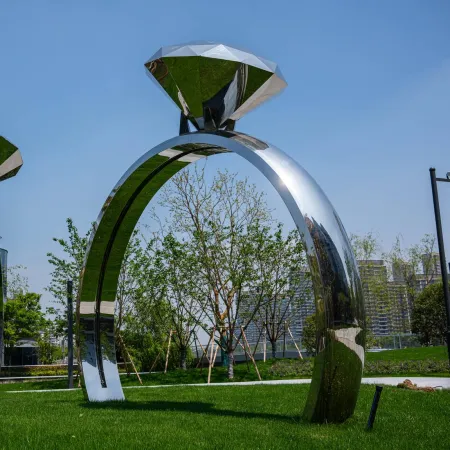
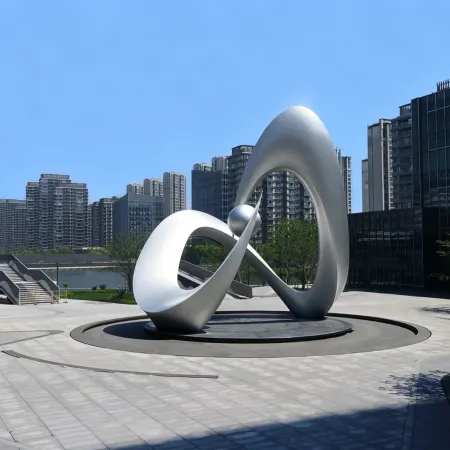
Imagine a garden piece with the presence of Peach Blossom, the lyricism of Homing Nesting and the welcome of Hello Conch.
Why the Garden Is a Different World for Sculpture
A garden is the only place where sculpture is seen slowly, repeatedly and in the round, in every light and every season, by people who are not passing through but living there. Garden outdoor sculpture therefore rewards pieces that reveal themselves gradually, a form that changes with the angle of the sun, a surface that behaves differently after rain, a silhouette that frames a view or closes a vista. Unlike a plaza piece that must command attention from a distance, a garden work can be quiet, personal and even private, discovered by the owner and a few trusted visitors.
The garden also sets the scale. Most private gardens are modest, and a sculpture that suits them is usually between waist height and a little above eye level, sized to be encountered at close range rather than viewed across an expanse. That intimacy changes the material conversation too, because surfaces will be touched, leaned near and examined closely, so the finish must reward near inspection rather than merely reading from afar. Choosing garden outdoor sculpture is closer to choosing furniture or jewellery for the landscape than to commissioning a monument.
Form, Story and the Character of the Garden
The best garden outdoor sculpture grows from the character of the garden itself. A formal garden with clipped hedges and symmetry may be completed by a classical or geometric form that echoes its order; a naturalistic planting may be enriched by an organic or abstract piece that feels native to the landscape; a family garden may welcome playful or figurative works that carry meaning for children; and a contemplative corner may ask for a single quiet form that gives the eye a place to rest. The sculpture should converse with the garden rather than compete with it.
Meaning matters more in a private setting than in a public one, because the owners will live with the piece daily. A work that recalls a place, a person, a journey or a belief, or simply an emotion the family wants to keep near, becomes part of the home in a way that a merely decorative object never does. When clients describe what the garden means to them, the studio listens for these threads and designs a piece that weaves them into the landscape, so that the sculpture carries the family's story forward for generations.
Materials That Age Gracefully Outdoors
Material is the first practical decision in garden outdoor sculpture, because the work will live through frost, rain, strong sun and, near the coast, salt, and it must look better with age rather than worse. Bronze develops a natural patina that many owners love, requiring little beyond an occasional wash. Stainless steel stays bright and mirror-like, reflecting the planting around it, with grade 316 for coastal gardens. Weathering steel settles into a warm rust that suits rural and naturalistic settings. Stone, particularly granite, weathers imperceptibly and carries a quiet permanence.
The garden also asks for finishes that tolerate the gardener's world: water from sprinklers, fertiliser splash, soil, fallen leaves and the occasional knock from a mower or strimmer. The studio should advise on what each material demands and what the owner is willing to provide, because a mirror finish that must be washed monthly may delight one owner and burden another. Honest advice at this stage prevents the disappointment of a sculpture that looks glorious in the showroom and demanding in the garden.
| Material | Character in the garden | Care note |
|---|---|---|
| Bronze | Classical warmth, natural patina | Occasional wash only |
| Stainless steel | Bright mirror of the planting | Wash in coastal air |
| Weathering steel | Warm rust, rural and natural | Manage runoff staining |
| Granite and stone | Quiet, ancient permanence | Minimal care needed |
| Painted steel | Full colour freedom | Depends on coating care |
Placement: Composing With the Living Landscape
Placement is half the art of garden outdoor sculpture, because the same piece can succeed or fail depending on where it stands. A sculpture may close a vista at the end of a path, mark a turn in a walk, stand beside water to double itself in reflection, or sit against a wall of green where its silhouette reads clearly. The placement should consider where the piece will be seen from the house, from seating areas and from the garden's main routes, and how the planting will frame or screen it as it grows.
Time is part of the composition. Trees and shrubs will grow, so a view that is open today may close in five years, and a clever placement plans for that growth or embraces it, letting the sculpture be gradually discovered among mature planting. The piece should also be placed with the seasons in mind, considering how it looks against snow, among autumn colour, in the low light of winter and at its most generous in high summer. Gardens are never finished, and a sculpture placed thoughtfully becomes a fixed point around which the changing garden can turn.
Commissioning a Piece for Your Own Garden
Commissioning garden outdoor sculpture is a collaboration closer than most, because the client is not a committee but a household with taste, memory and daily life. The process should begin with the studio listening to what the garden means, how it is used, what the family loves and what they hope the piece will bring, then developing concepts that answer those hopes in scale and material appropriate to the setting. A maquette lets the family live with the idea before committing, and it can be placed in the garden to test position and scale against the real view.
The practical side matters as much as the poetic. The base must suit the ground, whether lawn, paving or planting, and the piece must be stable and safe for children and pets. Access for delivery should be checked, since a large piece may need to pass through gates and along paths, and the installation should disturb the garden as little as possible. A studio experienced in private commissions will manage these details smoothly, so that the arrival of the sculpture feels like a gift to the garden rather than a construction project.
- Choose the right scale: intimate settings suit human-scaled forms
- Match the garden's character: formal, natural, playful or contemplative
- Let materials age: choose finishes you can live with
- Compose with time: plan for growth and every season
Frequently Asked Questions About Garden Outdoor Sculpture
What size of sculpture suits a private garden?
Most private gardens suit pieces from about waist height to slightly above eye level, sized for close encounter rather than distant viewing. The garden's proportions and the placement decide the ideal scale.
Which material needs the least care in a garden?
Bronze, granite and weathering steel need the least attention, each developing a natural aged character. Stainless steel stays bright but may need washing, especially near the coast, and painted steel depends on its coating.
How do we choose where to place the sculpture?
Consider views from the house and seating, the garden's routes and vistas, and how planting will grow around the piece. A maquette placed on site helps test position and scale before the final work is made.
Is a garden sculpture safe for children?
Yes, when designed and installed properly. Edges can be softened, climbing either designed for or discouraged, bases made stable and finishes chosen that stay cool and safe to touch. Tell the studio about children and pets.
How long does a bespoke garden commission take?
A typical piece takes from a few months to around a year, depending on material, scale and complexity. The design and maquette stages need time, as do fabrication and any foundation work in the garden.
Garden outdoor sculpture brings art into the most personal landscape a person owns, turning a garden into a place with a voice, a memory and a future. Chosen or commissioned with care, a piece becomes part of the family's daily life, changing with the light and the seasons, and it will still be standing when the trees that frame it have grown tall.
Tell us about your garden and let our garden outdoor sculpture specialists design a piece for your landscape.