What Memorial Sculpture for Veterans Owes Those Who Served
A memorial sculpture for veterans carries a debt that no other commemorative work quite bears, because it must honour those who served without flinching from what service cost them, and it must speak to veterans who know the truth of war and to civilians who never will. Such a memorial is judged first by the men and women it honours, and only then by the public, which makes its design a matter of trust between the studio and the veteran community. After more than two decades creating commemorative works across twenty-three countries, I have learned that the veteran memorial must be earned with listening, truth and humility.
This guide explores what veteran memorials must carry, and how they are designed with the veteran community rather than for it.
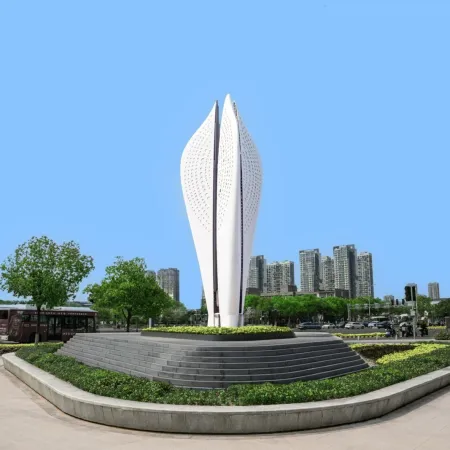
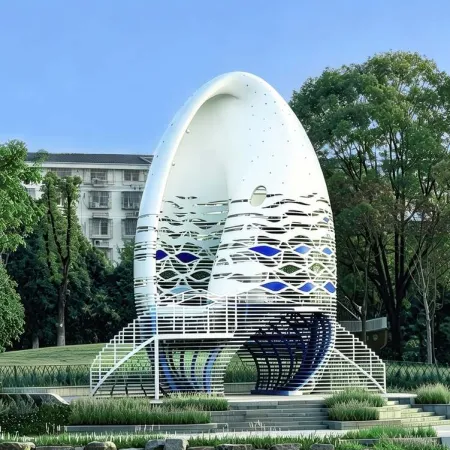
Our commemorative sculpture services design veteran memorials with the communities they honour, the Eye of the Phoenix work speaks of renewal after trial, and the Wind Sail form shows how a single gesture can carry public meaning.
Honouring Service Without Forgetting Its Cost
The central challenge of any memorial sculpture for veterans is balance: it must honour the courage and sacrifice of service while acknowledging the loss and suffering that service involved, and it must do both without sentimentality and without evasion. A memorial that shows only glory betrays the families of the fallen; one that shows only grief betrays the pride of those who served. The designs that endure are those that hold both truths together, letting the visitor carry away the full weight of what service means.
The balance is found in the specific story the memorial tells. A unit memorial may centre on the bond between comrades, a service memorial on the branches and their roles, a homecoming memorial on the return that so many never made, and each emphasis carries its own truth. The veteran community itself is the surest guide to that truth, which is why the design process must begin with their voices rather than with the designer's concept.
Designing With Veterans, Not for Them
A memorial sculpture for veterans must be designed in genuine partnership with the veteran community, because no outsider can know what the memorial must say. The process begins with gatherings in which veterans share what they want remembered, the comrades lost, the moments of courage, the daily reality of service, the things civilians misunderstand, and those conversations shape every decision that follows. A memorial that emerges from this listening carries the authority of the people it honours.
The partnership continues through every stage of the design. Veterans review the concepts, argue about the details, approve the maquette and check the inscriptions, and each round of feedback makes the work truer. We treat the veteran community as co-authors of the memorial, because a work they have helped to shape is a work they will defend, visit and explain to the next generation, and that ownership is the difference between a monument and a memorial.
| Memorial Focus | What It Carries | Design Language |
|---|---|---|
| The fallen | Names and individual loss | Walls of names, figures of mourning |
| Service and bond | Comradeship and shared duty | Figures together, unit symbols |
| Return and home | Homecoming and its price | Welcome gestures, threshold forms |
| The living veterans | Those who came home changed | Recognition of service and struggle |
Names, Service Details and the Discipline of Accuracy
In a memorial sculpture for veterans, accuracy is a form of honour, because the details of service are sacred to those who lived them. Names must match the official rolls exactly, ranks and units must be correct, insignia must be modelled with care, and the uniform details must be right for the period and the service, because a veteran who spots an error will feel the whole memorial has betrayed the truth. The verification of these details is a formal discipline, not a courtesy.
The inscriptions on a veteran memorial carry a particular weight. The words chosen must speak for the community, whether they are the names of the fallen, the motto of a unit or a line that captures what service meant, and they must be composed with the veterans and approved letter by letter before they are set in metal or stone. We treat every name and every word on a veteran memorial as a vow, and we verify each one against the record the community provides.
Materials and Forms for the Veteran Memorial
The materials of a memorial sculpture for veterans should carry the permanence that service deserves and the honesty that veterans expect. Bronze remains the language of figurative honour, the soldier, the sailor, the airman, the nurse, modelled with respect and cast to endure; stone carries the gravity of the oldest war memorials and the names of the fallen; stainless steel speaks in the contemporary language of many modern service memorials; and weathering steel brings an elegiac tone that suits memorials of loss.
The form should follow the story the veterans have told. A figure of a single service member may carry the human truth of service best; a wall of names makes the scale of loss inescapable; an abstract gesture can express what words cannot. We develop the form with the community, testing each direction against their experience, until the memorial's language matches the truth they carry, because a veteran memorial is not a stylistic exercise but a statement of what a community owes its veterans.
Creating a Place for Ceremony and for Quiet
A memorial sculpture for veterans must serve both the public ceremony of remembrance and the private visit of a veteran or a family, and its site must make room for both. The annual service needs a forecourt, a focus and a sightline for the gathered community; the individual visitor needs a place to stand alone before a name, to leave a token, to remember without an audience. The design of the memorial and its space together creates that double life.
The placement of the memorial also carries meaning. A veteran memorial at the heart of the town says that service belongs to everyone; one in a quiet garden says that memory needs solitude; one at a place connected to the unit's history says that this ground is sacred. We advise on siting with the community, because the place becomes part of what the memorial says, and the right place lets a veteran memorial do its quiet work for generations.
- Hold both truths: honour the service without forgetting its cost
- Design with veterans: they are co-authors, not an audience
- Keep the details sacred: names, ranks and insignia must be exact
- Make room for both: ceremony for the many, quiet for the one
A Veteran Memorial Keeps the Debt Visible
Service honoured with truth, not sentimentality
Names and details verified as a form of respect
A place for the annual service and the private visit
A community statement that endures for generations
Designing for Different Services and Different Eras
A memorial sculpture for veterans may be asked to honour more than one service or more than one era, and the design must find a way to hold them all with equal honour. A community may wish to remember those who served in several conflicts, a unit may include members from different branches, and a family may honour a veteran whose service spanned decades, and the memorial must compose these varied stories into one legible whole. The design can use separate panels for each service, a single form that carries the shared values, or a figure that belongs to no one era but to service itself.
The design decisions must be made with the veterans and families who represent each service and era, because only they can say what must be included and what must be left out. We facilitate these conversations, helping the community find the structure that honours every group without letting the memorial become a catalogue, and we test the design with each constituency until all feel their service is seen. A veteran memorial that honours many must be built on the trust of many, and that trust is earned in the listening.
Frequently Asked Questions About Memorial Sculpture for Veterans
How should a veteran memorial be designed?
In partnership with the veteran community. Their voices guide the concept, the form and the inscriptions, and their approval at every stage makes the memorial truly theirs.
Should the memorial show glory or grief?
Both, held in balance. Honour the courage and sacrifice of service while acknowledging its cost, without sentimentality on one side or evasion on the other.
How do we ensure names and service details are accurate?
Establish the official record with the commissioning body and veteran groups, verify every name, rank and insignia against it and approve all inscriptions letter by letter before they are set.
What materials suit a veteran memorial?
Bronze for figurative honour, stone for names and tradition, stainless steel for contemporary service memorials and weathering steel for works of loss. The form and the community's story guide the choice.
How do we create a place for both ceremony and private remembrance?
Design the memorial and its site together, with a forecourt and focus for annual services and quieter corners where individuals can stand before a name and remember without an audience.
A memorial sculpture for veterans is a debt the community pays in form, and it is paid honestly only when it is designed with veterans, true to their service and open to the full weight of what they gave. Commission with humility and partnership, and your memorial will be worthy of those it honours.
Let our studio work with your veteran community to create the memorial sculpture for veterans that their service deserves.