Designing an Art Installation for Landscape Architecture Into the Ground Plan
An art installation for landscape architecture projects succeeds or fails by one relationship: how the sculpture and the living ground plan treat each other. Placed carelessly, a work fights the planting, shadows the lawns and reads as an object dropped from a crane. Placed well, it becomes part of the landscape's own grammar — a destination the paths were always heading toward. At Yifeng Sculpture Studio we have collaborated with landscape architects for over two decades, and this guide sets out how that collaboration should work.
The stakes are real for both sides. The landscape architect has spent years growing an environment; the sculptor is asking to stand a permanent object in the middle of it. Done with discipline, each makes the other more valuable.
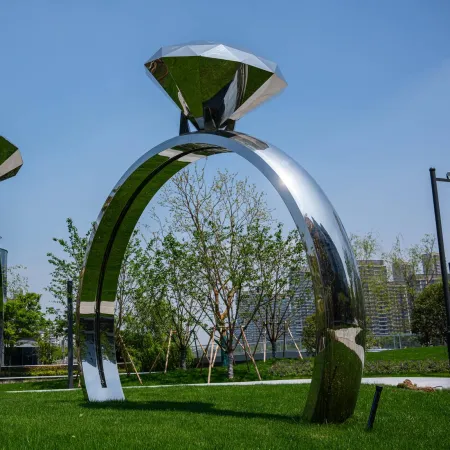
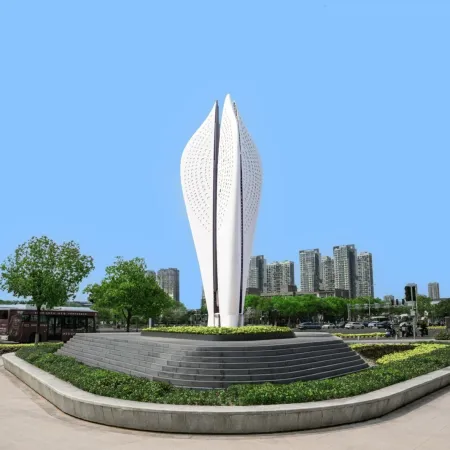
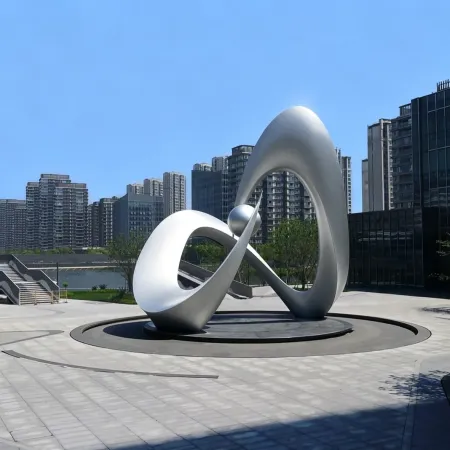
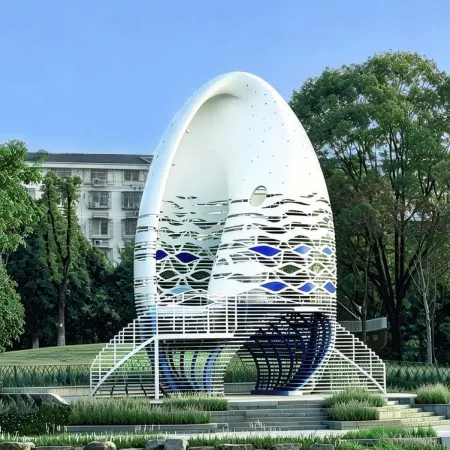
The project archive shows many works built into parks and waterfront landscapes, the services overview explains our collaboration model, and pieces such as the Summit of Nine Peaks demonstrate sculpture composed for reading within a designed terrain.
Joining the Landscape Process at the Right Time
The single biggest determinant of success is timing. When the art installation for landscape architecture projects joins at masterplan stage, sightlines, paths, earthworks and planting can be shaped around the sculpture — and the sculpture around them. When it joins after the plan is frozen, every option is a compromise: whatever position remains is where the work must stand, whatever trees are scheduled are what will frame or block it.
We therefore ask to be present for the conversations where the ground is still movable. That does not mean the artwork leads the masterplan; it means the artwork's needs — foundation zones, approach geometry, viewing distances, crane access — enter the same drawing set as the drainage and the planting, once, instead of being retrofitted three times.
What the Sculpture Needs From the Landscape Plan
- A foundation zone agreed before planting schedules are locked, so no mature tree pays for the anchors
- Approach geometry — paths that deliver the first view the composition was designed around
- Drainage coordination — no sculpture base sitting in a planted bowl that collects standing water
- Maintenance access — a route for future care that does not cross the flowerbeds each visit
Materials That Belong Outdoors Among Living Things
Landscape settings are the most aggressive environments public art faces: full weather exposure, irrigation spray, soil contact, fertilizers and the biology of roots and insects. Material strategy is therefore a collaboration topic from the first meeting. Stainless steel and aluminum resist the irrigation environment indefinitely; weathering steel gives a rich oxide surface that harmonizes with planting but demands detailing that controls runoff; composites enable organic forms that echo the landscape's own curves at minimal weight.
| Landscape Context | Recommended Strategy | Reason |
|---|---|---|
| Irrigated gardens | 316 stainless or coated aluminum | Constant moisture and mineral spray |
| Natural parkland | Weathering steel with runoff-managed bases | Oxide surface converses with planting |
| Waterfront lawns | Marine-grade alloy, elevated base design | Salt exposure and storm surge |
| Woodland settings | Matte dark finishes, root-aware foundations | Shadow integration and tree protection |
Siting an Art Installation for Landscape Architecture Projects
Siting an art installation for landscape architecture contexts is a joint drawing exercise. We study the path network for the moments where a destination is missing — the midpoint of a long promenade, the top of a rise, the place where two loops cross. Sculpture placed at these moments earns visitors who were already walking; sculpture placed off the desire lines earns nobody. The ground plan tells us where people already are; the sculpture gives them a reason to arrive.
- Joint site walk — landscape architect and studio read the terrain together
- Sightline trials — placement tested against the paths people actually use
- Foundation and drainage design — coordinated with irrigation and soil strategy
- Installation window — sequenced around planting and practical completion milestones
What the Landscape Gains From the Studio
Engineering packages that merge into the masterplan documentation set
Materials selected against irrigation, soil biology and maintenance reality
An installation crew that leaves the planting looking untouched
The Long Game: Sculpture and Landscape Aging Together
A landscape is never finished; it matures. The sculpture must be designed for the landscape it will inhabit in year fifteen, not the one photographed at opening. Trees grow into the sightlines that were clear; lawns where children played become groves. We design with this in mind: forms that keep their identity when the framing changes, finishes that weather into their surroundings rather than against them, and bases that anticipate root growth over decades. Our works in mature parks across more than twenty countries have aged through exactly these transformations.
The reverse is equally true: the landscape plan should anticipate the sculpture's presence — the wear ring of feet around a popular work, the shadow it casts on certain lawns, the maintenance vehicle that will visit it twice a year. An art installation for landscape architecture projects is a fifty-year housemate; both parties should plan for the whole lease.
Coordinating Services: Irrigation, Lighting and Site Infrastructure
Landscape projects carry a hidden network that architectural sites do not: irrigation lines woven through every bed, low-voltage garden lighting loops, drainage runs and, increasingly, the control cabling for smart systems. An art installation for landscape architecture projects has to enter this network as a polite participant, not a disruption. Every service we add — power to a light feature, a supply line for water, a control signal for kinetic movement — is routed with the irrigation drawing set open on the same table, and every trench is cut once, not three times by three trades.
This coordination habit is also what keeps the long-term maintenance story clean. A sculpture whose services were routed beside the planting beds, with accessible junctions outside the root zones, can be inspected and serviced for decades without disturbing the landscape above. A sculpture whose cabling was improvised will eventually demand excavation — and excavation through a mature bed is the kind of repair that undoes years of growth. We therefore document our service routes as part of the handover package, drawn onto the same plans the groundskeeping team already uses, so the artwork's infrastructure is never a mystery to the people who maintain the ground around it.
- Single-trench policy — all sculpture services share one coordinated route with the landscape's own utilities
- Accessible junctions — electrical and water connections placed outside root protection zones
- Documented routing — as-built service drawings handed over on the landscape team's own plan set
- Seasonal logic — lighting scenes and water features programmed around planting cycles, not against them
The Season Drawing: Reading a Landscape Through the Year
One exercise we ask of every landscape collaboration is the season drawing. The masterplan is usually presented in full summer leaf; the sculpture must live through winter bareness, autumn color, spring flush and the low western light of midsummer evenings. We sketch the sculpture against the site in all four states before the design freezes, because a form that depends on a summer backdrop for its contrast will disappear in February, and a color chosen to warm the winter will shout in June. An art installation for landscape architecture projects earns its place by holding the ground plan together in every season, not only the one on the presentation board.
Frequently Asked Questions About Sculpture in Landscape Projects
When should the sculpture join the design process?
At masterplan stage if possible — that is when sightlines, paths and foundation zones can be shaped together. If the plan is already frozen, we work from what remains and tell you honestly what the constraints cost.
Can the sculpture include water, lighting or sound?
Yes. Water, lighting and sound elements are engineered with the same rigor as the structure, and their services are coordinated with the landscape's irrigation, electrical and control infrastructure from the start.
How is the base prepared in planted areas?
We coordinate foundation depth, drainage and root protection with the landscape contractor before excavation. Anchors are positioned to preserve mature planting, and restored ground is finished to match the surrounding treatment.
Who maintains a public landscape sculpture?
The owner's team, following the maintenance schedule we deliver, with access routes designed so routine care never damages the planting. We remain available for periodic inspection and refinishing.
Can the work be relocated as the landscape evolves?
When the brief asks for it, we design demountable anchoring and discrete lifting points so the piece can travel with the masterplan's next phase without structural surgery.
An art installation for landscape architecture projects should feel like it grew where it stands — arrived at by the paths, framed by the planting, aged into its site. That result is a collaboration discipline, and it is one our studio has practiced since 2003 across parks, waterfronts and gardens in more than twenty countries. Bring us into your ground plan early, send us the drawing set while it is still alive with options, and we will make sure the landscape and the artwork spend the next fifty years making each other better — starting with an art installation for landscape architecture planned the way this guide describes.