How a City Plaza Large Sculpture Turns a Square Into a Destination
A city plaza large sculpture has a job that no gallery work will ever have: it must hold a public square, give people a reason to stop, and turn an open space into a place with identity and memory. Plazas are among the hardest environments for sculpture because they are empty, exposed and often crossed at speed, so the work must be strong enough to pull people from the edges into the centre. After more than a decade designing and installing city plaza large sculpture across twenty-three countries, I have learned exactly what makes a square adopt a sculpture as its own.
This guide explains how plaza sculpture works, what makes it succeed, and how to commission a piece that will make your square a true destination.
Our design and installation services cover public space commissions, the public works archive shows our plaza installations, and the Artistic Light Columns demonstrates how sculpture can structure a square at night.
Why a Plaza Needs Sculpture at All
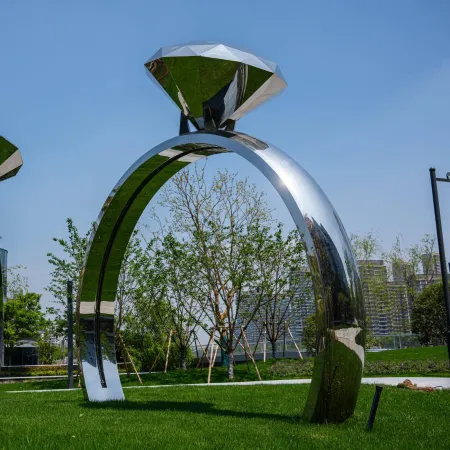
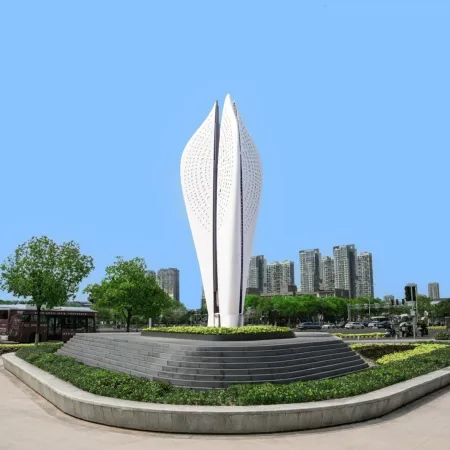
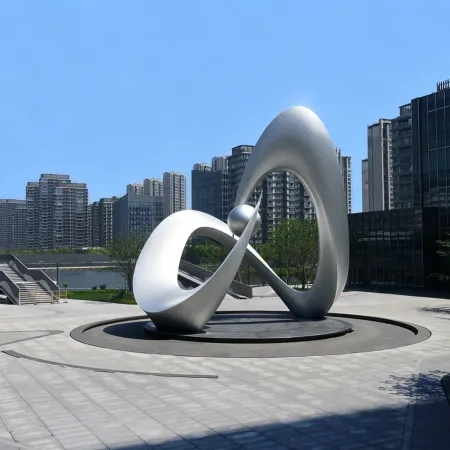
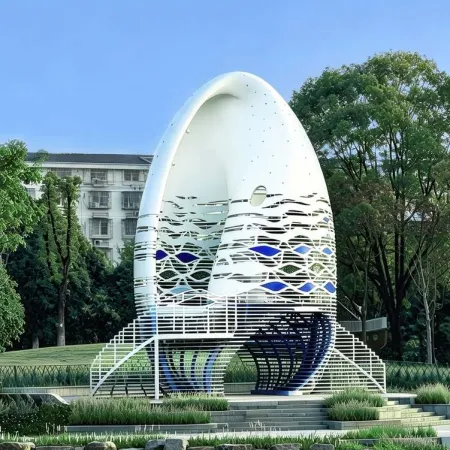
An empty plaza is just a gap between buildings, a place people cross because they must, and it only becomes a destination when something gives them a reason to pause. A city plaza large sculpture provides that reason: it gives the eye a focal point, gives the space a scale and gives visitors a natural meeting place. The most successful squares in the world are defined by a single memorable object, and that object is what turns anonymous paving into a public room with an identity.
Sculpture also changes how a plaza is used. A strong central work draws people inward instead of letting them hug the edges, it creates the backdrop for photographs, events and daily life, and it gives the surrounding cafes, shops and offices a shared point of reference. Plazas that gain a landmark sculpture consistently report more footfall, longer dwell times and stronger local attachment, because people return to places that have a face they can remember.
What Makes a Plaza Sculpture Work at Full Scale
The first law of a city plaza large sculpture is that it must be readable from the plaza edges, because people decide whether to approach from the perimeter. That means a strong silhouette, a clear scale relationship to the buildings around it and a form that reads instantly even when half hidden by moving crowds. Many plaza commissions fail because they look good in a rendering viewed from above but disappear when viewed at ground level from fifty metres away, so our studio always tests the concept from the real sightlines of the square.
The second law is that the work must share the plaza with daily life. A sculpture that occupies the whole square kills the events, markets and gatherings that make a plaza alive, so the design must respect the clear paths, the event space and the human scale. The best plaza sculptures are generous hosts, anchoring the square without claiming all of it, and that balance between presence and generosity is the true craft of plaza design.
| Plaza Role | Design Implication | Public Benefit |
|---|---|---|
| Focal point | Strong silhouette from all edges | Draws people into the centre |
| Meeting place | Recognisable from any direction | Gives the square a shared address |
| Photo identity | Composition that flatters at ground level | Spreads the plaza across media |
| Event partner | Leaves clear space for gatherings | Keeps the square flexible and alive |
Designing for Day, Night and the Seasons
A plaza is used from early morning to late evening, so a city plaza large sculpture must be designed across the full cycle of the day. By day it competes with architecture, signage and street furniture; at dusk it becomes a silhouette against the sky; and at night it may become the brightest object in the square, either through integrated lighting, reflective surfaces or the ambient glow of the city. The design should be considered for every one of these phases, and the lighting strategy should be developed as part of the sculpture rather than bolted on afterwards.
Seasons change the plaza too. Deciduous trees alter the backdrop between summer and winter, low winter sun throws long shadows that can either dramatise or flatten the work, and rain or snow changes how the surface reads. A plaza sculpture that has been conceived with these variations in mind will look intentional in every season, while one designed for a single perfect photograph will disappoint through most of the year.
Commissioning a City Plaza Large Sculpture
The commissioning process for a plaza landmark should start with how the square is actually used. We begin by observing the plaza at different times, mapping the pedestrian desire lines, the event areas and the places where people already gather, because the sculpture must reinforce the life of the square rather than fight it. From that analysis we develop concepts tested against the real sightlines and the real scale, and the client approves a direction that has been proven in the context of its place.
Engineering for a plaza is demanding because the work must survive crowds, weather and occasional impact while standing on a foundation that often sits above underground services. Wind loads across an open square are higher than many people expect, and drainage, anchoring and public safety all need professional attention. We carry the full engineering responsibility for every plaza work we deliver, so the client receives a sculpture that is safe, durable and correct in every structural detail.
- Map the square: study desire lines and gathering points first
- Respect the events: leave the plaza flexible for public life
- Design for all hours: plan the night identity with the form
- Engineer for crowds: wind, impact and safety at full scale
The Right Plaza Sculpture Will Deliver
A square people choose to visit, not just cross
A recognisable identity for the whole district
A natural stage for events and daily life
A photo landmark that markets the city itself
Avoiding the Common Plaza Mistakes
The most common mistake in plaza commissioning is choosing a sculpture that was designed for a gallery and merely scaled up. Gallery works rarely have the silhouette strength, the material robustness or the all-round readability that a plaza demands, and scaling them up only magnifies their weaknesses. The second mistake is placing the work without regard for the square's functions, blocking an event area or forcing pedestrians to detour, which breeds resentment against the sculpture itself. And the third is treating lighting as an afterthought, leaving the landmark invisible after dark.
Every one of these mistakes is avoidable when the client works with a studio that designs public sculpture as its core discipline. A studio that thinks in plazas will raise the sightline question before the concept is drawn, will map the square before proposing a position and will design the night experience as part of the form. The value of that experience is that the client does not have to know the questions in advance, because the studio asks them all before the first steel is ordered.
Working With a Studio That Knows Public Squares
A city plaza large sculpture is a permanent piece of the city, so the studio that makes it should be judged by public work already standing in real squares. Our studio has designed and installed plaza landmarks across twenty-three countries since 2003, and every commission is handled end to end by our own sculptors, engineers and installation crews. We bring the discipline of public space to every project: sightline studies, crowd analysis, structural certification and a finish specified for decades of weather and celebration.
If you are planning a landmark for your square, begin with a conversation about your plaza, its people and its ambitions, and let us show you what a city plaza large sculpture can do when it is designed for the place rather than merely placed in it.
Frequently Asked Questions About a City Plaza Large Sculpture
How large should a plaza sculpture be?
Scale is set by the size of the square and the height of its surrounding buildings, not by preference. The work must read from the plaza edges without dominating the space or blocking its life.
Should the sculpture sit in the centre of the plaza?
Not always. The best position respects pedestrian desire lines and event space, so a central position works only when it does not block the square's daily functions. Placement should be studied, not assumed.
What materials survive public plaza life?
Stainless steel, painted steel and bronze are the proven families for public squares. Finishes must tolerate weather, cleaning and contact while keeping their visual quality for decades.
Can a plaza sculpture include lighting or interaction?
Yes. Integrated lighting, water and kinetic elements can extend the life of the square into the evening, provided they are engineered for public safety and maintainable by the owner.
How do we win public support for a plaza artwork?
Involve the community early, choose a form that welcomes interpretation and communicate the story of the work. Sculptures that people understand and can claim as their own are defended, not attacked.
A city plaza large sculpture is one of the highest-value investments a city can make in its public realm, because it gives an open space a face, a story and a reason to be visited. Done well, it outlives administrations, trends and generations, and it becomes part of how the city is known.
Let our studio help you find the form that will make your square a destination, and give your city plaza large sculpture the permanence it deserves.