How Urban Public Art Projects Earn Their Place in the City
Urban public art projects earn their place in the city only when they survive the city's own tests: the approvals, the traffic, the weather between the towers and the judgment of millions of daily passersby. A work that passes those tests becomes part of the city's memory; one that fails them becomes a lesson in what urban commissions must not repeat.
This guide explains how urban public art projects are conceived, carried and delivered in the working city, and what clients should demand when commissioning art for streets, plazas and districts that never sleep. We have carried urban works across more than twenty countries since 2003.
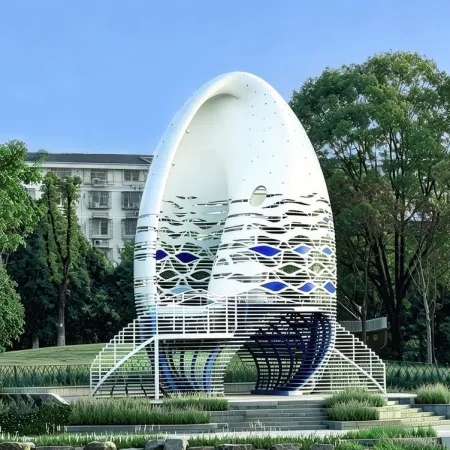
See urban works in their element at Heart of Changfeng, the corridor piece Fishbone Corridor and the wider range in our project gallery.
The City Is a Different Client
Urban public art projects answer to a client that no private commission ever faces: the city itself, in all its complexity. The work must satisfy the planning authority that approves it, the engineers who own the roads and the utilities around it, the community that lives beside it, the maintenance teams who will care for it and the millions of passersby who will judge it daily. Each of these audiences holds a piece of the work's fate, and a studio that ignores any of them builds a vulnerability into the commission. The urban studio learns to design for all of them at once, weaving the approvals, the engineering and the public life into the form from the very first sketch.
The urban realm also changes the stakes of failure. A work that fails in a private garden disappoints its owner; a work that fails in a city square disappoints the public, occupies a prime site and becomes a story that the next urban commission must overcome. This is why urban public art projects demand the full discipline of a serious studio: the site reading, the engineering, the approvals navigation and the installation planning that private commissions can sometimes skip. The city gives no second chance to make a first impression, and the works that earn their place are those whose makers respected the urban standard from the beginning.
Reading the City Before Designing the Work
Urban public art projects begin with a reading of the city, because the work must belong to its district rather than to a catalogue of forms. The studio should study how the space is actually used at every hour, the commuter's rush and the evening's leisure, the weekday and the weekend, the summer and the winter; it should understand the district's character, its history and its ambitions, the scale of its buildings and the rhythm of its streets; and it should identify the sight lines and the gathering points where a work can give the most to the city's life. A work that grows from this reading feels inevitable, as if the place had been waiting for it.
The reading must also cover the city's systems, because an urban work lives inside infrastructure that predates it and will outlast it. The planning should confirm what lies beneath the site, the utilities, the drainage and the structures that the foundation must respect; what governs the space above it, the sight lines, the lighting and the approvals that constrain the form; and what moves around it, the traffic, the pedestrians and the services that the installation must work with. Urban public art projects that read only the visible city design works that collide with the invisible one, and the collision is always expensive.
| Urban test | What it demands | Why works fail it |
|---|---|---|
| Approvals | Documentation the city accepts | Process treated as an afterthought |
| Infrastructure | Respect for what lies beneath | The invisible city ignored |
| Public life | A place in daily urban rhythm | Art that ignores how cities are used |
| Endurance | Materials for the urban exposure | Specified for a milder climate |
Designing for the Working City
Urban public art projects must be designed for the working city, where the work shares its site with traffic, pedestrians, services and the daily operations of urban life. The design should reward both the glance and the study, giving the passerby at speed a moment of recognition and the resident at leisure a depth to explore; it should compose with the surrounding scale, holding its own among towers without bullying the street; and it should serve the city's functioning as well as its beauty, giving people reasons to pause, landmarks to navigate by and moments of delight in the daily grind. Urban art that works the city's hours earns a place in its routine.
The urban design must also respect the city's maintenance reality, because an urban work is cared for by crews who serve the whole district, not a private team devoted to one sculpture. Materials and finishes should be specified for the urban exposure, the pollution, the de-icing salts and the public contact that city air and city life bring, and the detailing should let the work shed grime and resist the wear that urban settings impose. The care documentation should speak the language of the city's maintenance teams, and the design should never demand a level of care that the city cannot give, because a neglected urban work is a reproach to the very public it was meant to serve.
Navigating the Urban Process
Urban public art projects live or die in the process as much as in the art, because the city surrounds every commission with approvals, consultations and committees that a private work never meets. The studio must know the landscape of permissions, from the planning approval to the landowner's consent to the design review, and it must prepare the materials that each authority needs in the language that each audience understands. It must also carry the community process with genuine skill, because urban works attract public debate and the studio's handling of that debate becomes part of the public record.
The test of the urban studio is whether the vision survives the process. Every committee, every consultation and every review carries a gentle pressure to simplify, to soften and to change what was approved, and the works that emerge from heavy process are often the works whose soul was diluted by it. The studio that protects the approved concept through the urban maze, presenting it honestly, defending it clearly and adjusting only where the public realm genuinely demands, delivers works that arrive whole, and that protection of the vision is as precious as the art itself. The client should choose a studio with a record of carrying urban works through the process without losing them.
- Read the full city, visible and invisible, before the design begins.
- Design for the working hours of the street, the plaza and the district.
- Specify for the urban exposure that city air and city care impose.
- Navigate the approvals with documentation the city accepts.
- Protect the vision through every committee and review.
What Urban Works Must Survive
The approvals of the working city
The weather between the towers
The judgment of daily passersby
Decades of the city's care
Delivering in the Live City
The installation of urban public art projects happens in a city that does not stop, and the delivery must be planned accordingly. The work should be engineered in sections that suit the site access and the streets that lead to it, with the lifting planned around the traffic, the pedestrians and the services that own the space; the installation should be scheduled for the hours when it will least disrupt the urban life and coordinated with the authorities who control the roads and the public realm. The studio should execute the placement with a discipline that leaves the city as it found it, protecting both the work and the public through every stage of the lift and the assembly.
After the installation, the urban commission should close with the handover that the city's long care requires: the material specifications, the maintenance schedule and the documentation written for the teams who will serve the work for decades. An urban studio that delivers a work and walks away has done only half its job; the studio that prepares its work for the city's care has done the whole of it. The works that define our cities were carried by studios that understood the urban condition in all its complexity, and a partner with that understanding will deliver a work your city lives with in pride for generations.
Frequently Asked Questions About Urban Public Art Projects
Why is the city a different client?
Because an urban work must satisfy the approvals, the engineers, the community, the maintenance teams and the daily public all at once, and it has no private refuge from any of them.
What must the site reading cover?
The district's character, the space's use across hours and seasons, the surrounding scale, and the infrastructure and approvals that govern what can be built where.
How does a vision survive the approvals?
Through a studio that prepares the right documentation, engages the community with skill and defends the approved concept through every committee without diluting it.
What materials suit the urban realm?
Materials specified for pollution, de-icing salts and public contact, with detailing that sheds grime and a care regime the city's own teams can sustain.
How is installation handled in the live city?
Sections are planned for the site access, the lifting is coordinated with the authorities and the placement is scheduled for the hours that least disrupt urban life.
Urban public art projects earn their place by surviving the city's tests: the approvals, the infrastructure, the working hours and the decades of care. Read the full city before designing, specify for the urban exposure, navigate the process without losing the vision and deliver with a handover the city can sustain, and your work will become part of the city's memory rather than a lesson in what to avoid.
If you are planning urban public art projects and want a studio that knows the city's tests, bring us your site and its story and we will carry a work worthy of your streets from the first sketch to the standing landmark.