What a Custom Sculpture Manufacturer Must Control to Protect Your Investment
A custom sculpture manufacturer is the entity that actually converts your approved design into physical form, and the manufacturer's control over materials, fabrication quality, engineering and finishing determines whether the sculpture that arrives on your site matches the one you approved. Because sculpture is made once and cannot be returned like a factory product, choosing a manufacturer with genuine production discipline is the most important protection you have. I have worked with and evaluated sculpture manufacturers for over a decade, and this guide explains what a serious manufacturer should control, what questions reveal the difference between a real workshop and a middleman, and how to structure the relationship so quality is guaranteed rather than hoped for.
We look at production control, material integrity, fabrication quality, inspection and the commercial structure that keeps a manufacturer accountable.
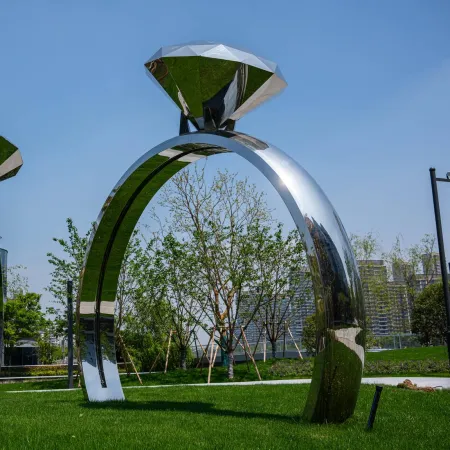
Our services overview explains our manufacturing model, the project archive shows works we have manufactured, and the Diamond Rings case demonstrates the precision a serious manufacturer achieves.
Manufacturer or Middleman: The Question That Decides Everything
The term manufacturer is used loosely, and the first task of any buyer is to determine whether the company actually makes sculpture or merely arranges for it to be made. A genuine custom sculpture manufacturer owns its workshop, employs its fabricators, welders and finishers, and controls the production process from material purchase to final inspection. A middleman forwards your drawings to whatever workshop offers the lowest price, adding a margin and accepting little responsibility. The difference becomes visible when problems arise: a manufacturer has the authority to fix a weld, redo a finish or adjust a schedule, while a middleman can only relay messages. Before you commit, verify the workshop exists, ask for live video of production and confirm who will physically build your sculpture. The answer determines your entire risk profile.
Material Integrity: The Foundation of Trust
A manufacturer that cannot document its materials cannot be trusted with your sculpture. The specified steel grade, the thickness, the finish system and the quality of consumables all affect the work's appearance and its survival outdoors. A serious manufacturer purchases material with certificates, verifies it against the specification and keeps records that can be inspected. If your design calls for marine-grade stainless in a coastal site, the manufacturer must prove that is what went into your sculpture, not a cheaper substitute chosen silently. Material integrity extends to the details: the fasteners, the sealants, the paint system and the welding consumables must all match the specification, because corrosion and failure often begin in the components nobody photographs. Ask for material certificates as part of the handover, and treat any reluctance as a warning.
| Control Point | What a Serious Manufacturer Does | Risk if Skipped |
|---|---|---|
| Material purchase | Certified material matched to spec | Substitution and premature corrosion |
| Welding | Skilled welders, controlled process | Weak joints and visible seams |
| Fabrication tolerance | Dimensions held to drawing | Misalignment on site |
| Finishing | Approved surface system applied | Premature fading and failure |
| Inspection | Documented checks before shipment | Defects discovered on site |
Fabrication Quality: The Details That Define the Work
In sculpture, fabrication quality lives in details that photographs rarely reveal. A stainless seam must be welded and ground until it disappears, which demands both skill and patience. A painted surface must be built on correct preparation, or the coating will fail from within. The interior of a hollow form must be vented and drained so condensation cannot accumulate. The base plate must be flat and its anchor holes must align with the foundation within tolerance. These details are the difference between a sculpture that looks superb on day one and for decades after, and one that reveals its compromises within the first year. When you review a manufacturer's work, ask to see pieces in progress, not only finished photographs, because work in progress shows the seams, the structure and the care that finished images hide.
Engineering Within the Manufacturer's Walls
The best custom sculpture manufacturers do not simply build to someone else's drawings; they engineer the work so it can be built and will stand safely. This means translating the artistic design into fabrication drawings, calculating the internal structure for the sculpture's loads, designing the connections and base for the site, and planning how the work will be transported and erected. A manufacturer with engineering capability will flag problems in the design before they become expensive, such as a form that cannot be balanced, a section too large to ship or a finish unsuited to the climate. This engineering input is a gift to the client, because it catches errors while they are still drawings. Ask how the manufacturer handles structural design and whether you will receive the calculations; the answer reveals whether you have an engineering partner or just a fabricator.
Signs of a Manufacturer You Can Trust
Owns its workshop and welcomes live visits
Provides material certificates as standard
Shares structural calculations with clients
Shows work in progress, not only finished pieces
Inspection and the Pre-Shipment Gate
No amount of trust replaces inspection. A professional manufacturer operates a documented quality process and welcomes inspection at agreed points, most importantly before shipment. The pre-shipment inspection reviews the finished work against the approved design and samples, checks dimensions and finish, verifies the documentation and confirms the crating is adequate for transport. The inspection can be performed by the client, by the manufacturer's own quality team with photographic evidence, or by an independent third party for high-value commissions. Whatever the method, the acceptance criteria should be agreed in writing before production so the inspection measures against a known standard. A manufacturer that resists inspection is telling you something about its confidence; a manufacturer that invites it is demonstrating the discipline your investment deserves.
Crating, Shipping and the Journey to Your Site
The journey from the workshop to your site is where many sculptures suffer their only damage, and a custom sculpture manufacturer that takes responsibility for the whole journey protects your work through every mile. Export-grade crating is engineered for the specific sculpture: internal bracing that holds the piece immobile, cushioning at every contact point, and a crate built to survive the handling of ocean freight and the transfer between trucks. Fragile surfaces, polished mirrors and delicate projections each demand their own protection strategy. The crating is not an afterthought but a design task in its own right, and its quality is visible in the sculpture's condition on arrival.
The documentation of the journey matters as much as the physical protection. The manufacturer should provide packing lists, shipping marks and the drawings or instructions your local team needs to unpack, handle and install the work correctly. For international commissions, the shipping terms should be defined clearly in the contract, stating where responsibility transfers and what insurance covers. Many manufacturers also offer installation supervision, sending an engineer to oversee the erection so the sculpture is placed exactly to its design. When the same partner that built the sculpture also plans its journey and its installation, there is no gap where responsibility can be lost, and your work arrives as the work you approved.
Frequently Asked Questions About Choosing a Custom Sculpture Manufacturer
How do I verify that a manufacturer really owns its workshop?
Ask for live video tours, request evidence of owned equipment and check whether the team can discuss fabrication processes in technical detail. A real manufacturer welcomes scrutiny; a middleman usually cannot show you a convincing production floor.
What material documentation should I receive?
Expect material certificates confirming grade and specification, structural calculation reports, and records of any finish system used. These documents form part of the handover and give you confidence that the sculpture was built to the approved specification.
Should I use an independent inspection company?
For high-value commissions, an independent pre-shipment inspection is a wise investment. It provides an objective check against the agreed acceptance criteria and protects both parties by documenting the work's condition before it is crated and shipped.
Can a manufacturer also handle installation overseas?
Yes. Full-service manufacturers design work in shippable sections, provide export-grade crating and can send engineers to supervise installation. This removes the coordination risk between fabrication and erection, which is why the single-partner model is so valuable.
What payment structure protects me when working with a manufacturer?
Staged payments tied to verifiable milestones protect both sides: design approval, fabrication progress and pre-shipment inspection. This structure means you never pay far ahead of work you have seen, and the manufacturer is never left exposed on completed work.
A custom sculpture manufacturer that controls its materials, employs skilled fabricators, engineers its work and welcomes inspection is the partner who turns your approved design into a sculpture you will be proud of for decades. Since 2003 our studio has manufactured custom sculpture across twenty-three countries, with our own workshop, our own engineering and our own quality systems under one roof. We build the invisible details with the same discipline as the visible surface, and we document what we build so you can verify it.
If you are selecting a custom sculpture manufacturer, send us your drawings and your quality expectations, and we will show you how a serious manufacturer responds with materials, engineering and inspection built into the proposal.