How a Landmark Metal Sculpture Is Engineered to Command a City
A landmark metal sculpture is the material of the modern civic skyline, because metal alone can rise to the heights, span the voids and catch the light in ways that make a work visible from across a city. From mirror stainless arches to weathering steel waves and painted steel towers, the great urban landmarks of recent decades are overwhelmingly metal, and understanding how they are engineered explains both their power and their cost. I have spent more than a decade designing and building landmark metal sculpture for clients across twenty-three countries, and this guide opens the workshop door on how these works come to be.
We will look at the metals that suit landmark work, the engineering that keeps large forms standing, and the fabrication and finishing standards that decide whether a sculpture looks magnificent or merely big.
Our metal fabrication services cover structural and sculptural steel work, the landmark project archive documents completed metal works, and the Wind Sail piece shows how a slender metal form is engineered to read against sky and water.
The Metals That Carry Landmark Ambition
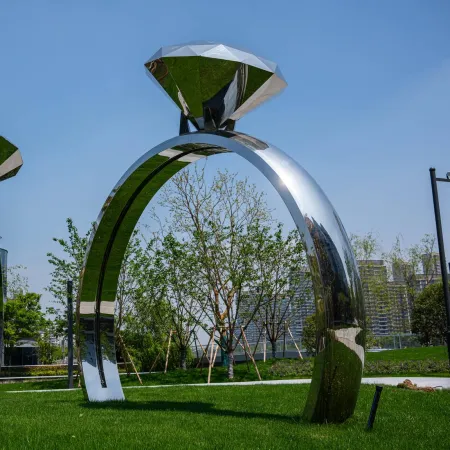
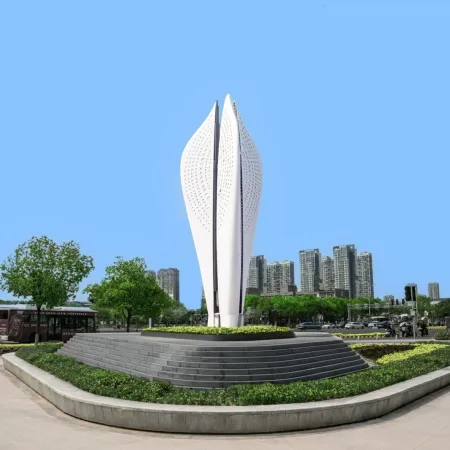
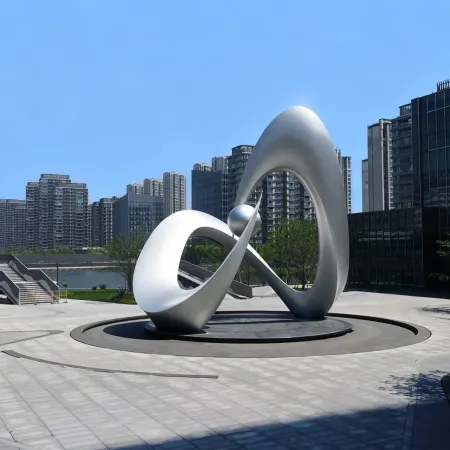
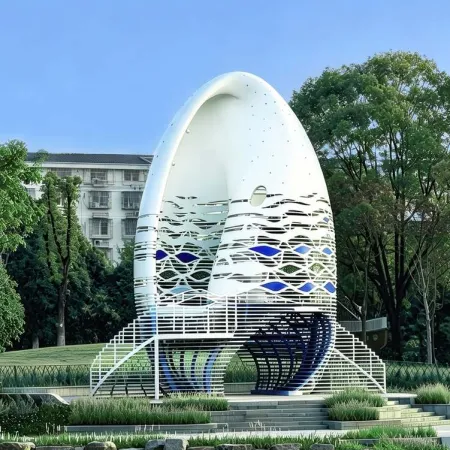
Landmark metal sculpture is really a family of materials, each with a distinct voice and discipline. Stainless steel offers the mirror and the lasting brilliance that make sculpture a living reflector of sky and city, at a cost that reflects its corrosion resistance. Weathering steel develops a stable rust patina that harmonises with earth and heritage settings while needing no repainting. Painted carbon steel delivers any colour and the most economical route to large scale. And aluminium brings light weight for enormous spans. The concept, the climate and the budget decide which metal earns the commission.
| Metal | Character | Best Use |
|---|---|---|
| Stainless steel | Mirror brilliance, corrosion proof | Iconic modern landmarks |
| Weathering steel | Earthy patina that deepens | Landscape and heritage parks |
| Painted steel | Any colour, economical scale | Colourful civic statements |
| Aluminium | Light weight for wide spans | Large open structures |
The Engineering Behind a Form That Stands
A landmark metal sculpture is first a structural problem and only then a work of art, because wind does not respect artistic intention. The engineering begins with the site wind speed and exposure, from which the design wind load is calculated; the form is then analysed to find its critical stresses, the steel sections and wall thicknesses are sized to carry them with an honest safety margin, and the foundation and anchor system are designed to resist overturning and sliding. Resonance is considered too, because a tall slender sculpture can be excited by wind, and the design must either avoid or damp that behaviour.
The connection between the artistic skin and the structural core is where landmark metal sculpture is won or lost. Large works are fabricated in sections and assembled, so the weld plan, the temporary bracing and the sequence of assembly must all be engineered before cutting begins. Internal frames, gussets and stiffeners must disappear inside the form, and the sculpture must be transportable as sections that can pass under bridges and through tunnels, then be re-assembled on site to tolerances measured in millimetres.
Fabrication Standards That Separate Magnificent From Merely Big
Any fabricator can make a large metal object; few can make a landmark metal sculpture whose surfaces look inevitable. The difference is visible in the seams, which must be welded, ground and blended until the sculpture appears to have grown as one form rather than having been assembled; in the geometry, which must hold its curves within tolerances that photographs cannot see; and in the surface, which for mirror stainless demands a polishing regime of escalating grits followed by a final pass that erases every scratch. These are skills measured in years, and they are why the choice of studio matters so much.
What the Workshop Must Prove
Precision cutting and forming capacity
Welding certified for structural loads
Finishing craftsmen for seamless skins
Assembly and erection experience
Finishing That Faces Real Weather for Decades
The finish of a landmark metal sculpture is its contract with the climate, and it must be specified for the exact site. Mirror stainless demands the correct grade for coastal salt or urban pollution and a specification for periodic cleaning that keeps the mirror honest. Painted steel demands a full coating system, blast preparation, primer, colour coats and a topcoat chosen for ultraviolet stability, applied in controlled conditions, because a repaint of a large landmark is an expensive and disruptive event. Weathering steel demands care with runoff, which can stain paving, and correct detailing to avoid water traps that corrode faster than the patina forms.
Maintenance thinking belongs in the design. Drainage should keep water off horizontal surfaces and out of cavities; access points should let crews reach every surface safely; and joints should be designed to be inspected. A landmark metal sculpture will be cleaned, inspected and occasionally repaired over its life, and a design that anticipates that care will look after its owner far better than one that treats maintenance as an afterthought.
- Wind engineering: load calculated for the exact site exposure
- Seamless skin: welds ground and blended out of sight
- Coating system: specified for decades, not seasons
- Drainage: water engineered away from every surface
Commissioning Metal Work at Landmark Scale
Commissioning a landmark metal sculpture is a construction project as much as an artistic one, and the process should reflect both natures. The studio should develop the concept with the site in mind, produce the engineering design and calculations for approval, fabricate in sections with inspection milestones, and manage transport and erection on site. Because the stakes are high, the client should verify delivered metal landmarks, review the engineering credentials and agree the inspection regime in the contract before any steel is ordered.
Since 2003 our studio has designed, engineered and installed landmark metal sculpture across twenty-three countries. We employ our own structural engineers, fabricate in our own workshops and finish every surface to a specification written for its climate, because a landmark is judged by the city for decades and we intend to be proud of it for all of them.
A landmark metal sculpture is engineering raised to the level of art, and when both disciplines are honoured it becomes one of those rare objects that defines a skyline and outlives its makers.
Cutting, Forming and the Precision of Large Plate
The fabrication of a landmark metal sculpture begins with the transformation of flat plate into three-dimensional form, and the methods chosen shape both the accuracy and the character of the work. Large forms are cut from steel plate using plasma, laser or water-jet cutting, each offering different balances of speed, edge quality and cost; the plate is then formed into curves using rolling, pressing or the patient craft of the hammer and the English wheel for the most demanding surfaces. The sequence of cutting and forming must be planned so that the pieces fit together within the tolerances the design demands, because a landmark that is assembled from inaccurate parts will show its errors in every seam and every shadow.
The joinery of the parts is where the sculpture either becomes seamless or reveals its construction. Welding at landmark scale demands certified welders who understand both the structural role of every joint and the visual standard of the finished surface, because a weld that is strong but ugly will be visible for decades. After welding, the seams are ground and blended into the surrounding metal, and for mirror finishes the entire surface moves through the polishing stages until the joints disappear completely. The discipline of cutting, forming, welding and finishing is the invisible craft of landmark metal sculpture, and it is the reason why two studios fabricating the same design can produce works of entirely different quality.
Frequently Asked Questions About Landmark Metal Sculpture
Which metal is best for a large public landmark?
There is no single best metal. Stainless steel offers mirror and corrosion resistance, weathering steel an earthy permanent patina, painted steel any colour at economical scale, and aluminium light weight for wide spans. The concept and site decide.
How is a tall metal sculpture engineered for wind?
Wind load is calculated from the site exposure, the structure is analysed for critical stresses and resonance, and the steel sections, foundation and anchors are sized to resist overturning with a safety margin.
How is a huge metal sculpture transported and erected?
Large works are fabricated in transportable sections, shipped with bracing to protect the finish, and re-assembled on site with cranes under engineered lift plans. Very large sculptures may be erected section by section.
What maintenance does a metal landmark need?
Cleaning schedules, coating inspection and structural checks vary by metal and climate. Stainless needs periodic washing, painted steel periodic coating inspection, and all works benefit from an access-friendly design and maintenance plan.
Can metal landmarks be combined with lighting or water?
Yes. Integrated lighting dramatically extends a metal landmark presence at night, and water features can be incorporated when the engineering and maintenance implications are designed from the start.
A landmark metal sculpture asks more of its makers than any other public commission, demanding structural genius, fabrication obsession and artistic vision in equal measure. When all three are present, the result is a work that cities are proud to call their own and that generations will continue to photograph.
Share your site and your vision with us, and we will show you what landmark metal sculpture, engineered honestly and finished obsessively, can achieve.